



Photo Credit © John Cole Photography
2026 Winner

Jurors' Citation
Cook Architecture
Visit Cook Architecture Website
Design Team:
Michael Cook |
Mario Ostolaza |
Maria Lira |
Michael Meaza
General Contractor:
Modern Constructs, LLC
Additional Consultants:
Structural Engineer: Field and Tung Structural Engineers |
Mechanical Engineer: Jermaine Robertson, PE |
Landscape Architect: Moody Graham
Project Description
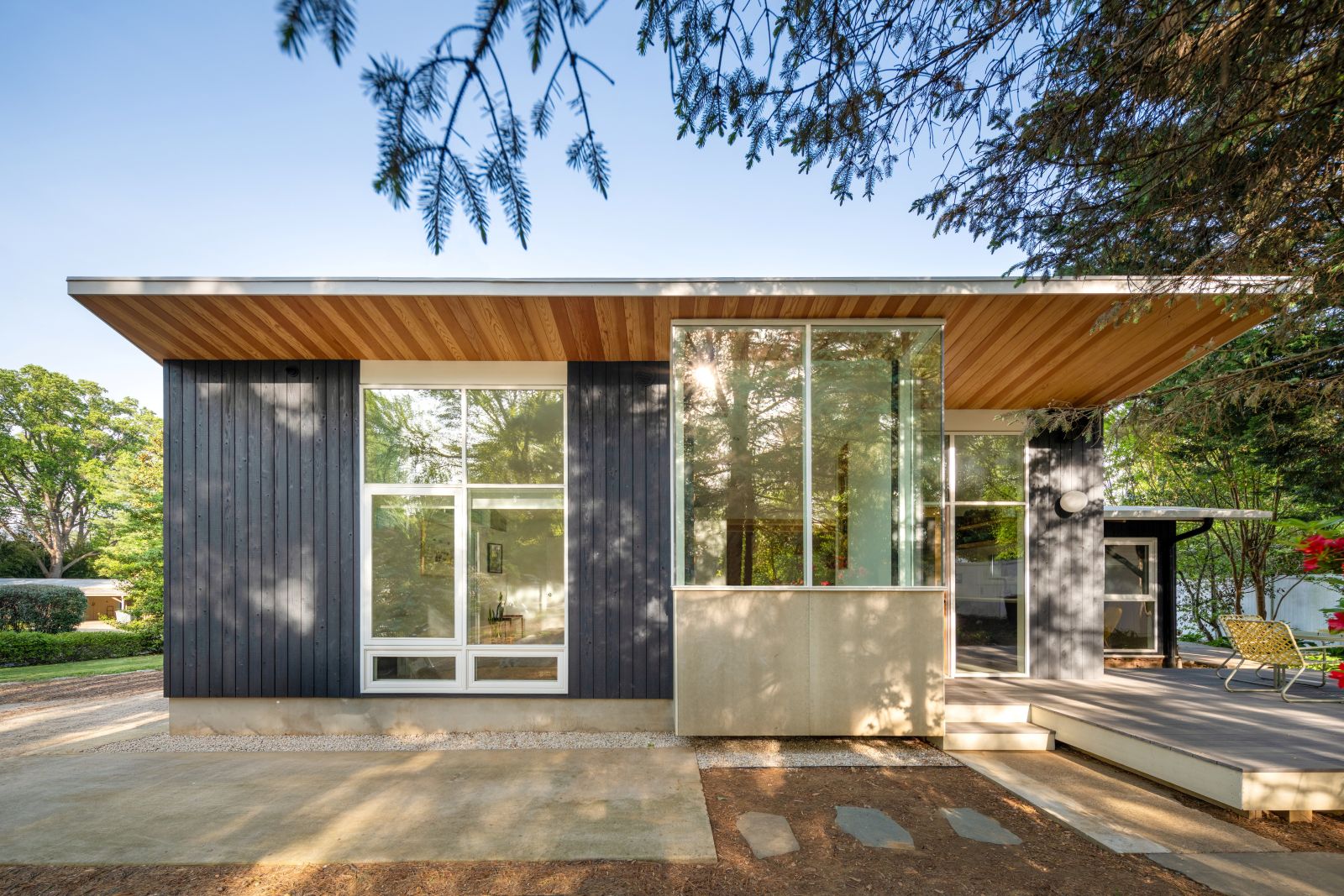
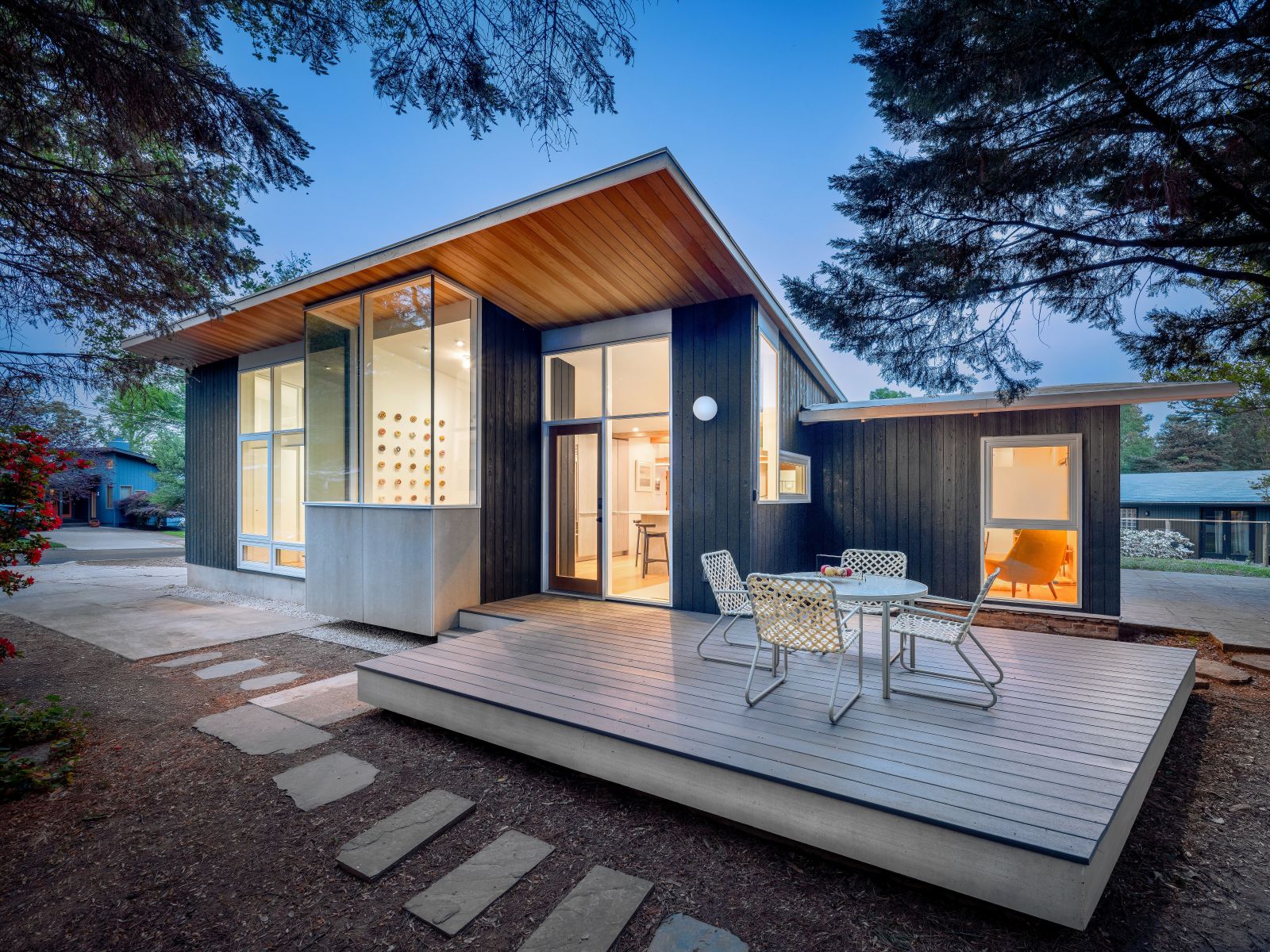
The Split Influence House is a complete renovation that reclaims a compromised mid-century modern residence by removing the poorly performing addition and re-centering the home around its original architectural core.
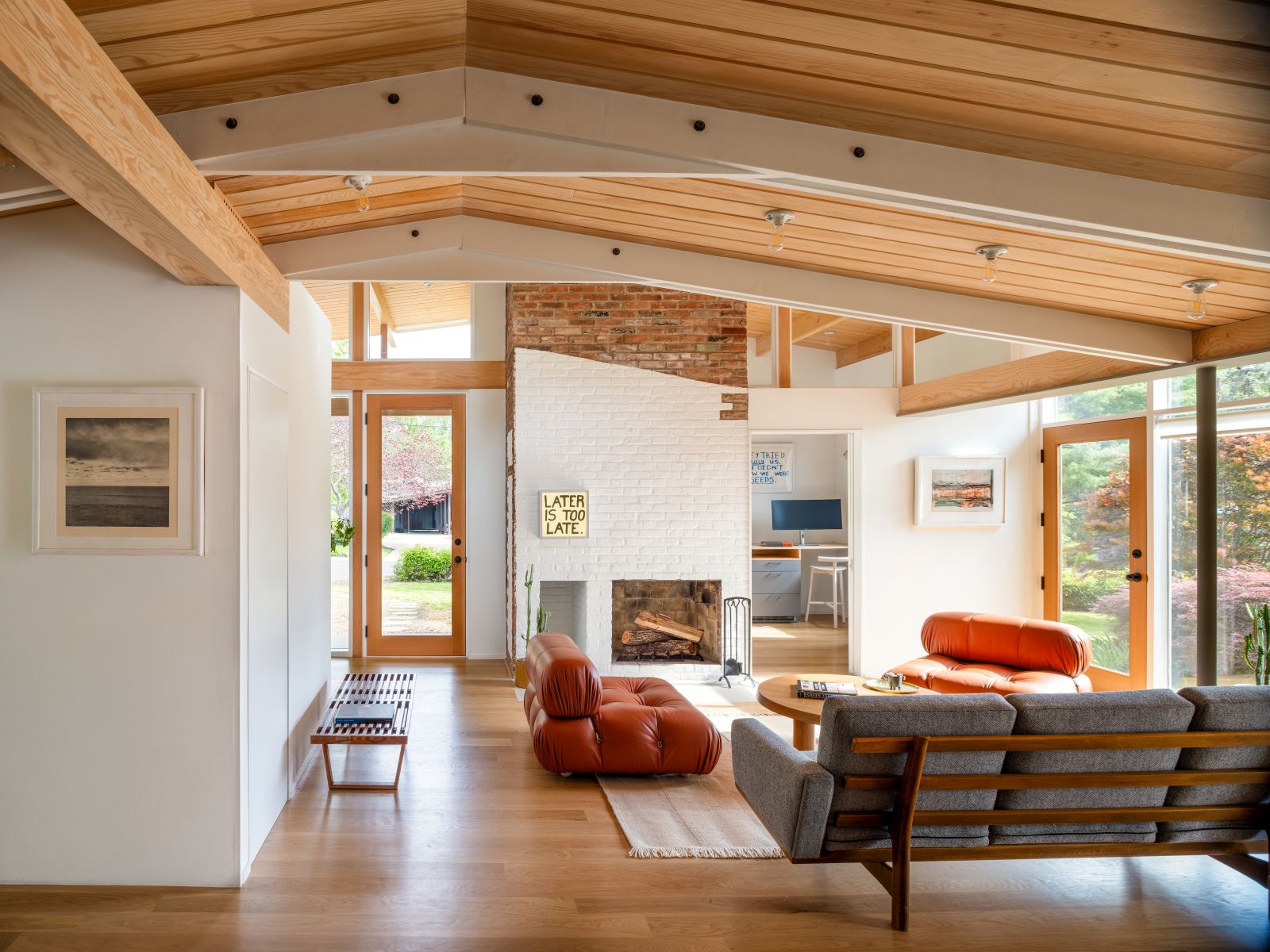
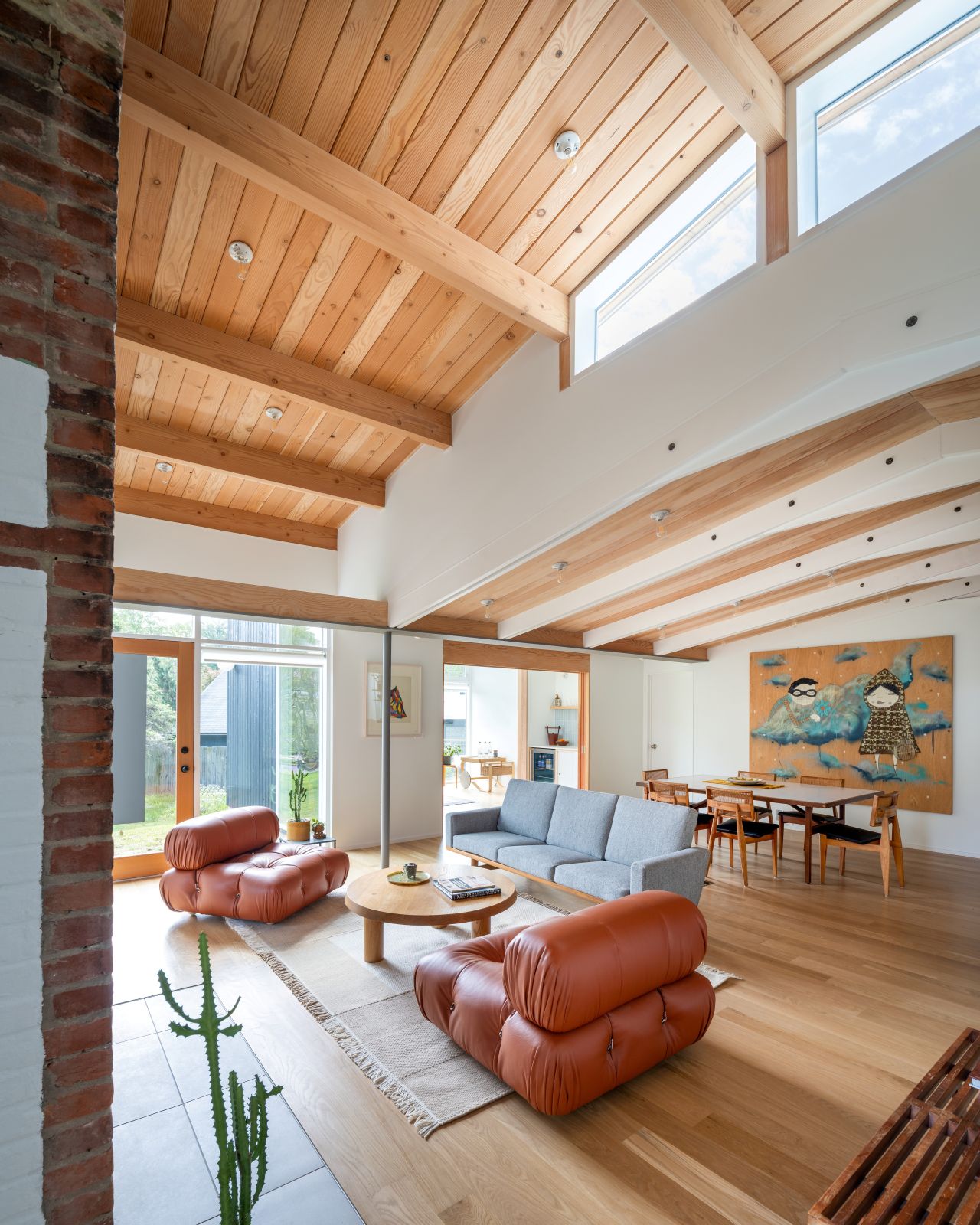
The house, originally designed by Nicholas Satterlee and Francis Lethbridge, is located in the historic Holmes Run Acres neighborhood of Falls Church, Virginia, a mid-century modern community listed on the National Register of Historic Places. The neighborhood is primarily populated with original Satterlee and Lethbridge house designs, resulting in a consistent Holmes Run Acres “style”, characterized by low-slung gable roofs, “sandwich” roof beam structural elements, and open cathedral ceilings.
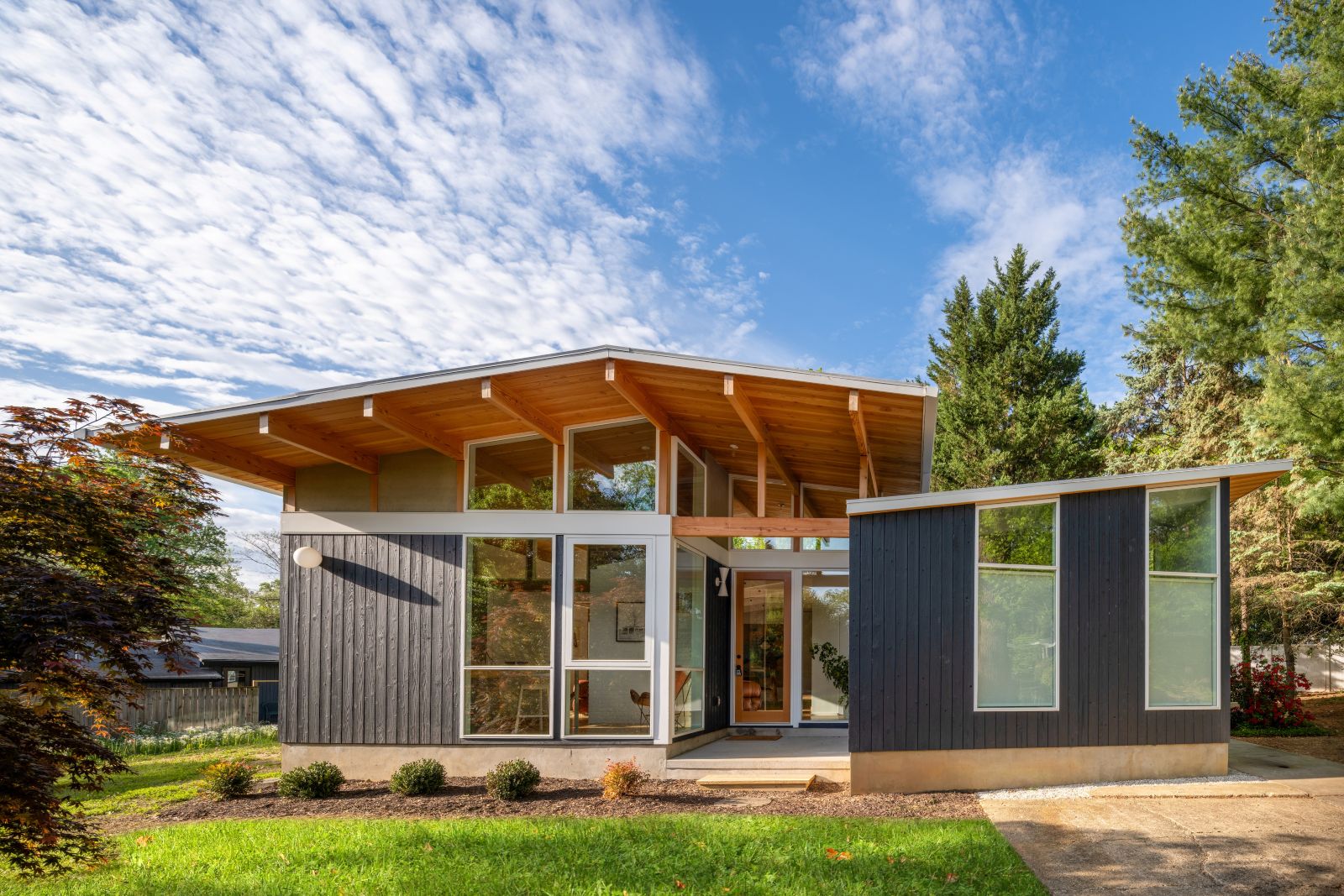
The project name refers to multiple structural and aesthetic influences that informed the entire design process. On the one hand, the design looks to acknowledge existing and neighborhood-typical elements of the Holmes Run style, retaining portions of the original roof assembly and sandwich roof beams. On the other hand, the design, driven both by functional goals and stylistic influences, introduces crucial elements which engage the original structure. The original Satterlee and Lethbridge sandwich roof beams and downward-sloping gable roofs transition to upward-sloping shed roofs and expansive views to the landscape, utilizing the single member post and beam tectonics of California mid-century modernism. The resulting form suggests a sort of hybrid structure drawn from separate but complementary mid-century influences, remaining embedded in the Holmes Run historical framework, while introducing a unique engagement with the surrounding landscape.
The near due-north orientation of the front façade presented a unique opportunity to shape new additions around morning and evening light. Three new volumes reorganize the house around the retained structure, with two extending to the east and west and a third forming a new entry volume to the north. The east and west additions slope their ceilings upward toward exterior glazing, pulling circulation out of the original gabled living space and introducing daylight into what had previously been an enclosed interior.
This reconfiguration is enabled by two new primary beams that support the original gable roof, which remains constructed of the existing sandwiched Douglas fir truss assemblies. Running perpendicular to the original truss system, these beams allow the house to open to nearly all cardinal directions, while the final three bays at the rear remain reserved for the new south-facing kid’s bedroom. To the east, a new steel perimeter beam opens the house to the family den. To the west, a concealed laminated beam assembly cuts through the existing trusses and is set higher within the roof plane, subtly breaking the gable’s symmetry and creating a taller ceiling transition into the new kitchen and primary bedroom. While the overall composition reads as simple, the resolution of these volumes required highly coordinated detailing across structure, enclosure, and daylighting.
The renovation extends the useful life of the existing structure while tailoring the home to its owners’ love of cooking, hosting, and everyday family life. The result is an open and flexible house that demonstrates how a historically significant neighborhood can be honored without freezing architecture in time.