



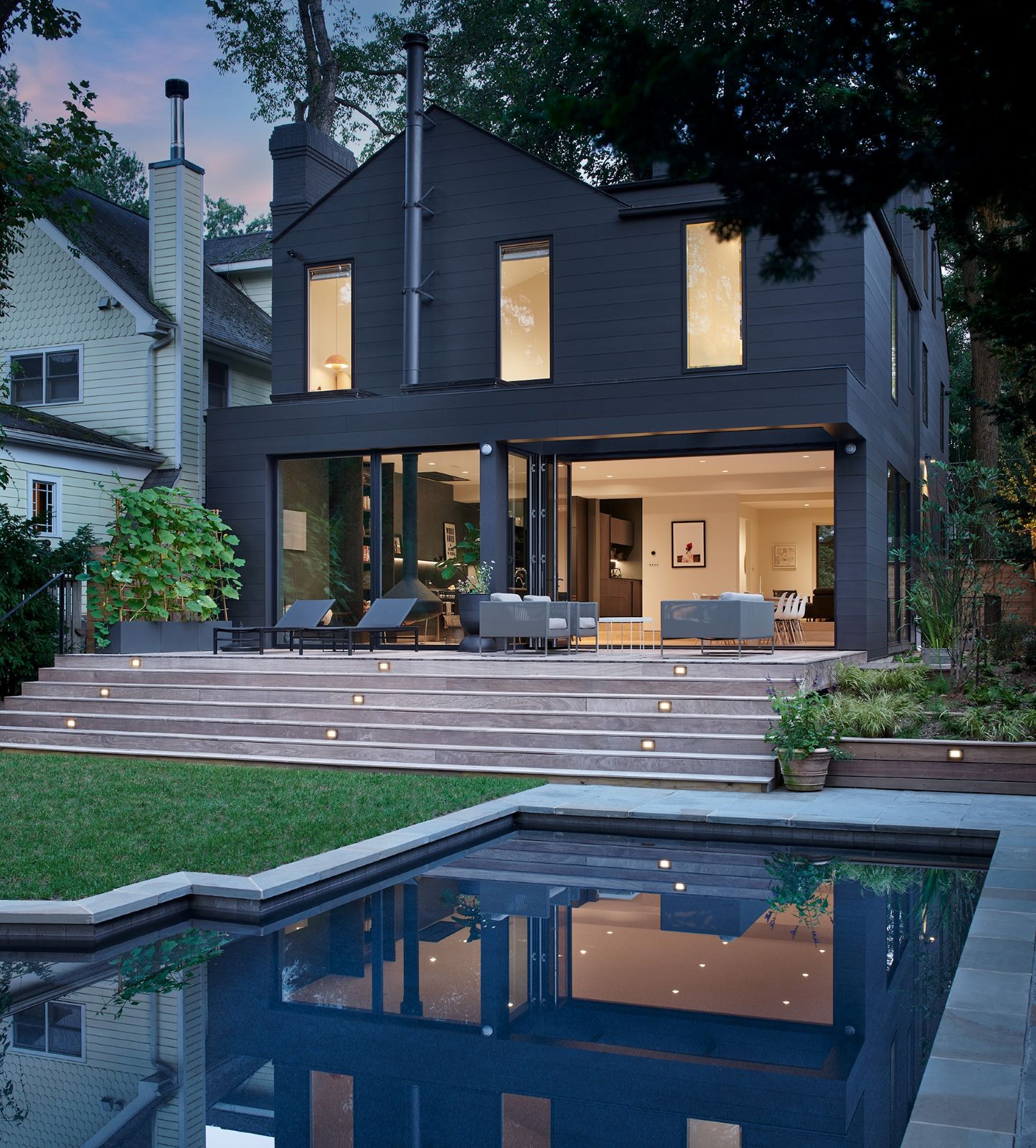
Photo Credit © Anice Hoachlander
2026 Winner

Jurors' Citation
EL Studio
Visit EL Studio Website
Design Team:
Mark Lawrence, AIA |
Elizabeth Emerson, AIA |
Sarah Beth Combs, AIA
Client:
Eric Carter & Lauren Herrington
General Contractor:
Added Dimensions
Additional Consultants:
JLC Engineering LLC |
Moody Graham
Project Description
Located in a neighborhood where the clients have long-established roots, the project begins with a commitment to community—just one block from their daughter’s school and surrounded by mature trees, the site offers both social connection and environmental richness. While the location and size were ideal, the existing house—an original Craftsman bungalow compromised by a series of insensitive, over-scaled additions—no longer supported the needs of a modern, highly social family.
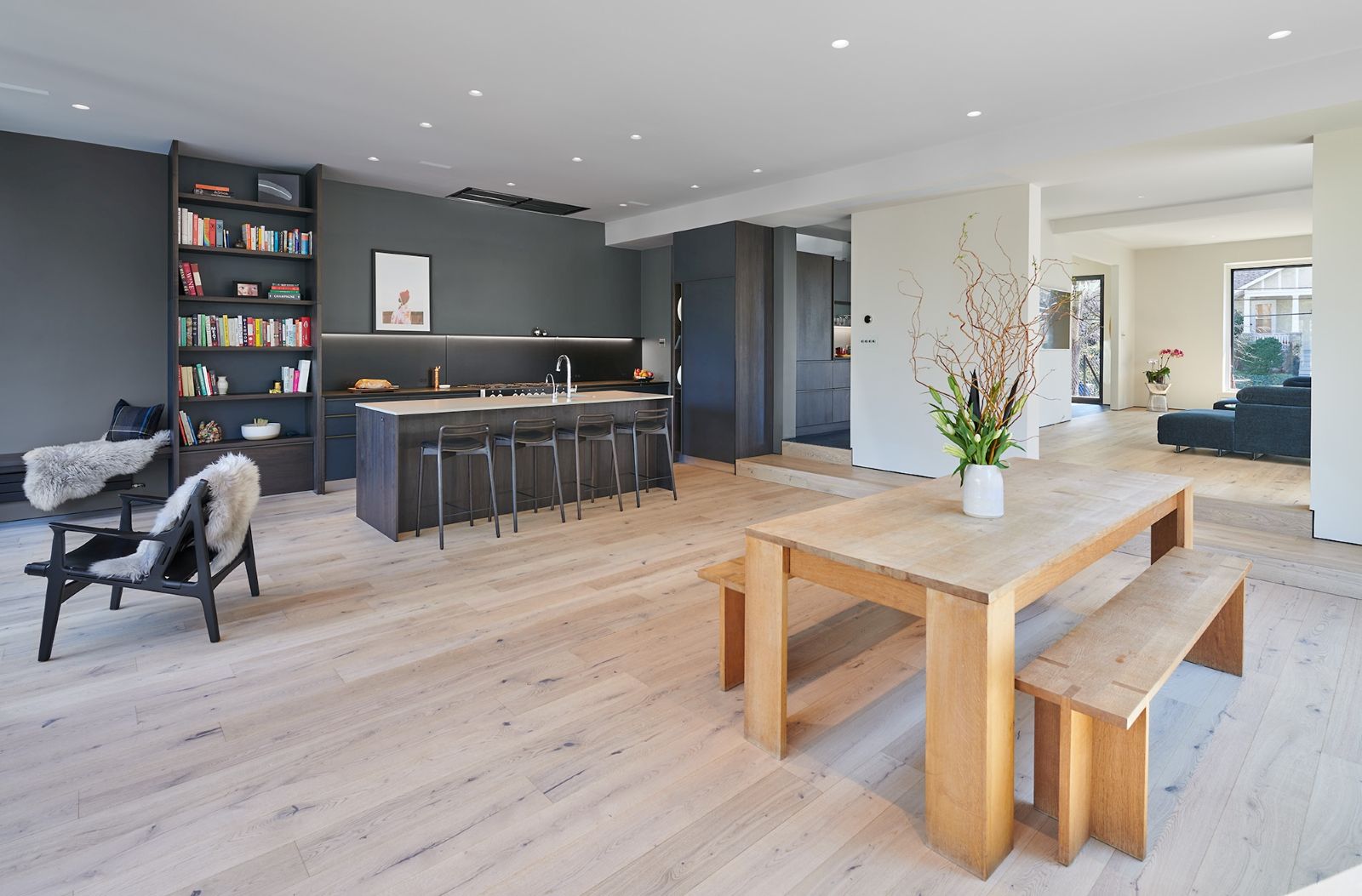
The renovation became an exercise in thoughtful subtraction and strategic transformation, guided by an integrated approach to design. By removing the front dormer and porch infill that overwhelmed the original structure, the design restores a more open, welcoming presence to the street, reinforcing neighborhood engagement and human-scaled proportion. At the rear, infilling a dark and underutilized screen porch creates a generous kitchen and dining space that anchors daily life and strengthens connections between family members and guests.
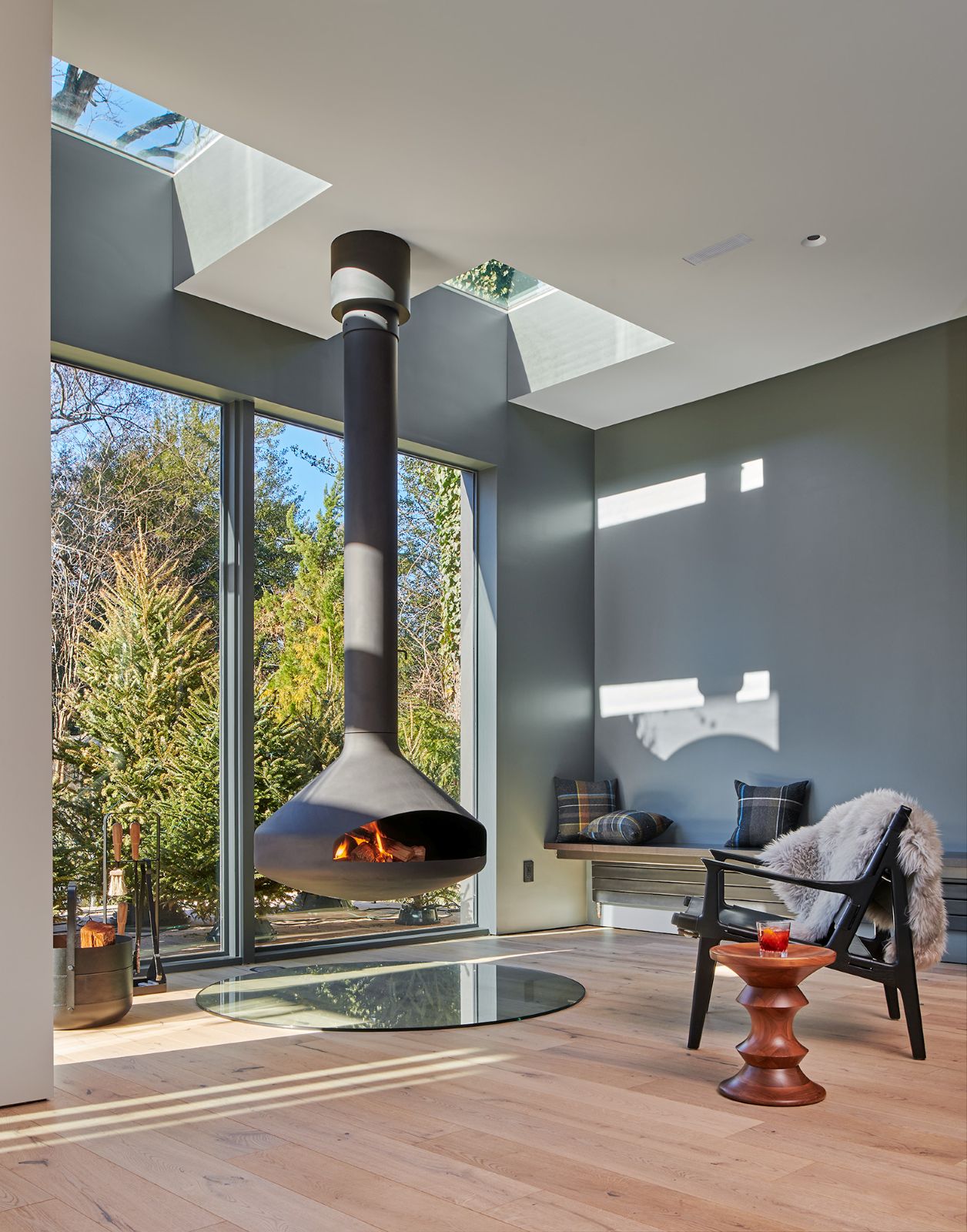
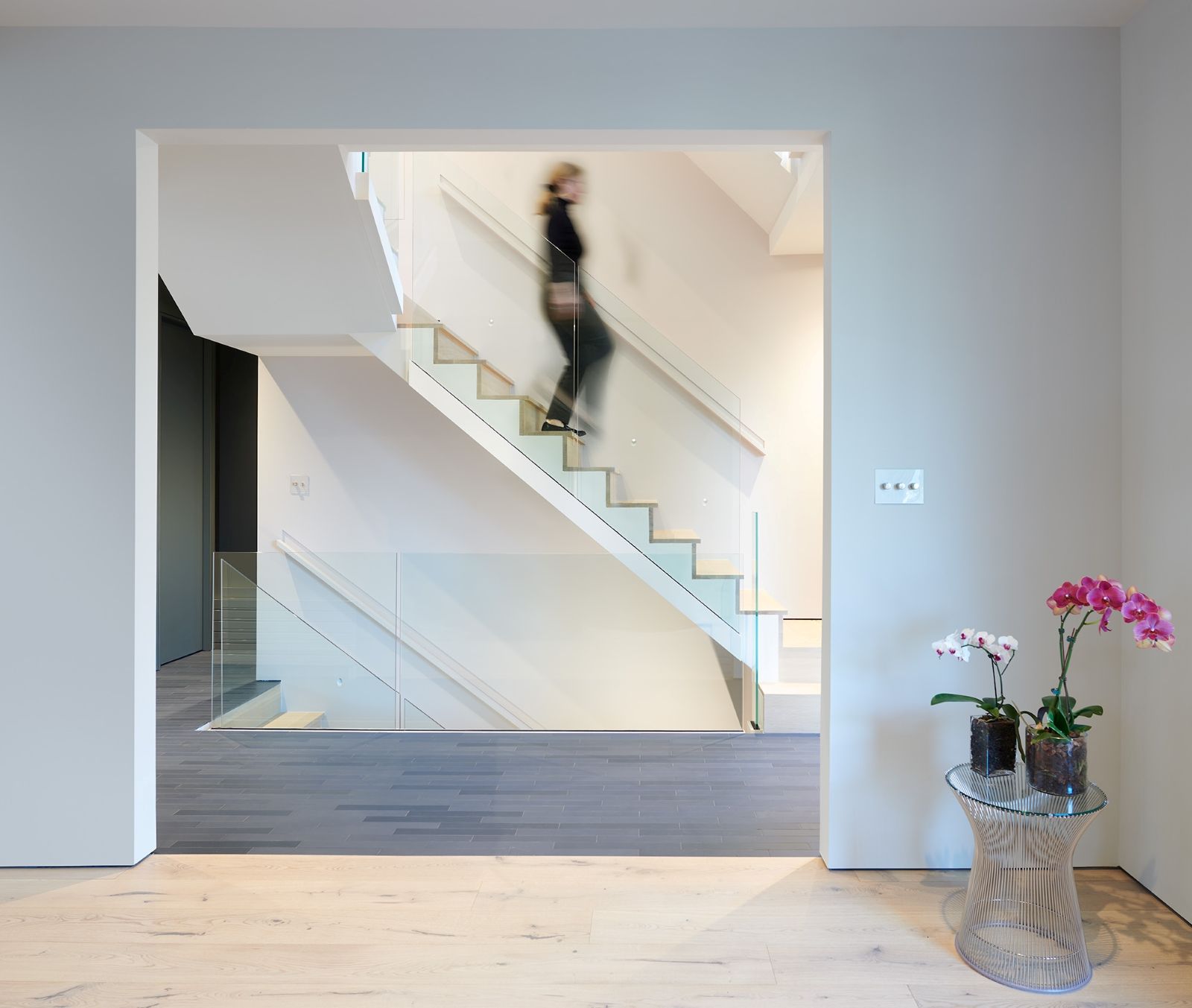
Inside and out, the project prioritizes openness, clarity, and flow. Confined, compartmentalized rooms are reconfigured into a cohesive sequence of spaces, while expanded apertures draw in daylight, improve natural ventilation, and establish a strong visual and physical connection to the garden and pool. These interventions enhance occupant wellness while reducing reliance on artificial lighting and mechanical conditioning.
Material and formal decisions are intentionally restrained, refining rather than replacing the existing structure to reduce unnecessary resource use. The result is a flexible, high-performing environment that balances comfort, durability, and adaptability over time.
Ultimately, the house is reimagined as a place for gathering—supporting a range of experiences from intimate, cozy moments to open, social living—demonstrating how careful, performance-driven design can transform a compromised structure into a cohesive home that is both rooted in its context and responsive to contemporary life.