

Bethesda, MD
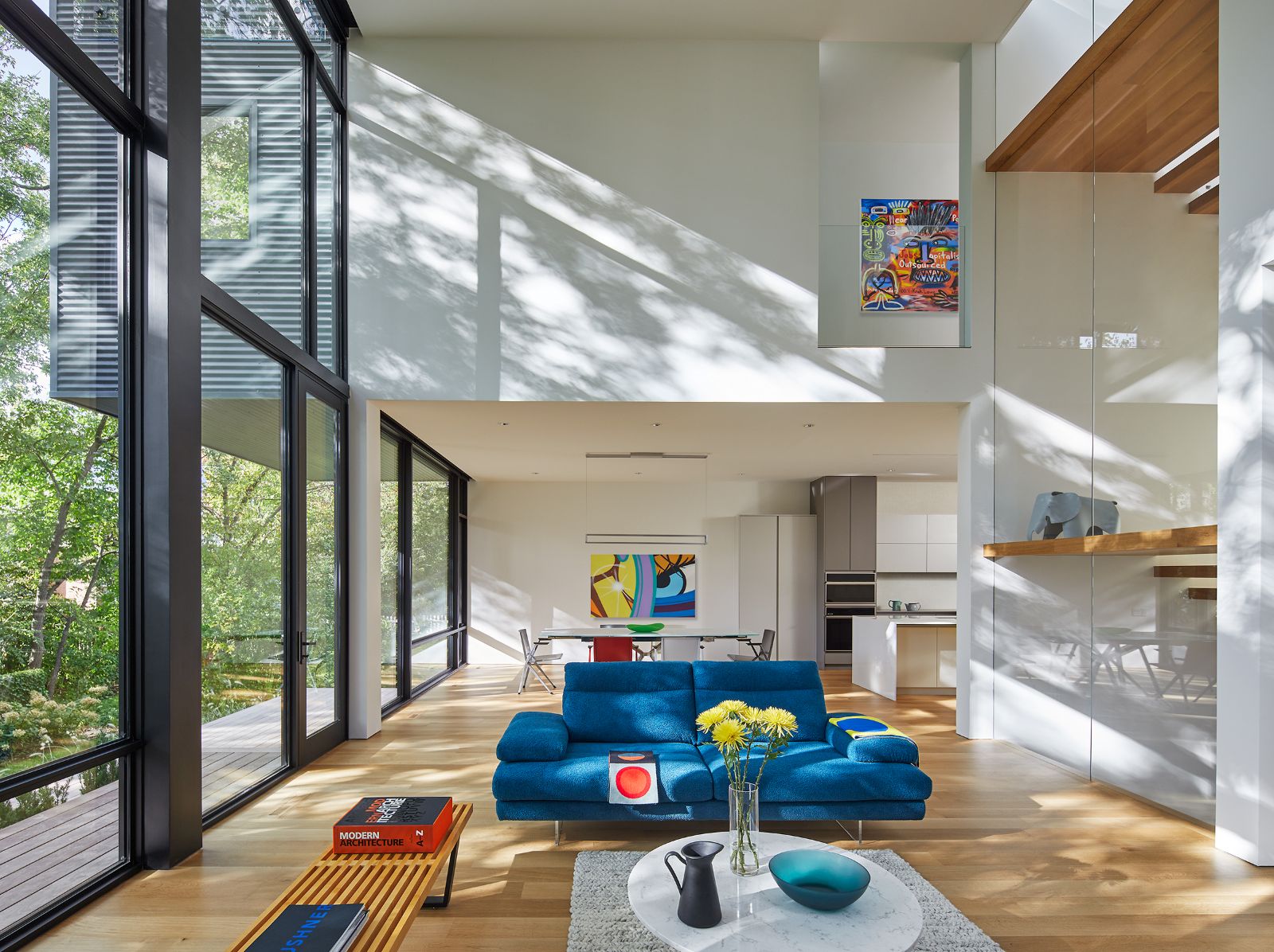
Photo Credit © Anice Hoachlander
2026 Winner

Award of Excellence
Robert M. Gurney, FAIA, Architect
Visit Robert M. Gurney, FAIA, Architect Website
Design Team:
Robert M. Gurney, FAIA | Kara McHone
General Contractor:
Potomac Valley Builders
Additional Consultants:
Structural Engineer: United Structural Engineers |
Landscape Architect: Campion Hruby Landscape Architects
Project Description
After living in their 1938 Brick colonial house for 29 years, the owners grew tired of the small, dark, and compartmentalized spaces typical of this building era. They loved their tree-lined neighborhood, located within walking distance of shops, restaurants, galleries and other urban amenities afforded in their town, near Washington, DC. After looking at various options, including renovating the existing house, it was determined that due to the aging infrastructure, low ceiling heights and uninsulated, inefficient building envelope, it was not economically feasible to efficiently update the existing structure. Instead, the structure was dismantled and donated, and a new house was designed to occupy essentially the same footprint, minimally disturbing the mature trees and vegetation on and around the site. Additionally, this approach allowed the major utilities servicing the structure to be retained.
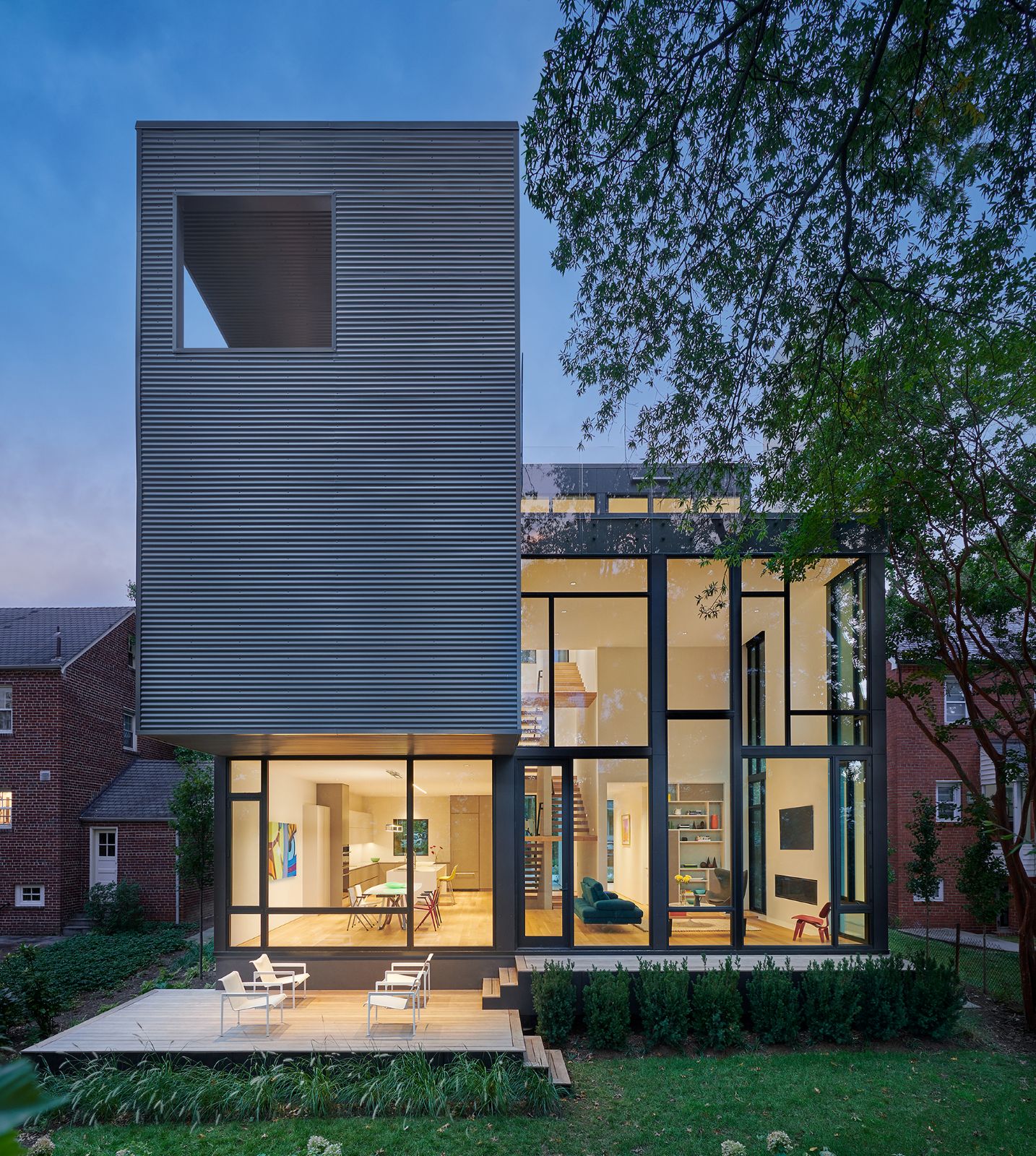
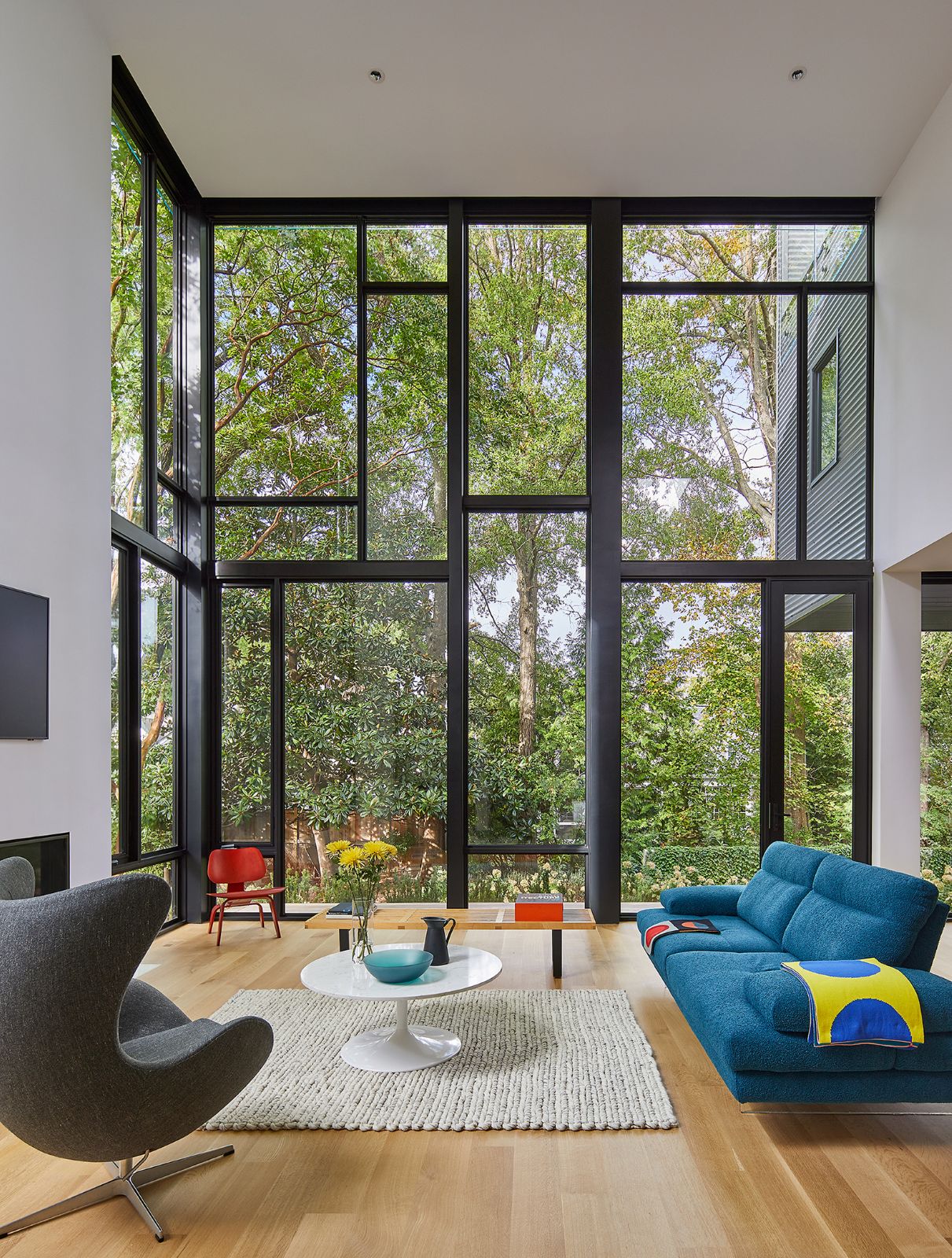
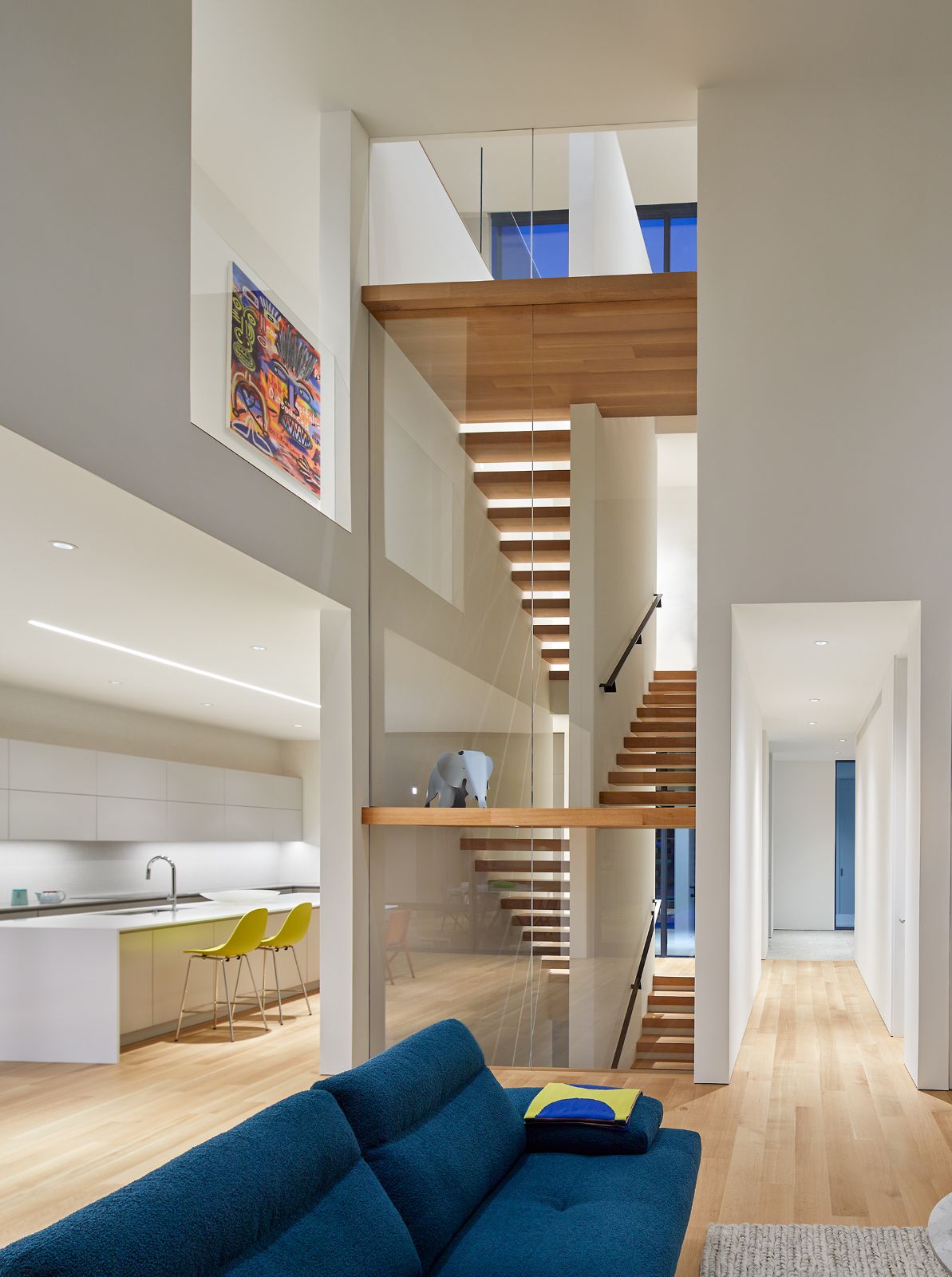
An open floor and spaces with high ceilings replace the cramped dark rooms that comprised the old house. The house is organized around a double-height glass enclosed living space. This is placed to optimize southern and western light infiltration while maximizing views toward the “greenbelt” that visually separates the adjacent lots. A centrally located staircase provides a dynamic circulation element, allowing views through the spaces and towards the rear garden. A generous, partially covered rooftop deck provides additional outdoor living spaces and directs views toward the “greenbelt” and allées of adjacent rear gardens.
While the new house is intended to be respectful of the existing context, it is divergent from the neighborhood precedent, employing the most recent technologies, building science, and construction methodology. This project looks to the future and is not a replica of the oversized, poorly detailed colonial houses, that many developers in the neighborhood seem to embrace.
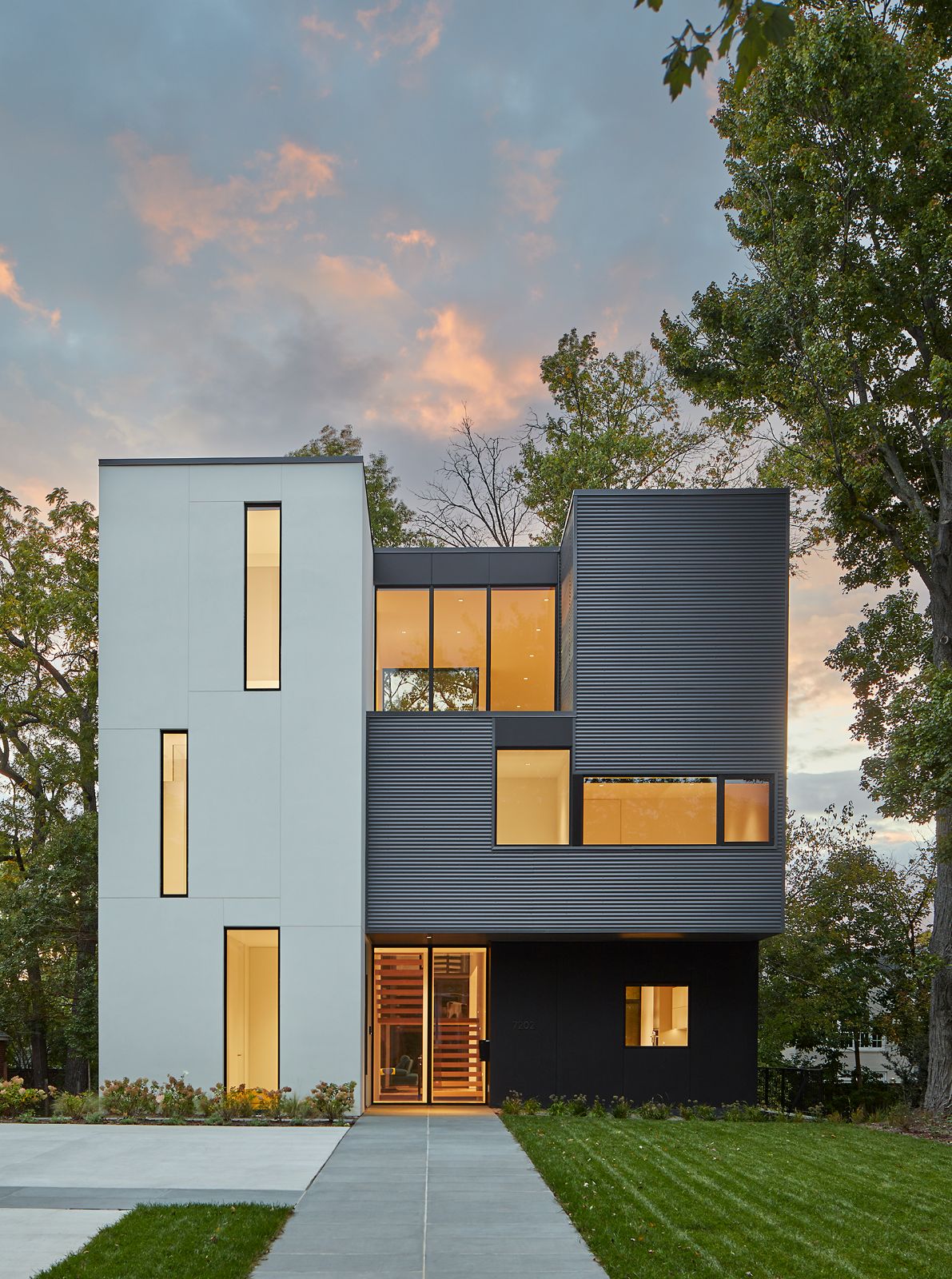
The primary spaces engage the private, rear garden while secondary and service spaces address the street. Simple, pure forms respond to program and zoning envelope requirements. Planes at varying depths, clad in differing materials are intended to reduce the perceived scale and animate the composition as seen from the front yard.
This project has an efficient floor plan with no underutilized or wasted spaces. Rooms with small footprints typically have high ceiling and an abundance of glass. Quality of space replaces quantity of space, resulting in less material consumption and reducing overall construction costs. This house is not a large house relative to houses in the area. The smaller footprint will result in lower costs to heat, cool and maintain the house. Stormwater is diverted to rain gardens and drywells, and ample green space is maintained. All water runoff is managed on site.
Operable windows and large sliding doors allow for fresh air and natural ventilation, reducing the usage of the high efficiency HVAC system. Floor-to-ceiling windows provide an abundance of daylight. Closed-cell spray foam insulation is optimal. Energy efficient appliances and LED light fixtures were used to keep electrical costs and usage to a minimum. Rainscreen systems comprise the building envelope, extending the life of the exterior materials.