



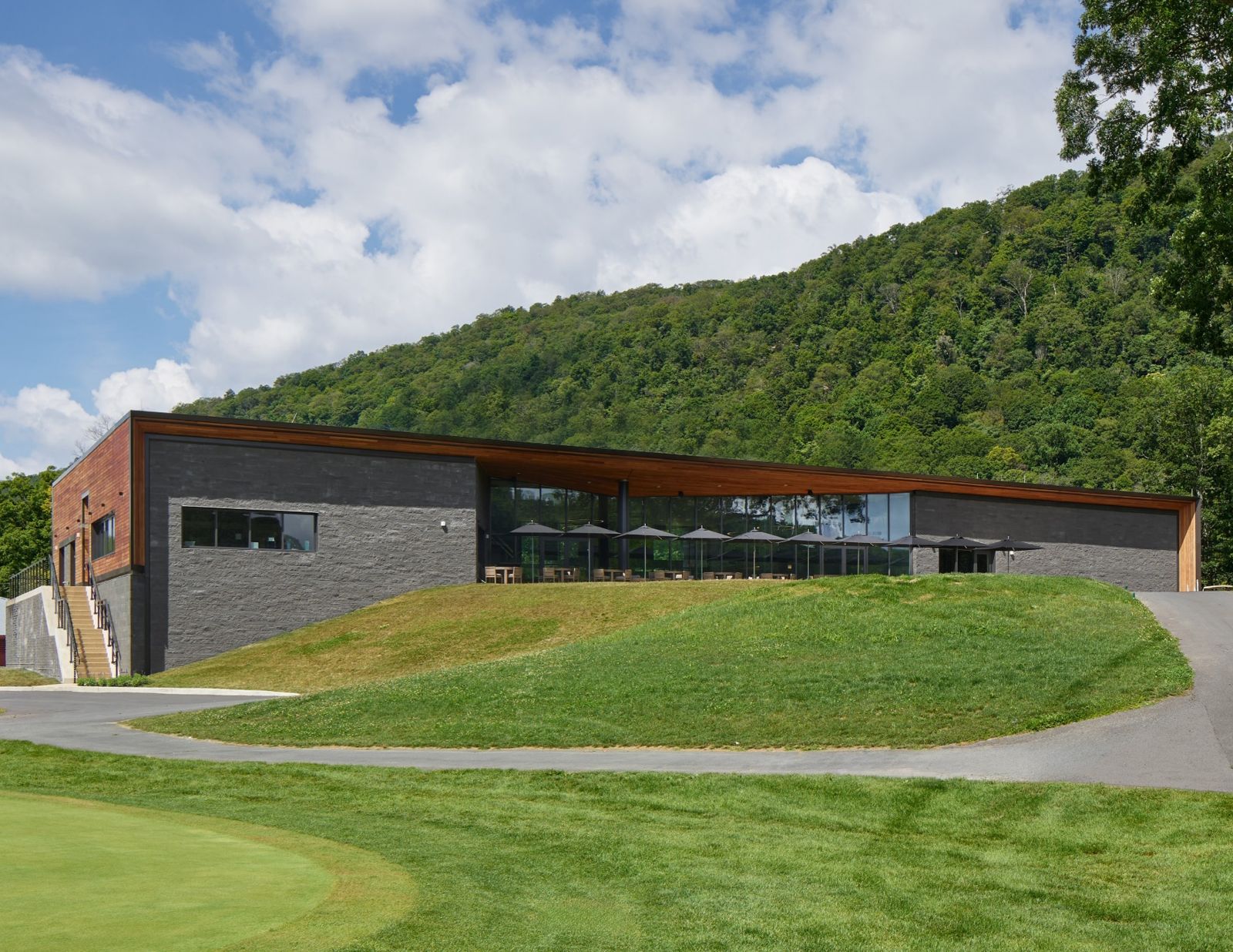
Photo Credit © Barry Halkin
2026 Winner

Award of Merit
Jacobs / Ewing Cole Joint Venture
Visit Jacobs / Ewing Cole Joint Venture Website
Design Team:
Stephen Wakeman | Grace Gan | Yousef Nawas | Gary Calligaro | John Capelli
Client:
US Army Garrison at West Point
General Contractor:
ICCI
Project Description
Since its opening in 1948, the West Point Golf Course has challenged and inspired golfers with its narrow fairways, dramatic elevation changes, and sweeping views of the Hudson Highlands. Designed by the renowned Robert Trent Jones Sr., the course was conceived as both a strategic test of skill and a celebration of the rugged beauty of the Hudson River Valley. Jones’ design philosophy—working with the land rather than imposing upon it—remains a defining characteristic of the course and a guiding influence for its next chapter.
For more than half a century, the original 6,050-square-foot clubhouse served as the social and operational heart of the course. Constructed in 1960, it supported generations of Cadets, military personnel, and community golfers before its demolition in 2016. In the years that followed, the U.S. Military Academy’s Division I golf team operated out of a nearby ski chalet, a temporary solution that lacked the functionality, presence, and sense of place expected of a collegiate athletic program and a historic course of this stature.
Recognizing the need for a modern, multi-functional facility, the U.S. Army Corps of Engineers (USACE), in partnership with the U.S. Military Academy (USMA), initiated a design effort to create a new clubhouse that would serve as a year-round destination for events, training, and tournament play. During early design charrettes, USMA golf coach Chad Bagley emphasized the importance of spectator engagement—particularly the ability for guests to view the final holes in real time. This priority became a central driver of the design vision, shaping both the building’s siting and its architectural expression.
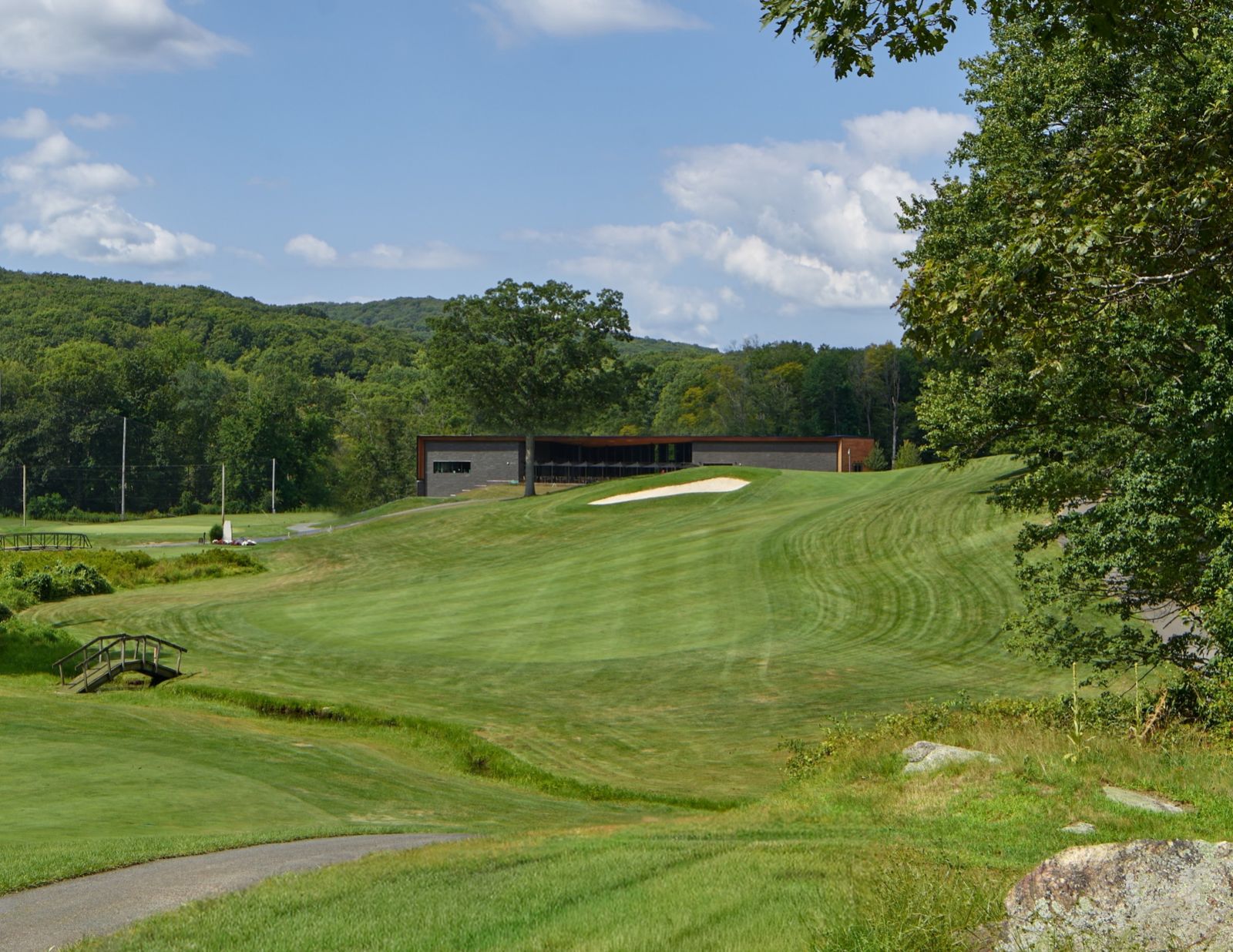
The design team engaged in extensive site investigations, programming sessions, and collaborative workshops with USACE, USMA, and key stakeholders. Four initial concepts were developed, each exploring different ways to integrate the clubhouse into the landscape while enhancing the golfer and spectator experience. A hybrid scheme ultimately emerged, defined by curvilinear walls, a trapezoidal main gathering space, and a strong visual connection to the 17th tee box and the granite ridges beyond. As the project evolved, the design was refined to meet budgetary constraints while preserving its sculptural form and its deep relationship to the land.
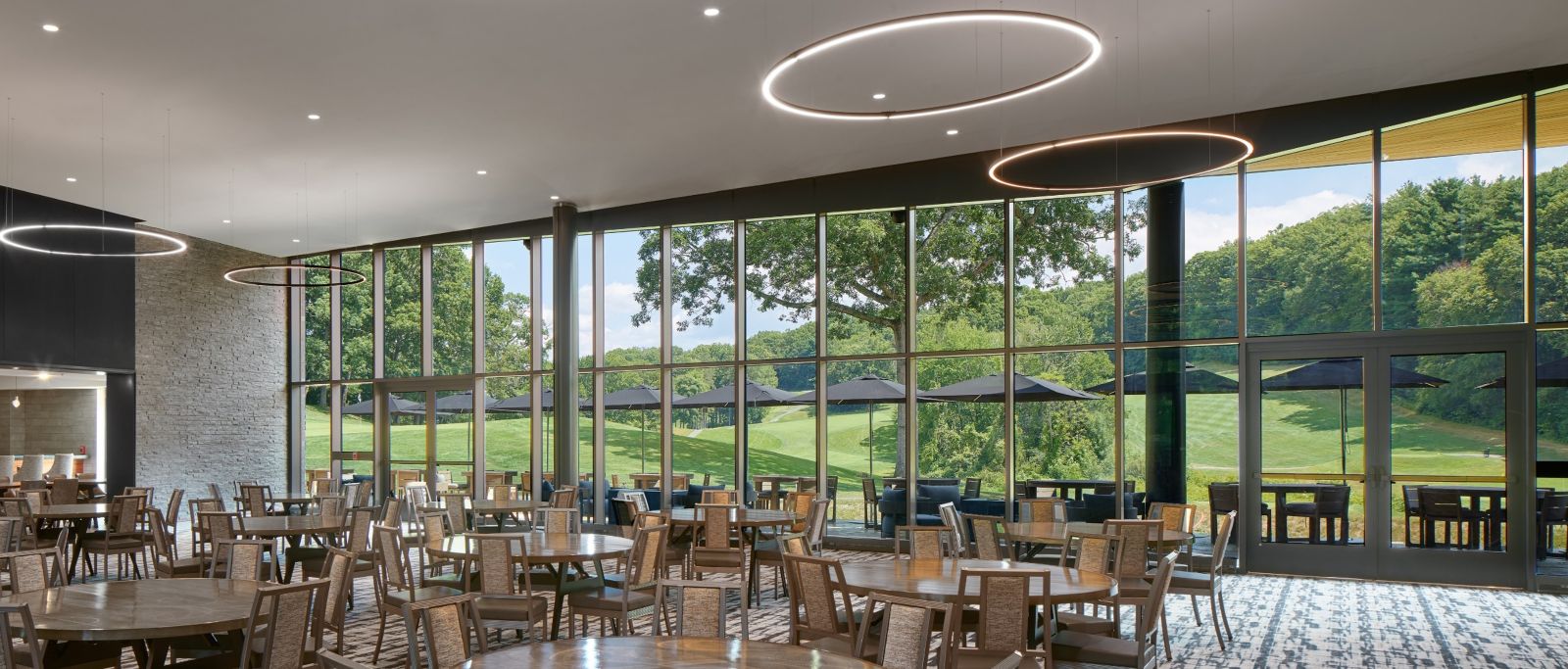
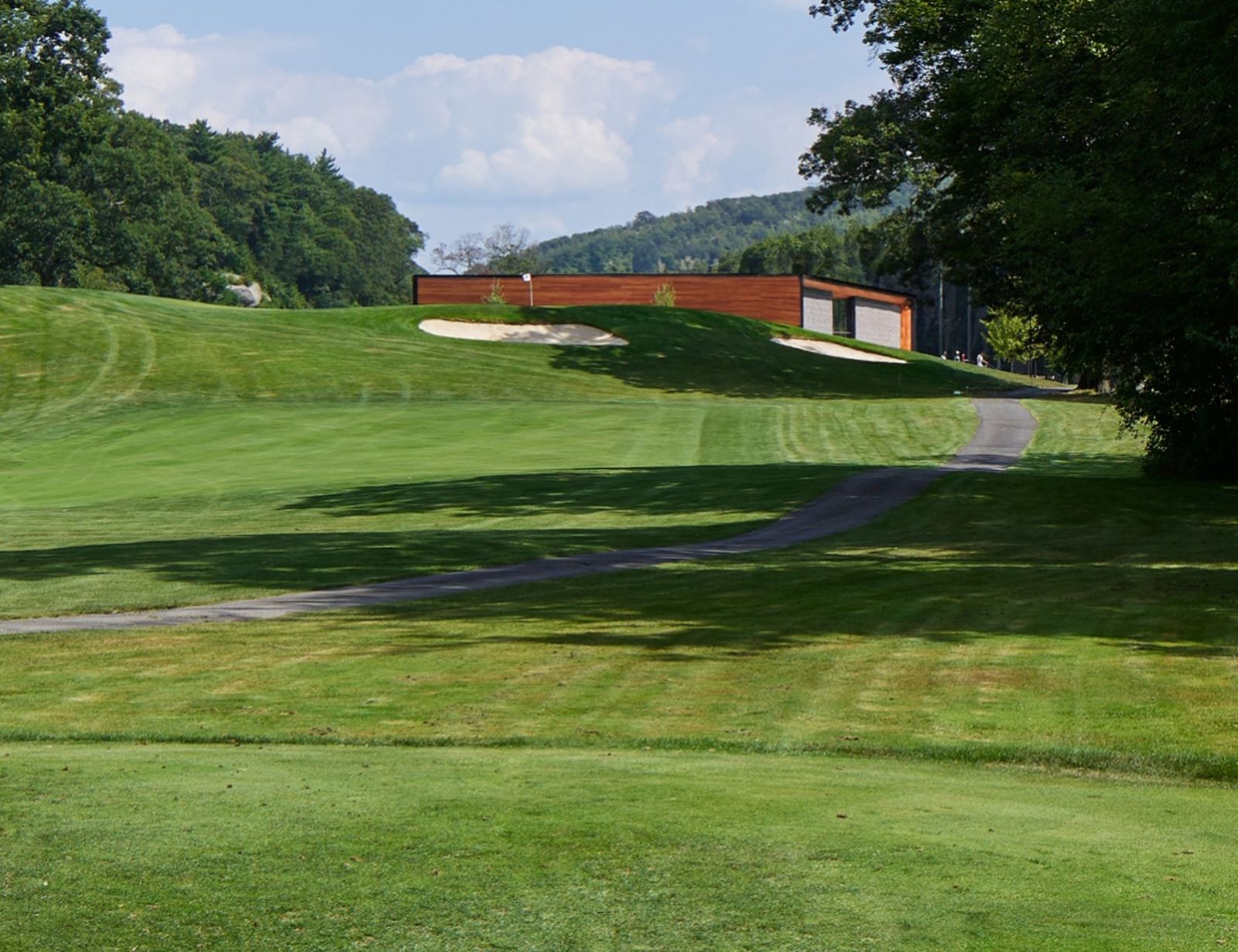
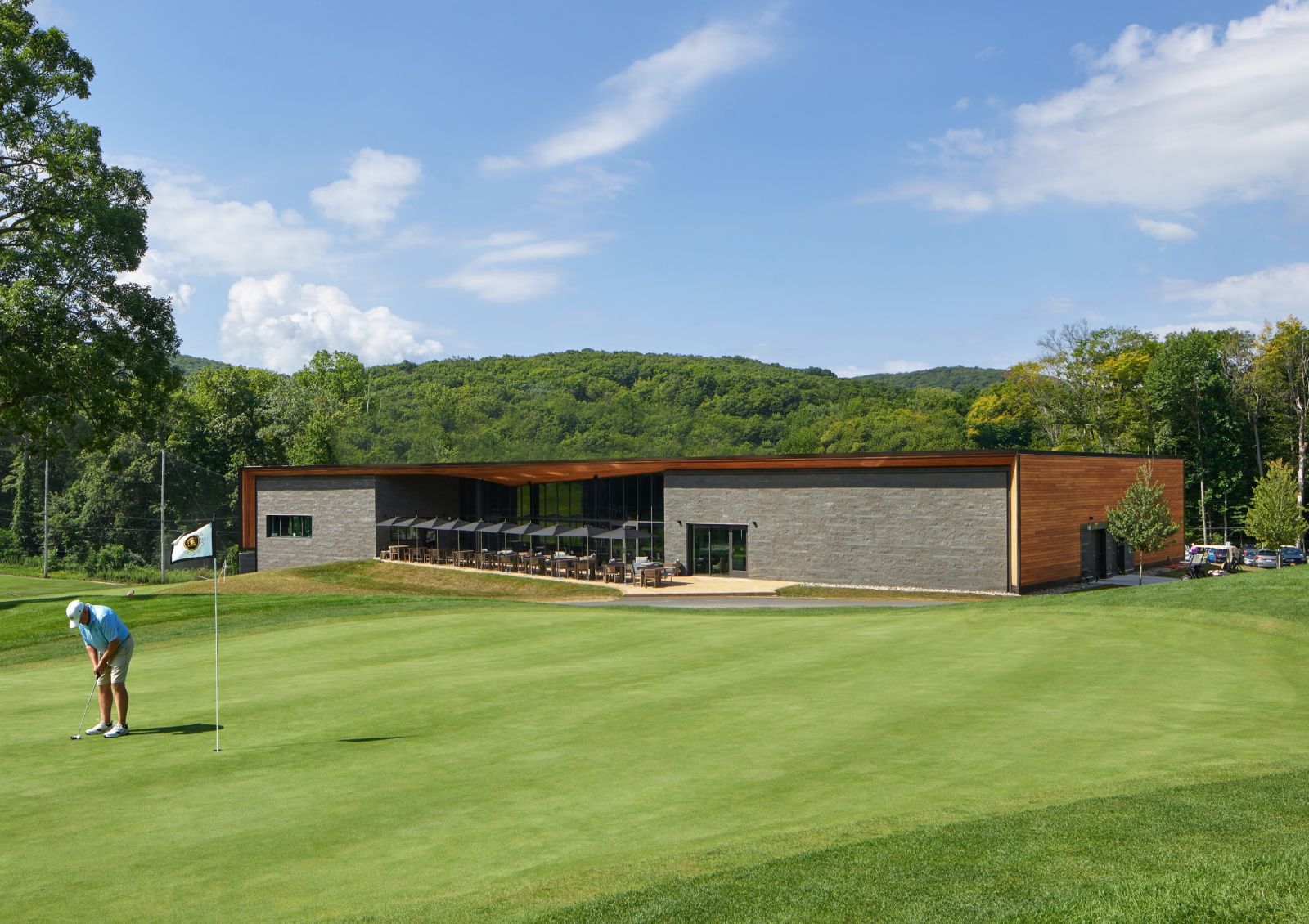
The resulting vision for the new West Point Golf Clubhouse is rooted in three core principles: honoring the dramatic Hudson Highlands landscape, offering a contemporary counterpoint to the iconic Gothic architecture of the USMA campus, and elevating the experience of both golfers and spectators. The clubhouse is conceived as an extension of the terrain—an elegant, low-lying structure that appears to emerge from the granite outcrops and rolling hills that define the site. Its material palette of stone, wood, and glass reinforces this connection, while expansive openings frame views of the 17th and 18th holes, transforming the building into a front-row seat for tournament play.
More than a replacement facility, the new clubhouse is envisioned as a gathering place that reflects the heritage, discipline, and excellence of West Point. It is designed to serve Cadets, alumni, military families, and visitors for decades to come—an enduring addition to the storied landscape of the United States Military Academy.