



Photo Credit © Judy Davis
2026 Winner

Award of Excellence
SmithGroup
Visit SmithGroup Website
Design Team:
David Johnson, AIA, LEED, Principal |
Lori Cappuccio, AIA, LEED, Vice President, Higher Education Studio Leader |
Kevin Johnson, AIA, LEED AP BD+C, Vice President |
Sven Shockey, FAIA, LEED BD+C, Vice President, Design Director |
Patty Boyle, AIA, LEED AP, Vice President, Corporate Director of Architecture |
Lori Singleton, ASLA, Vice President |
Dennis Daisey, AIA, Senior Principal |
Jamison Caldwell, PE, LEED AP, Senior Principal |
Patricia Halaby, AIA, LEED AP, Senior Principal |
Ben Grobe, AIA, LEED, Senior Principal |
Peter He, LEED AP BD+C, Principal |
Dongyeop Lee, AIA, LEED, Associate
Client:
Virginia Tech
General Contractor:
Whiting-Turner Contracting Company
Additional Consultants:
Structural Engineering: A&F Engineers | Associate Interior Designer: FORM Architects | Associate Landscape Architect: CORE Studio Design | Civil Engineering: Sorba Engineering | Lighting Design: CM Kling and Associates | Graphics & Signage: Patricia Hord Graphik Design | Audiovisual/IT/Security Engineering: Brightree Studios | Acoustic Engineering: Polysonics | Facade Maintenance Design: LJB, Inc. | Parking Planning: Rich and Associates | Cost Consulting: Forella Group
Project Description
A Blueprint for Academic Buildings
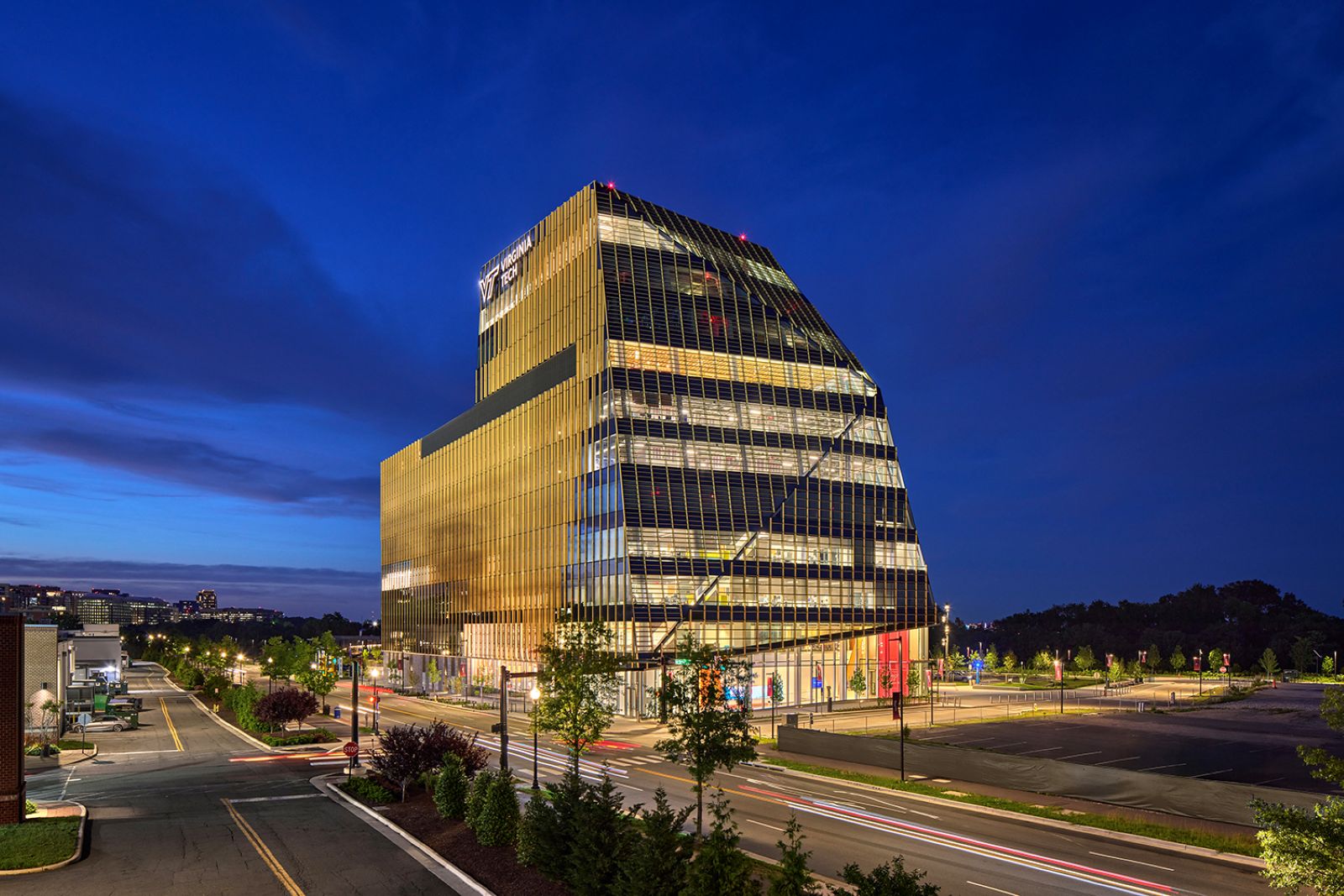
Virginia Tech’s Academic Building One sets a new standard for education and innovation. The landmark building in Alexandria, VA, anchors the Institute for Advanced Computing and builds on the State of Virginia’s $1.1 billion Tech Talent Investment Program; the same initiative that drew Amazon’s HQ2 to the region and continues to drive innovation across the state.
A Strategic Hub in the Capital Region
Capitalizing on its Washington, DC metro area location, the project expands Virginia Tech’s presence beyond its Blacksburg campus creating the most diverse tech graduate program in the United States, hosting approximately 750 master’s and 200 doctoral students in computer science and computer engineering. At its core, Academic Building One fosters collaboration between students, faculty, and industry in a dynamic, innovative-driven environment. More than a building, it’s a model of design excellence and a catalyst for the region’s tech ecosystem.
Computational Design
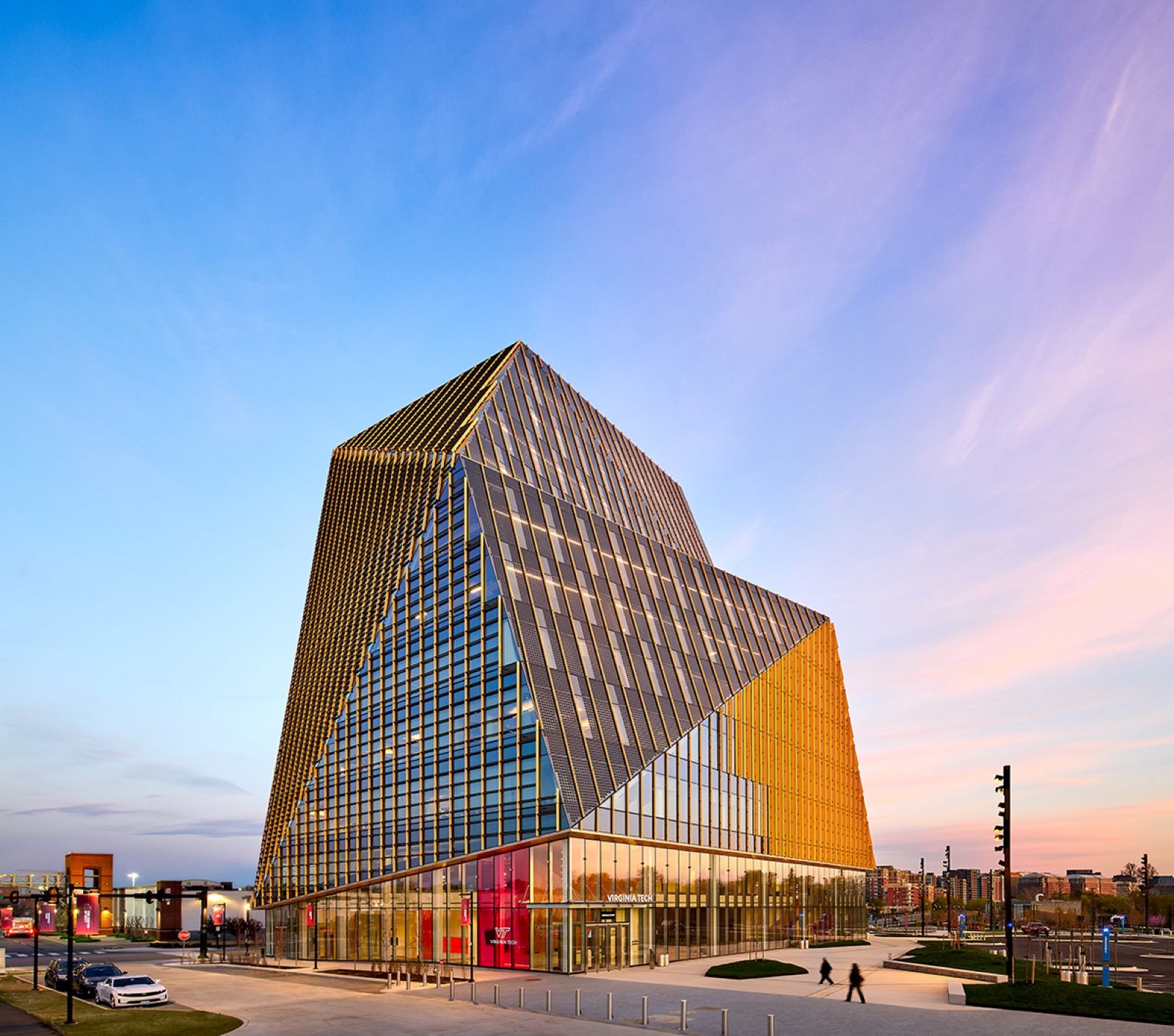
The design team employed advanced computational design techniques to explore more than 1,400 different massing options. The outcome is a high-performance, faceted structure optimized for energy efficiency, zoning, and occupant comfort, achievements made possible only through this computational technology. Custom digital tools informed the selection of the façade system, ensuring a design that is efficient and site-specific.
Sustainability at Scale
The LEED Platinum-pending project was a catalyst for the development of the City of Alexandria’s sustainability plan for the North Potomac Yard Area and includes many of the options identified in the comprehensive plan that will set the precedent for future building development.
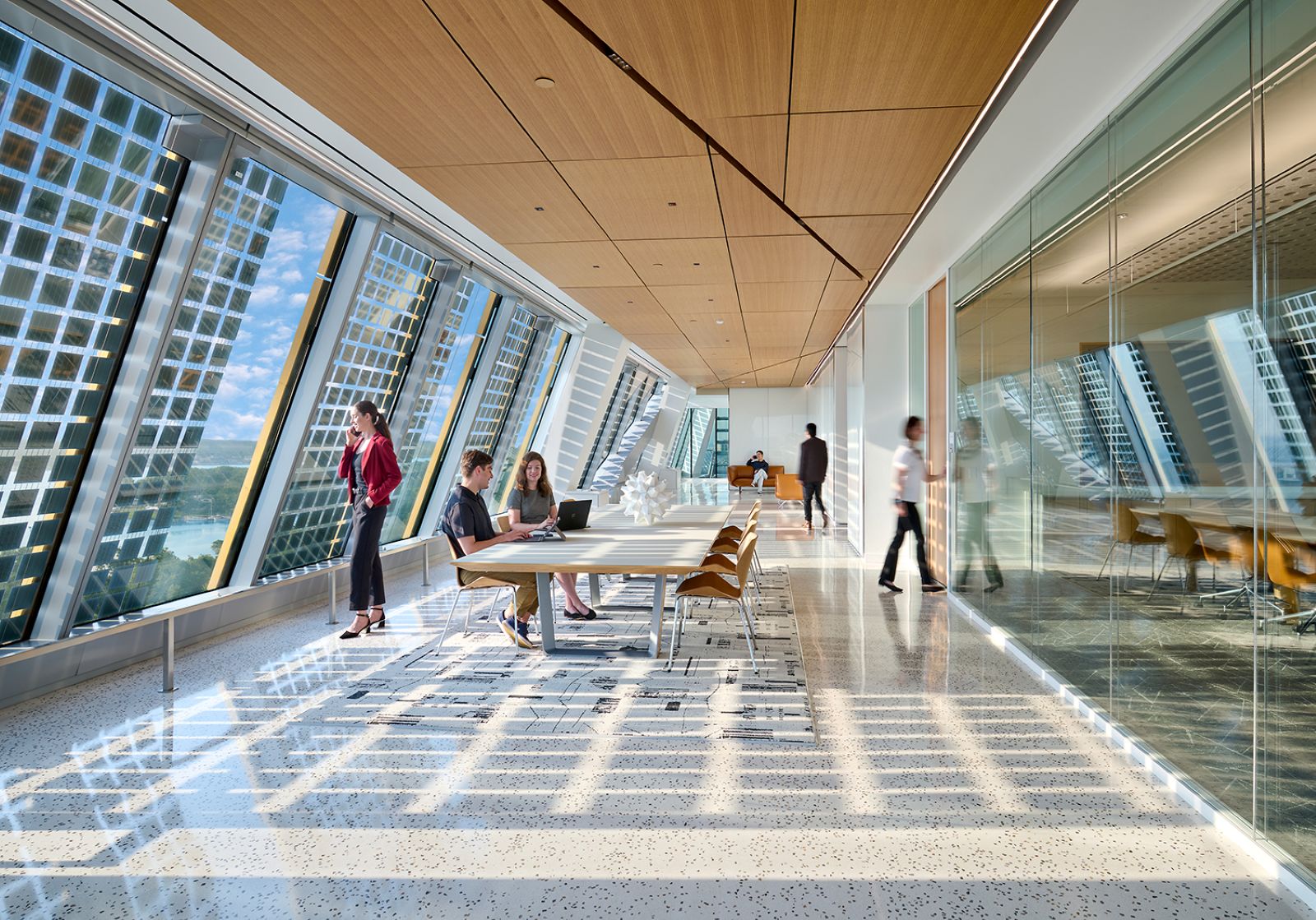
The façade employs heliomorphic design principles, meaning the building’s massing is aligned with the sun’s path. The project is one of the first in the U.S. to use building-integrated photovoltaic (BIPV) panels, where PV is embedded in the outer layer of insulated glass. PV fins on the south façade and rooftop PV trellis combine to generate clean energy. Terra cotta fins on the east and west façades provide passive shading, mitigating solar heat gain and glare, an important consideration given the building’s proximity to Washington Reagan National Airport to the north.
Fully electrified, the building uses modular heat pumps and is prepped for a future wastewater energy exchange system. A 50,000-gallon cistern offsets flushing water needs. Sustainable materials like CarbonCure concrete reduce embodied carbon by 12%.
Human-Centered, Inclusive Design
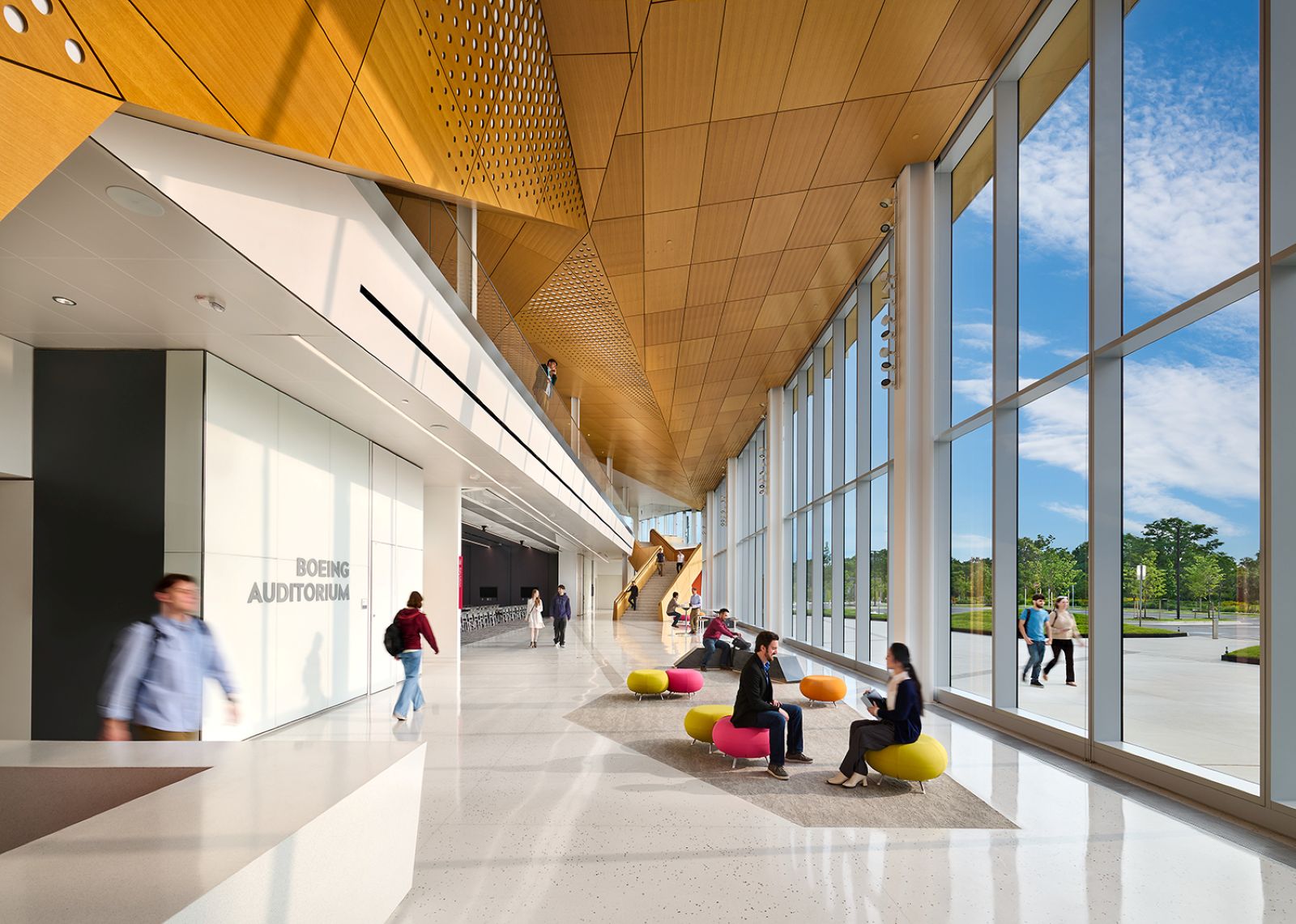
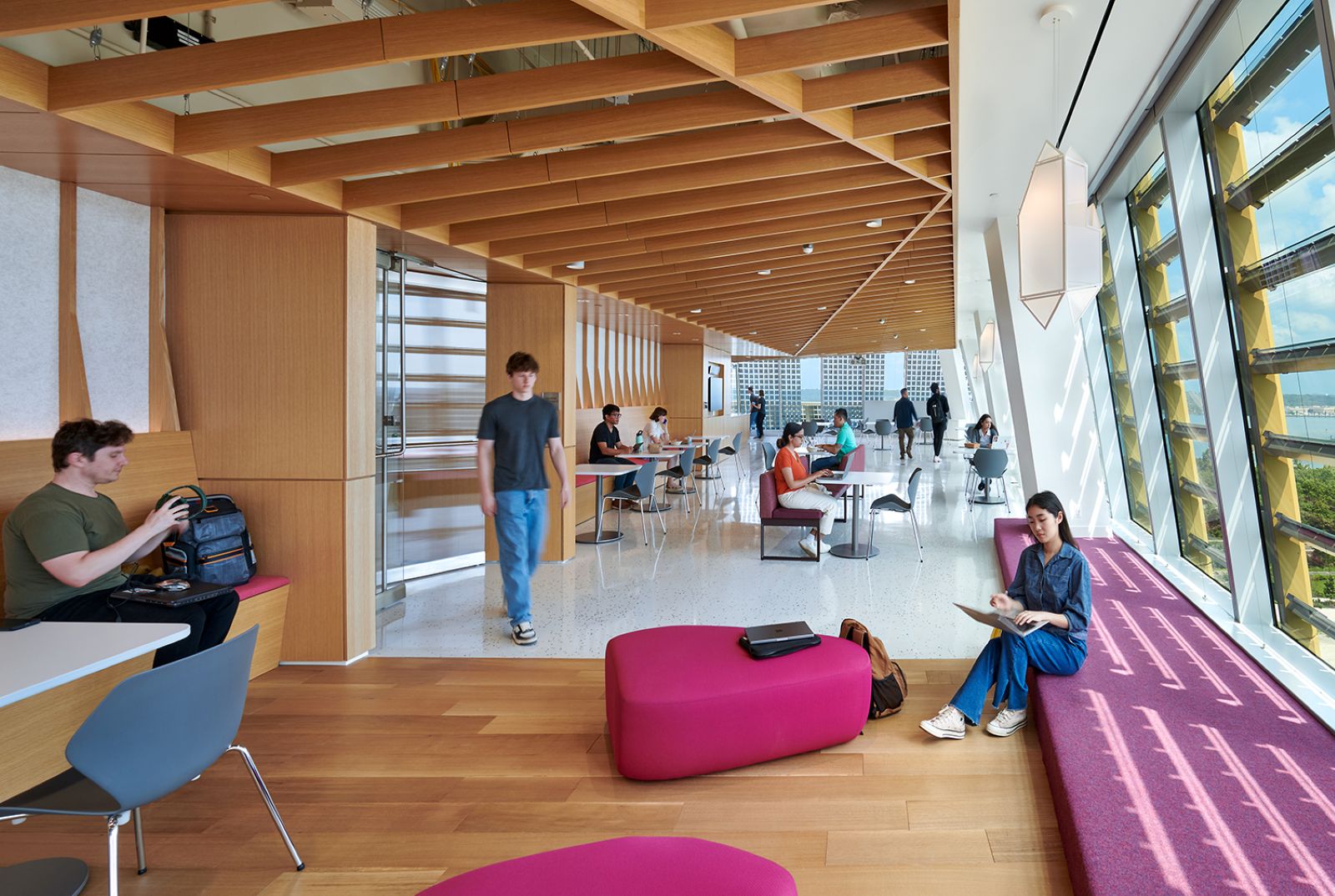
The interiors employ neurodiversity and biophilic features such as wellness stations, interior walking routes and stairwell graphics to encourage movement. Exterior glazing creates a dappled sunlight effect, while PV-integrated glass preserves visibility and casts dynamic patterns that enrich the interior experience. Together, natural light, PV glass, and nature-inspired finishes cultivate a calming, connected environment.
Conclusion
Academic Building One is more than just a structure, it is a forward-looking model for the future of academic design. Through the seamless integration of technology, sustainability and human-centered spaces, Virginia Tech and SmithGroup demonstrate how architectural design can transcend traditional boundaries to influence not only a single campus but the evolution of an entire industry and region.