



Image Credit © HDR
2026 Winner

Jurors' Citation for Responsible Design
HDR
Visit HDR Website
Design Team:
Warren Hendrickson |
Gabriela Kleiman |
Tyler Dye |
Morten Thomsen |
Hua Yang |
Tom Guarino |
Ida Wrocklage |
Parham Pazouki |
Jen Cross |
Gonzalo Koosau |
Wendy Reyes |
Andrew Van Ness |
Lauren Murphy |
Paul Daniel |
Brian Duhaeck |
Raymond Gao |
Jean Hansen
Client:
United State Department of Agriculture
Additional Consultants:
Agricultural Engineering: Curry-Wille & Associates |
Civil Engineering, Manure Management: Maurer-Stutz Inc.
Project Description
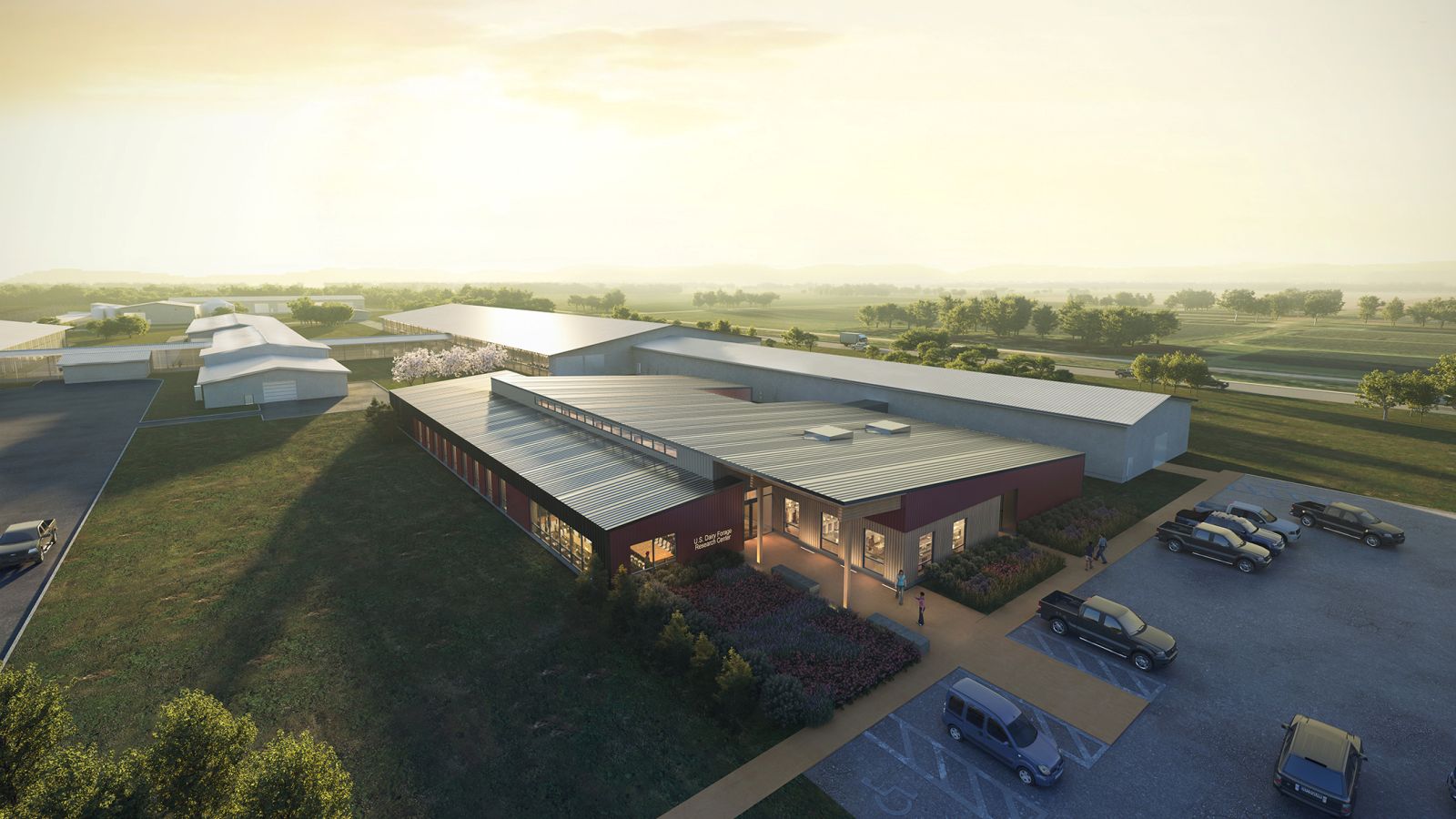
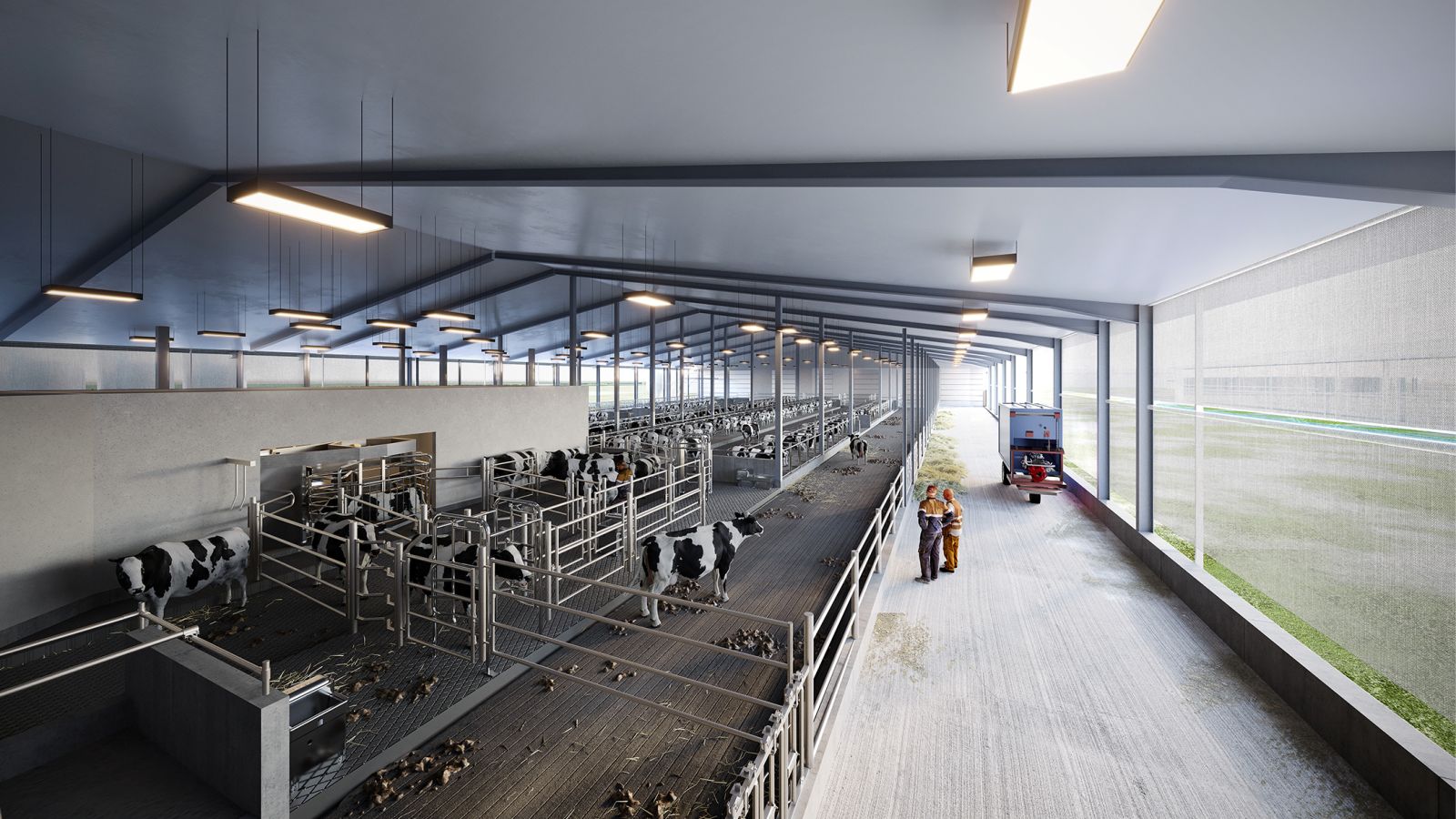
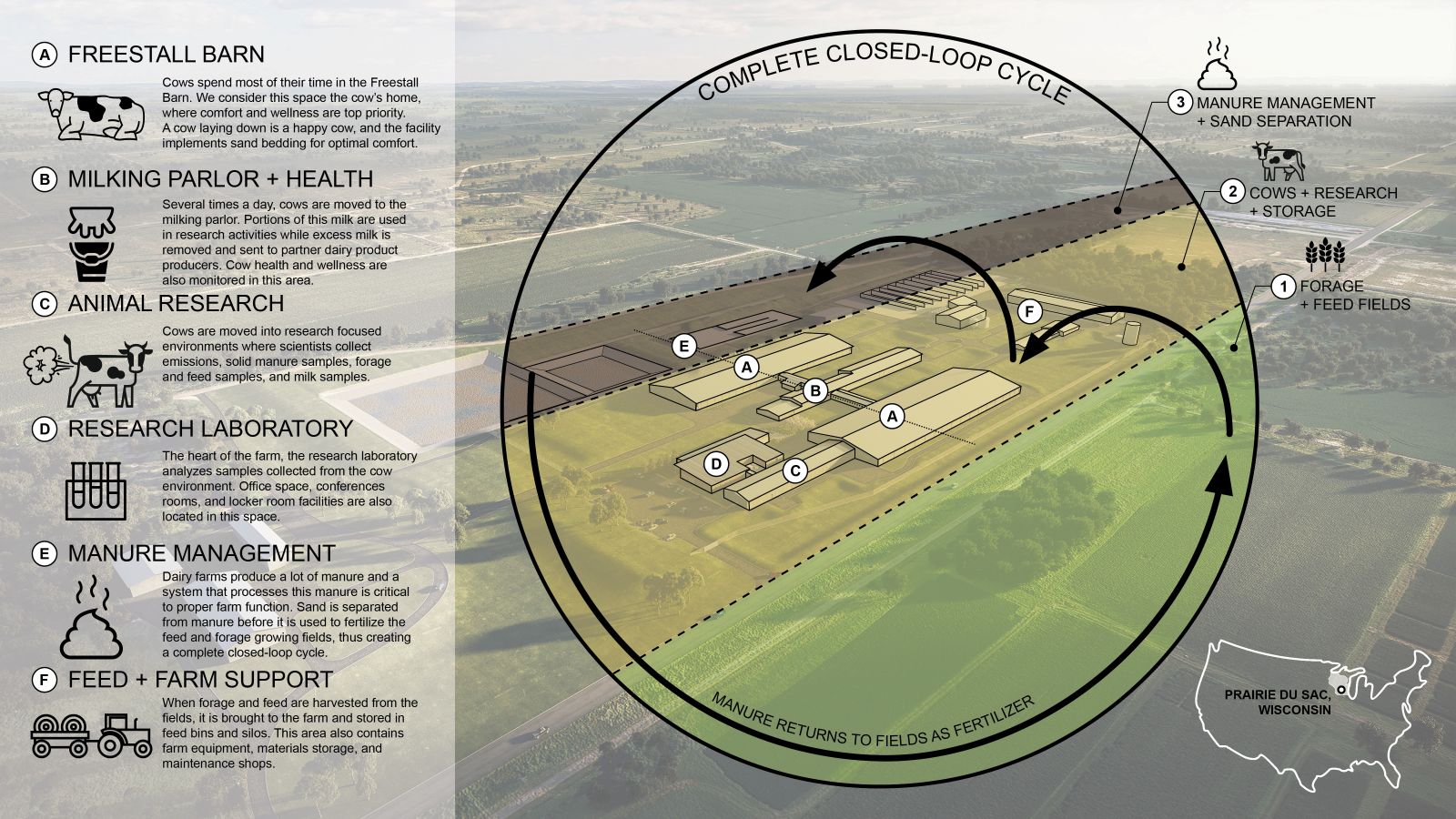
When you lace up your boots and step onto a farm, you don’t expect to find a world-class high-performance laboratory facility. The USDA’s new Dairy Forage Research Center bridges the gap between a high-performance laboratory environment and a building that blends seamlessly into a landscape typically characterized by well-loved, utilitarian structures. Built to support the USDA’s mission of promoting agricultural production to better nourish Americans and help feed people worldwide, the farm campus blends facilities built to serve humans and cows alike. Twenty-five individual structures and storage facilities totaling 254,840 gross square feet make up the entire farm complex complete with supporting infrastructure, maintenance facilities, and manure management systems. Designed as a complete closed-loop ecosystem, the farm and its research components work in harmony to benefit human occupants, cows, and the greater environment. Specialized mixtures of forage are grown onsite and fed to the cows. The cows then do what they do best, producing milk, manure, and methane. These byproducts are collected and studied, providing critical insight into the next generation of diary forage sources. To complete the loop, excess milk is sent to local dairy product producers while manure is collected and returned to the growing fields to fertilize the next crop of forage.
At the center of the farm lies the laboratory, office, and administration building. At 26,000 square feet, this hub is the primary facility built specifically for humans rather than cows and acts as the center of farming operations and research. The building massing references a typical gabled barn but reinterprets these geometries to better suit the high-performance laboratory environment. The building utilizes various vertical metal panel patterns and rhythms evoking the endless texture often found on a farm.
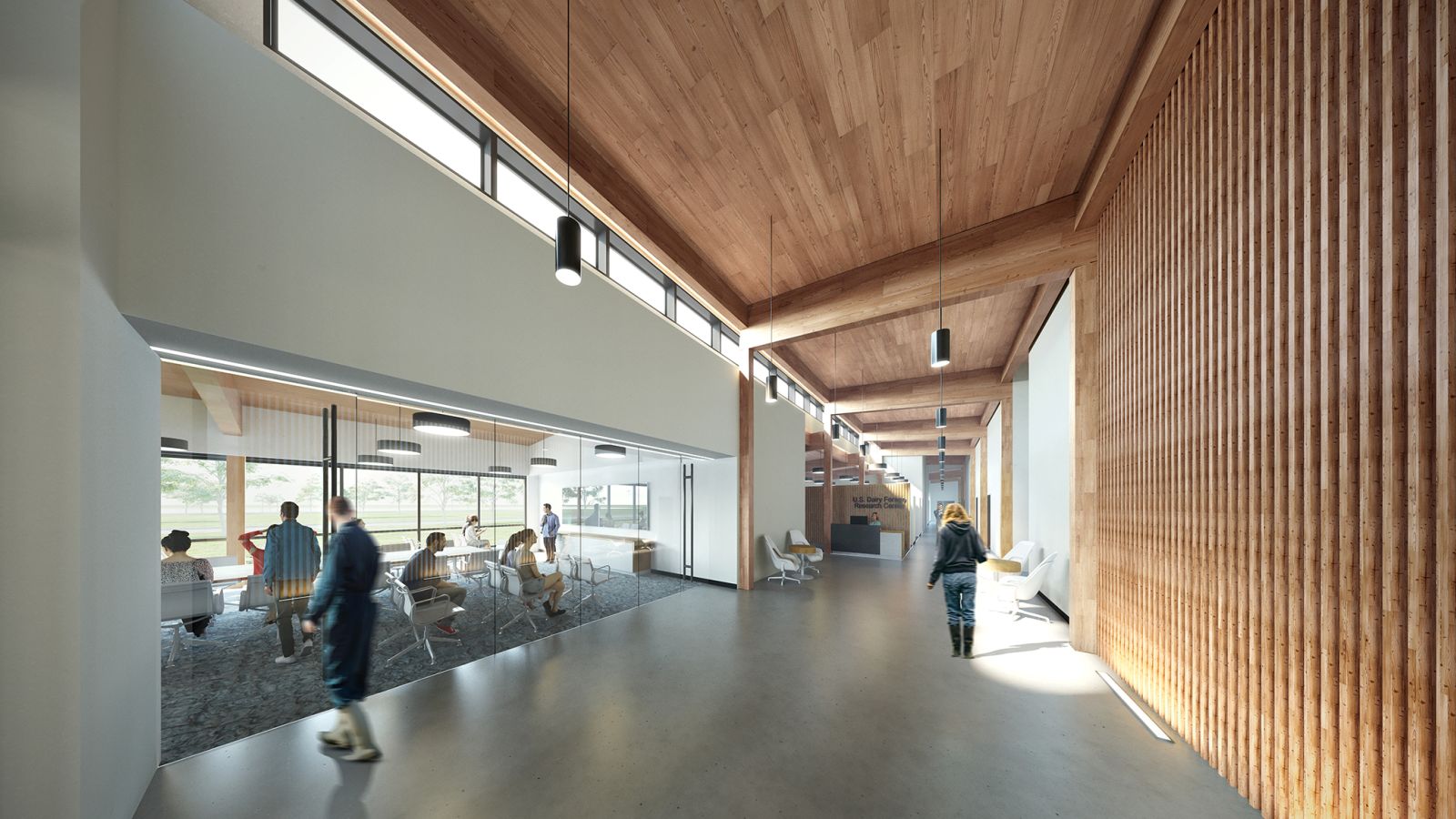
Containing a mixture of program that supports farming operations and research, the facility houses laboratories, support spaces, offices, break rooms, locker rooms, and mechanical equipment. Public engagement and education of tour groups is also a primary goal of the farm, making the large conference room and lobby space key elements to welcoming large groups of people. Balancing a need for flexible work environments, the facility provides closed offices, open workstations, and collaborative teaming areas to give staff agency over their workspace.
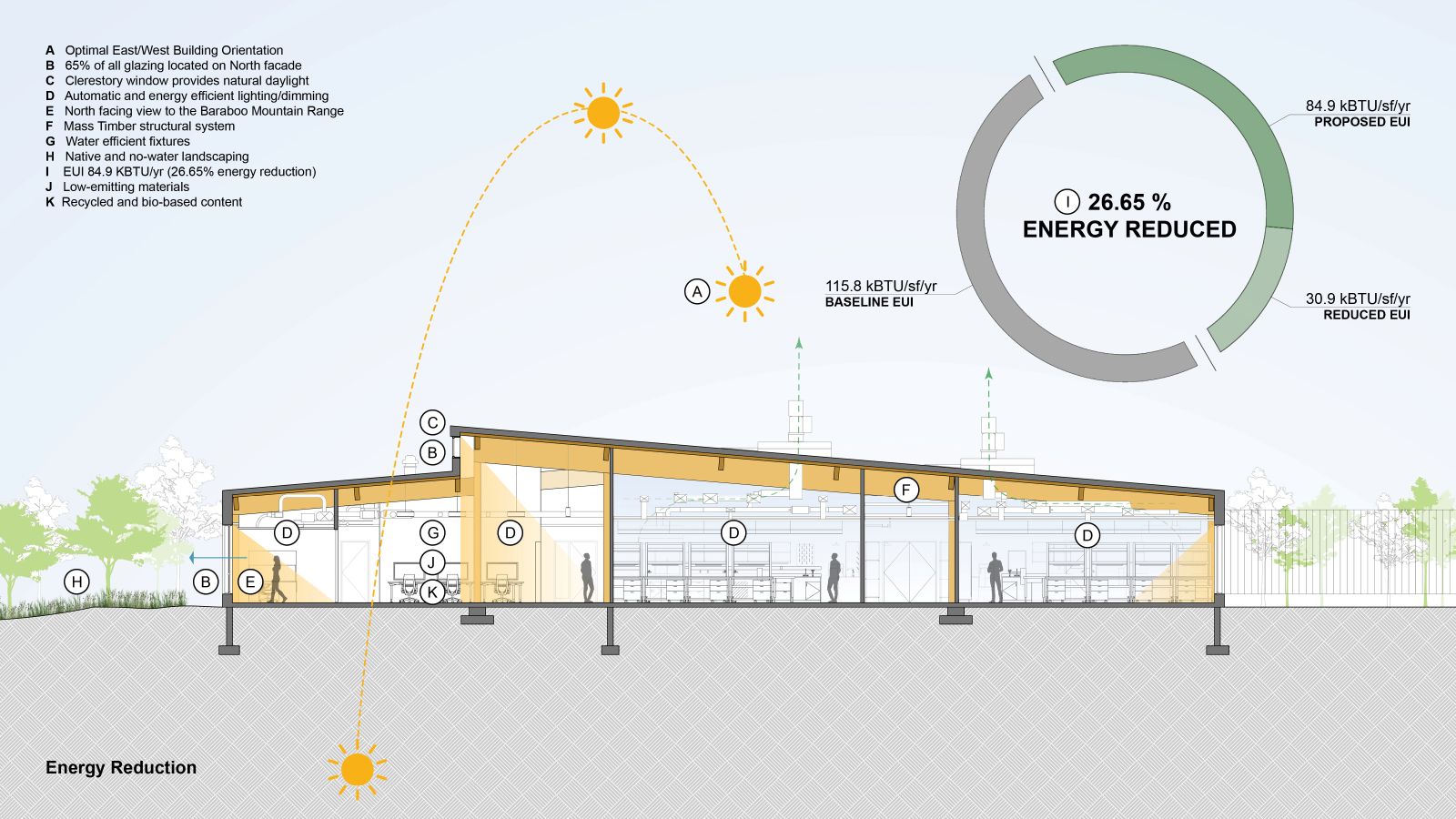
A primary element of the USDA’s mission focuses on the sustainability of food sources. This focus supported the incorporation of sustainable design strategies like optimal building orientation, views to nature, natural light, and efficient building systems. In addition to improving the well-being of building occupants, these strategies combine to create a holistic sustainability approach that reduces energy consumption by 26.78%. Design for resources was also a priority for the facility, needing to provide the USDA with a durable facility that also reduces embodied carbon. The project utilizes a timber structural system that brings warmth to the facility located in frigid northern Wisconsin. This timber, along with low-carbon steel metal panels reduce the building’s embodied carbon by 26% and delivers a resilient building that will withstand the abuse of farming activities for decades to come.