


Photo Credit ©️ Seamus Payne
2026 Winner

Jurors' Citation for Responsible Design
HCM
Visit HCM Website
Design Team:
Joe Schneider, Managing Principal |
Frank André, Design Principal |
Joe O'Toole, Senior Associate |
Alana Thurmond, Designer |
Greg Packham, Senior Associate |
Jack Rutka, Associate
Client:
Gables Residential and Edens
General Contractor:
John Moriarty & Associates
Additional Consultants:
Civil Engineer: Bohler DC |
Landscape Architect: Mahan Rykiel & Matt Renauld |
Interior Designer: Edit Lab |
Structural Engineer: Ellinwood + Machado |
Mechanical and Plumbing Engineer: Engineering Design Group |
Electrical Engineer: Power Design
Project Description
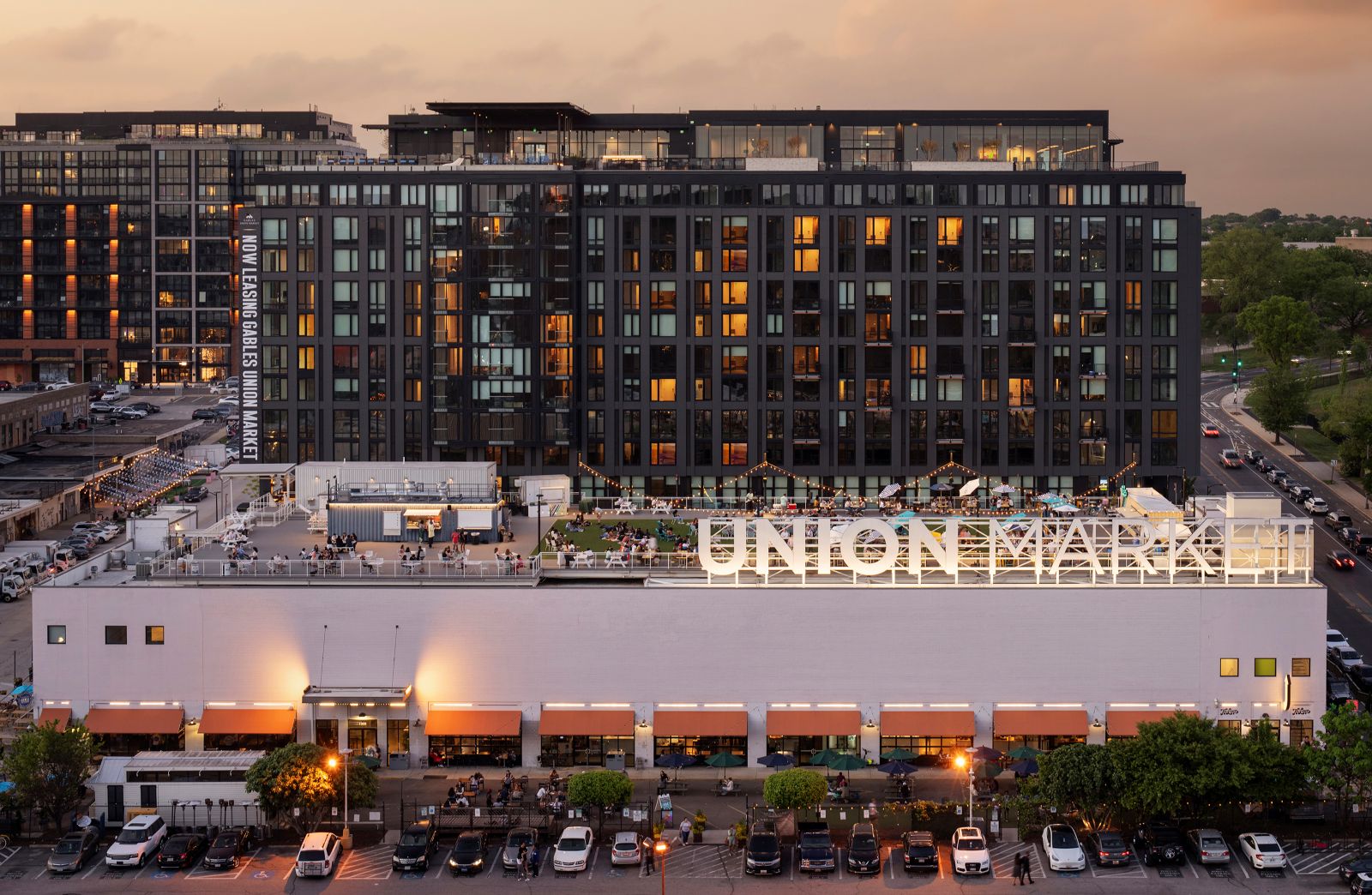
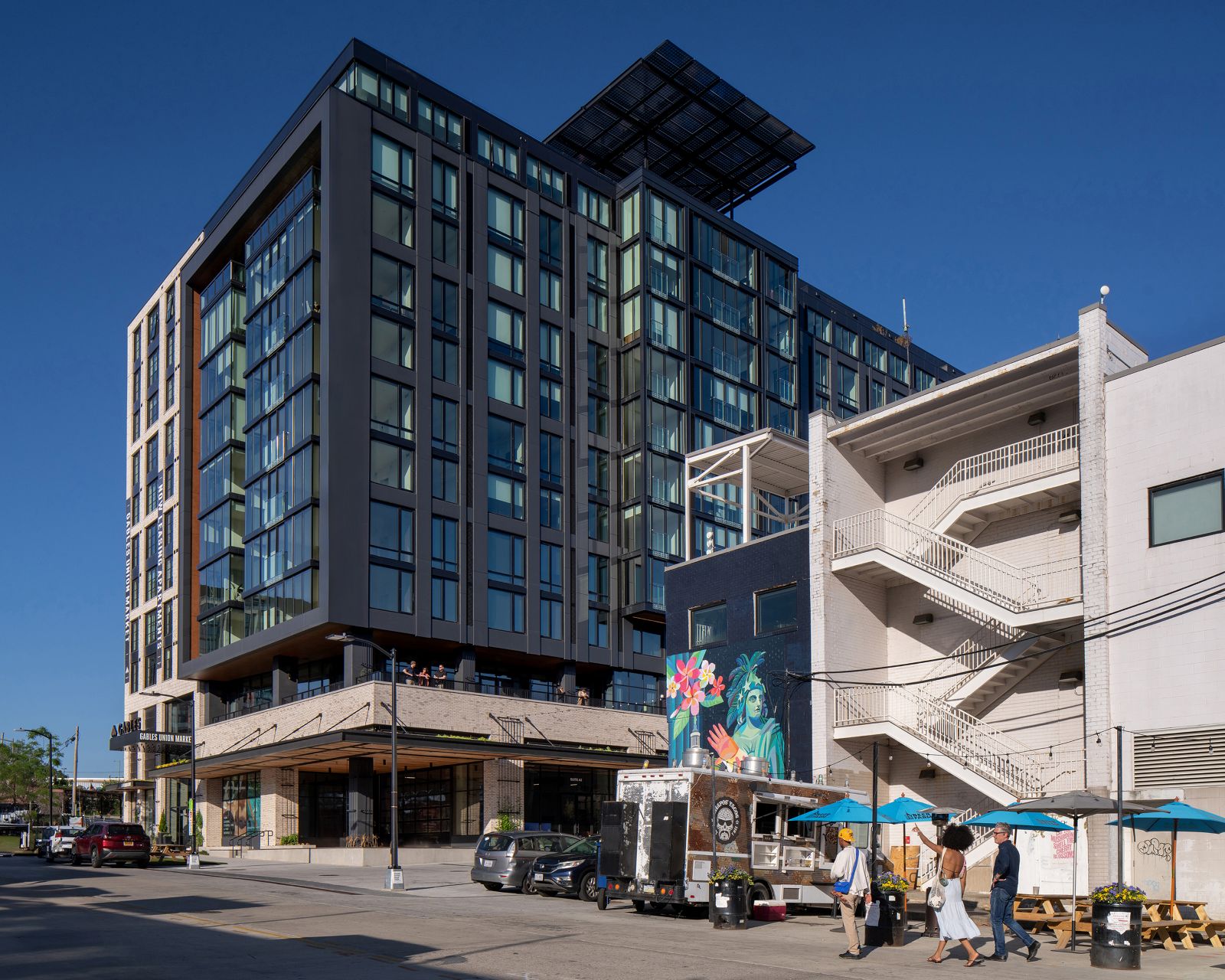
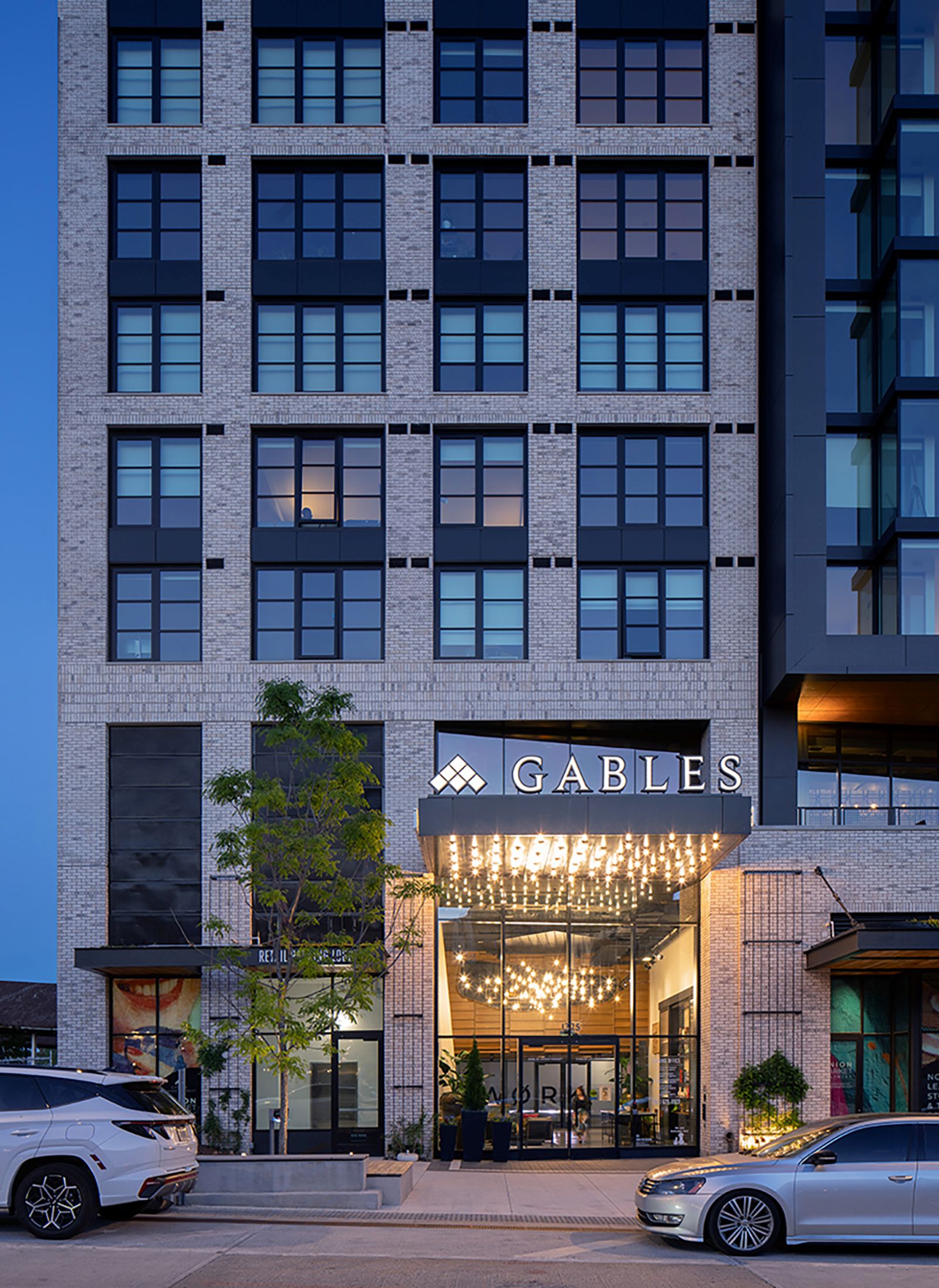
Union Market Residential is a mixed-use infill development in Washington, D.C.’s Union Market district that transforms a former mercantile warehouse site into a high-performance, community-centered urban environment. Guided by the AIA Framework for Design Excellence, the project integrates sustainability, equity, and resilience into a cohesive architectural concept that prioritizes both environmental performance and social connectivity.
From the outset, the design approach embeds sustainability as a generative force rather than an additive feature. Building massing and orientation maximize daylight access and passive heating while maintaining a vertically efficient form that frees the ground plane for public engagement. Street-level retail and flexible maker spaces foster economic opportunity and cultural vitality, reinforcing the project’s role as an extension of the neighborhood’s evolving identity. Engagement with local stakeholders informed key programmatic and spatial decisions, including the incorporation of deaf space design principles to support accessibility and inclusion for the nearby Gallaudet University community.
The project reclaims a previously impervious brownfield site by introducing a layered ecological strategy that achieves 34% vegetated coverage through green roofs and elevated landscapes. Native and climate-appropriate plantings enhance biodiversity, mitigate urban heat island effect, and improve stormwater quality despite constraints on ground-level planting. Water management systems are fully integrated into the architectural and landscape design, capturing and filtering stormwater while transforming infrastructure into an educational feature through a visible stormwater tank.
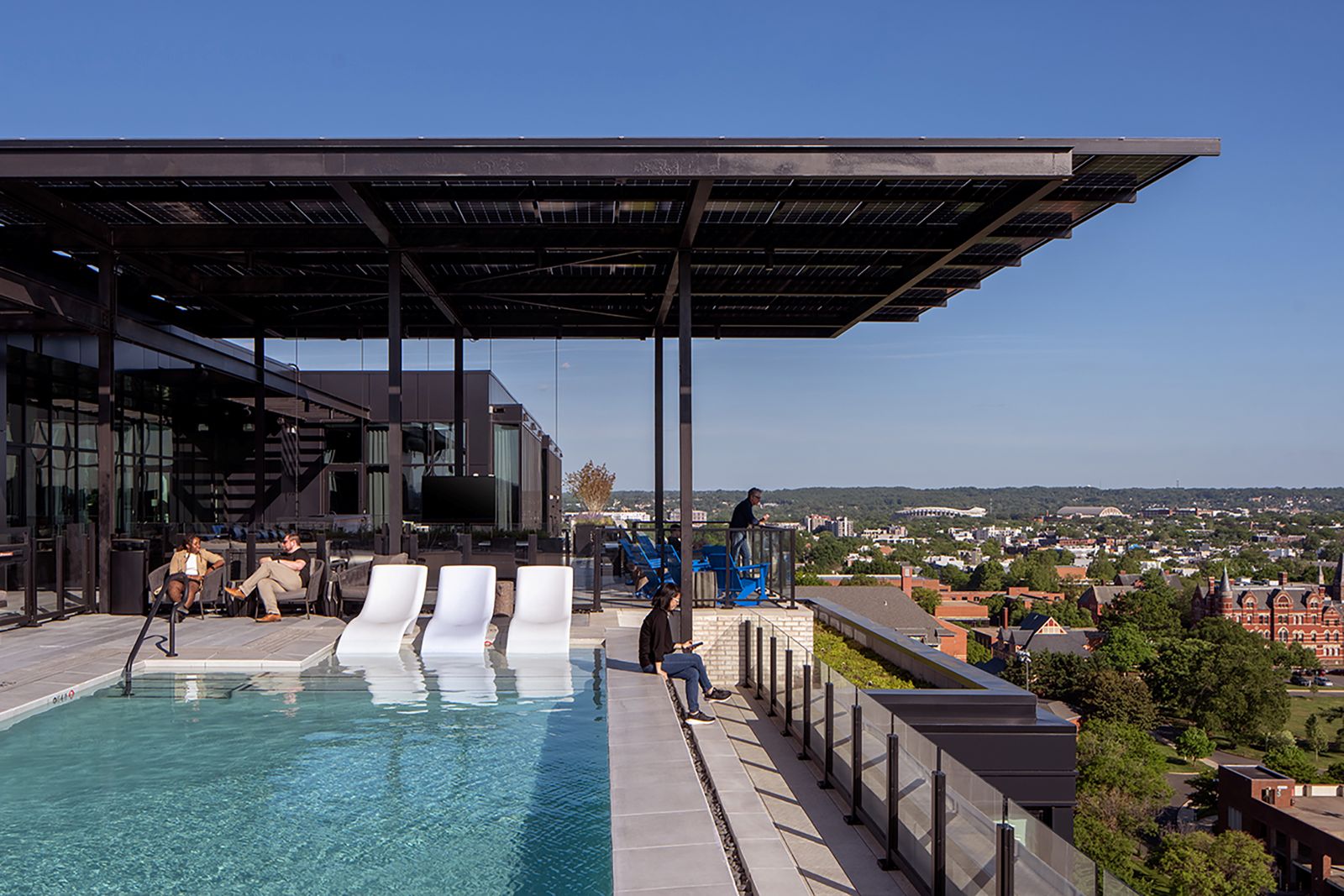
Energy performance is driven by passive design strategies, a high-performance envelope, and efficient mechanical systems, resulting in a 27.9% reduction in energy use intensity over code and significant progress toward AIA 2030 targets. Rooftop photovoltaic arrays generate on-site renewable energy while shading outdoor amenity spaces. These strategies contribute to the project’s LEED v4 Gold certification and demonstrate a holistic approach to resource efficiency.
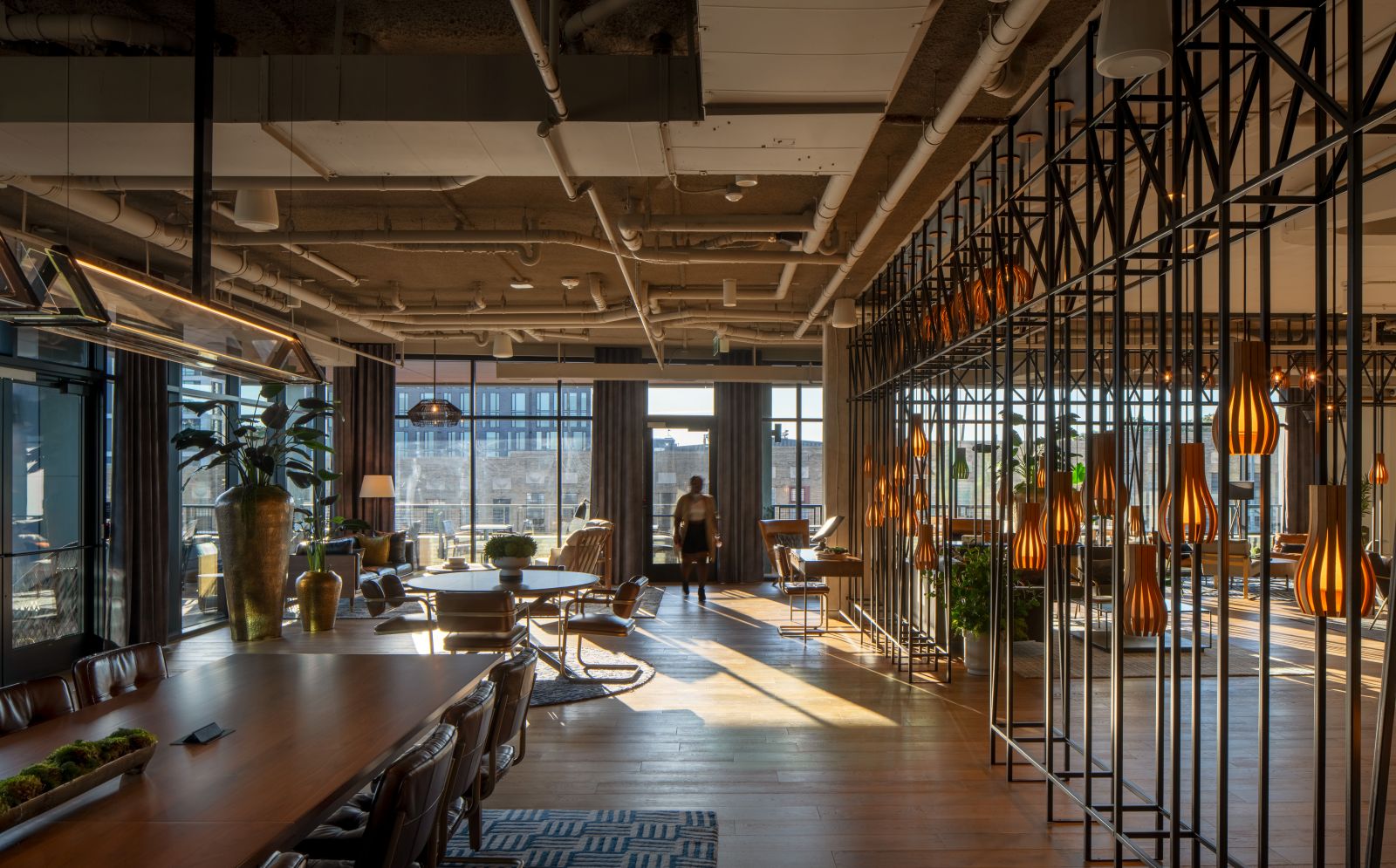
Human health and well-being are central to the design. Over 80% of regularly occupied spaces provide access to daylight and views, while rooftop gardens, climbing vines, and outdoor amenity areas promote movement, social interaction, and mental well-being. Interior environments are enhanced through low-VOC materials and careful acoustic design, supporting comfort and indoor air quality.
Durability and adaptability are embedded through a restrained material palette of locally sourced brick and metal panel rainscreen systems designed for a 75–100-year service life. Flexible interior layouts and modular systems allow the building to evolve over time, while resilient design strategies, including elevating the structure above the water table, reduce long-term risk.
Union Market Residential exemplifies how dense urban infill can align environmental performance, community engagement, and economic vitality. As both a continuation of the Union Market district’s evolution and a model for sustainable development, the project demonstrates a comprehensive and integrated response to the challenges of contemporary urban living.