



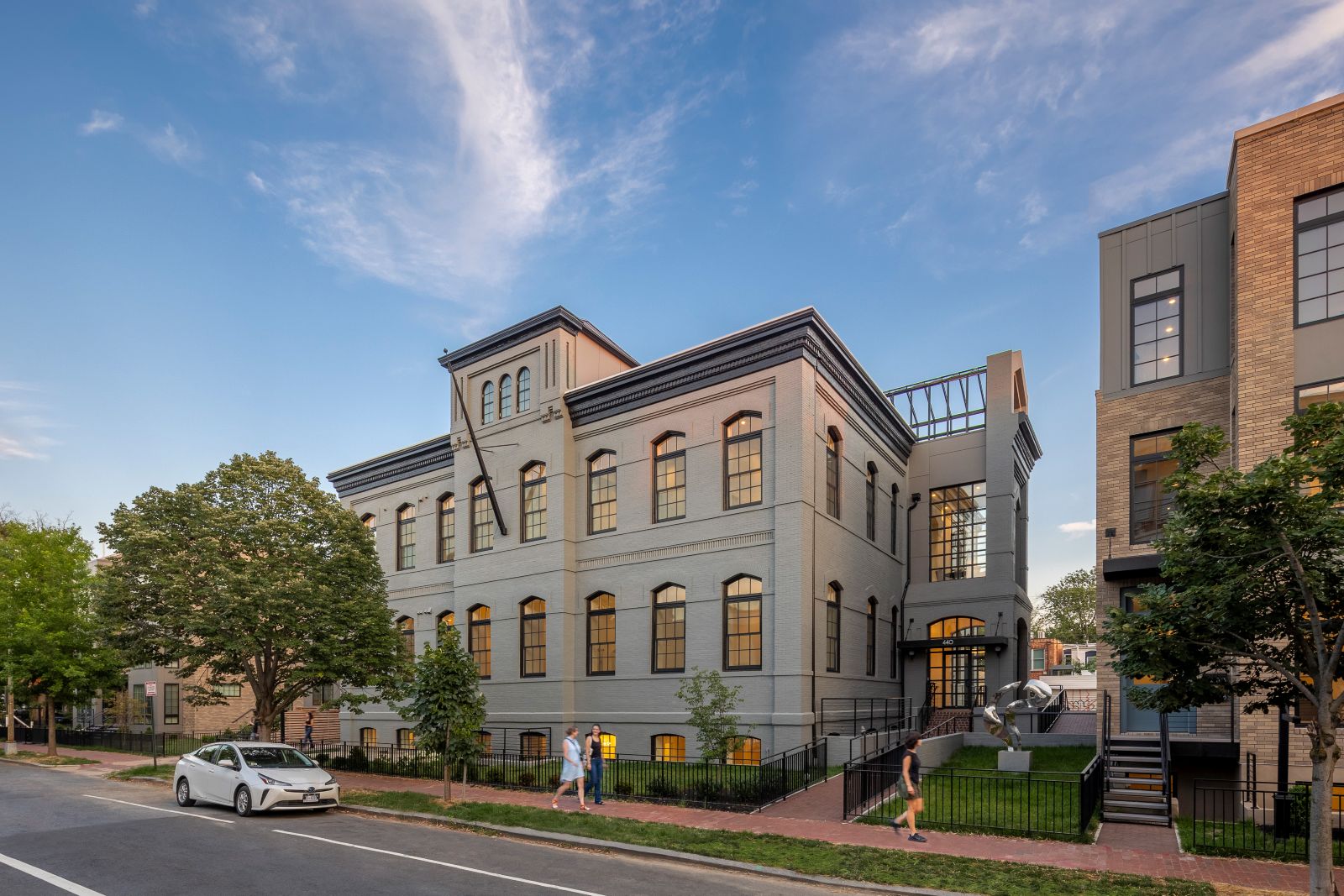
Photo Credit © Kate Wichlinski
2026 Winner

Award of Merit
Teass \ Warren Architects
Visit Teass \ Warren Architects Website
Design Team:
Charles Warren, AIA, LEED GA | Madeline Sambor, AIA, Well
Client:
440 R Street Partners, LLC
General Contractor:
Harbor Builders
Additional Consultants:
Structural Engineer: FMC Structural Design Group, LLC |
MEP Engineer: KK Engineering
Civil Engineer: CAS Engineering
Project Description
The Collection at R Street sits at the intersection of Shaw’s layered history and its contemporary housing needs, a single urban block that weaves together preservation, infill, and community in equal measure.
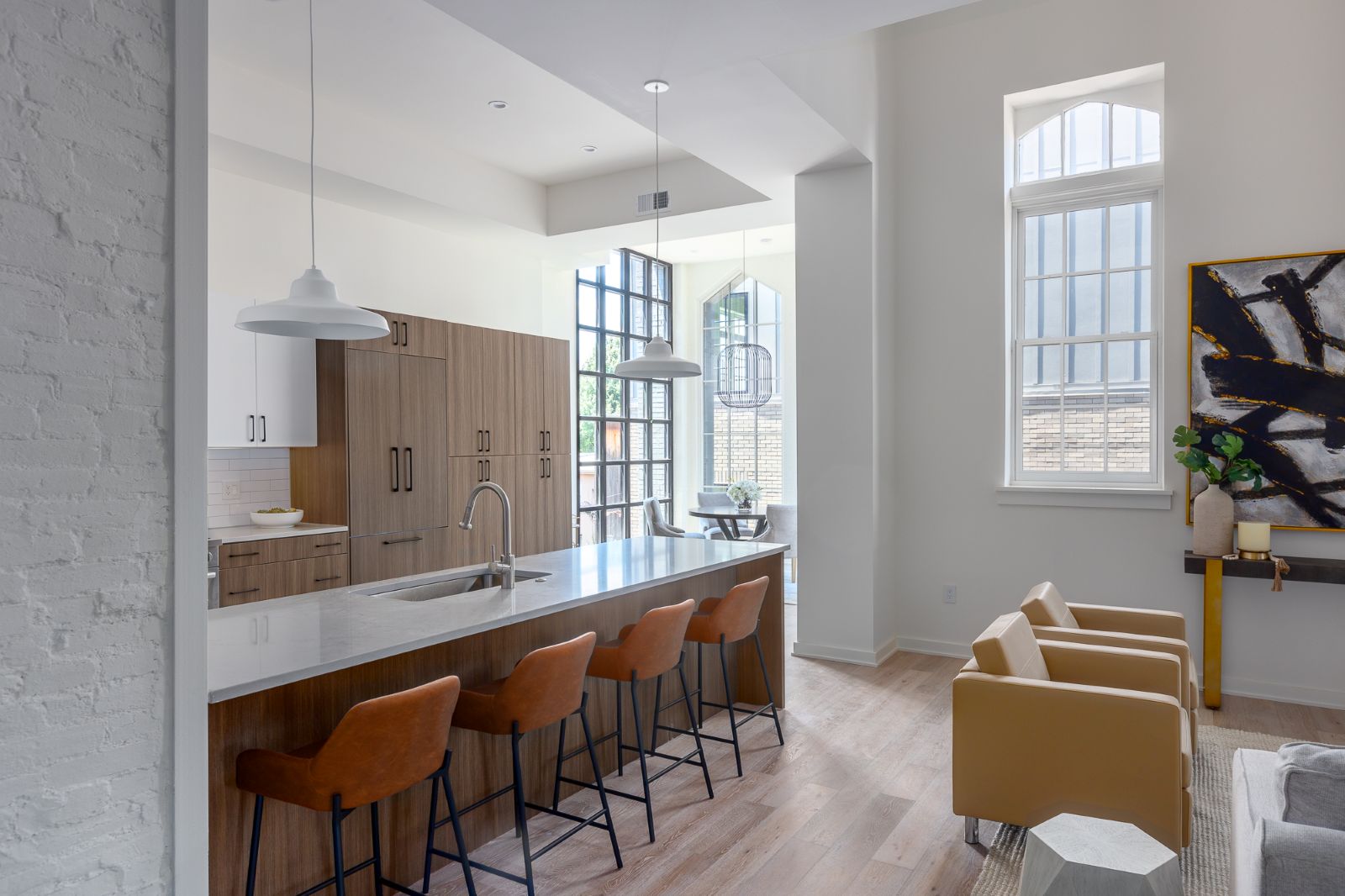
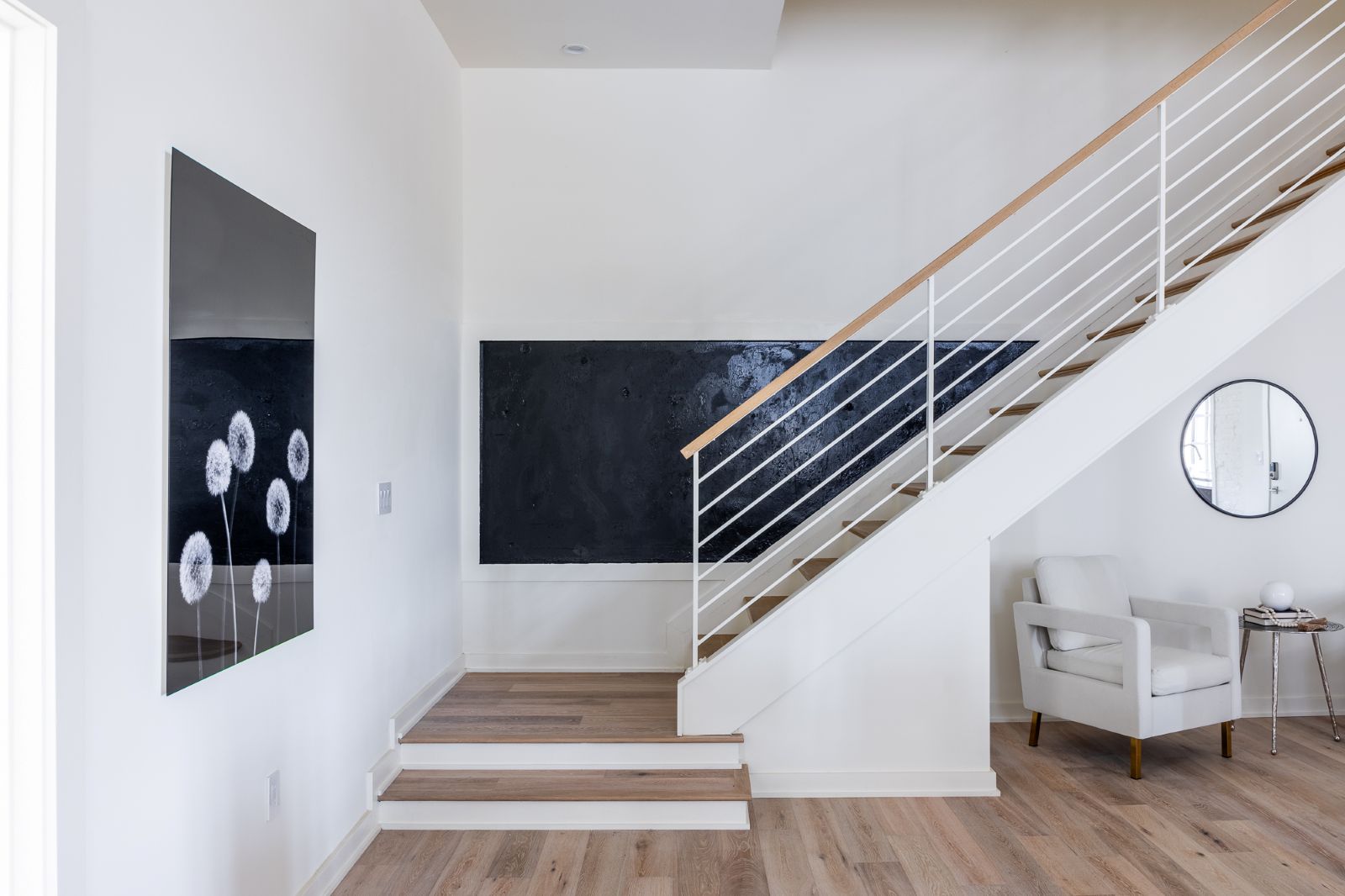
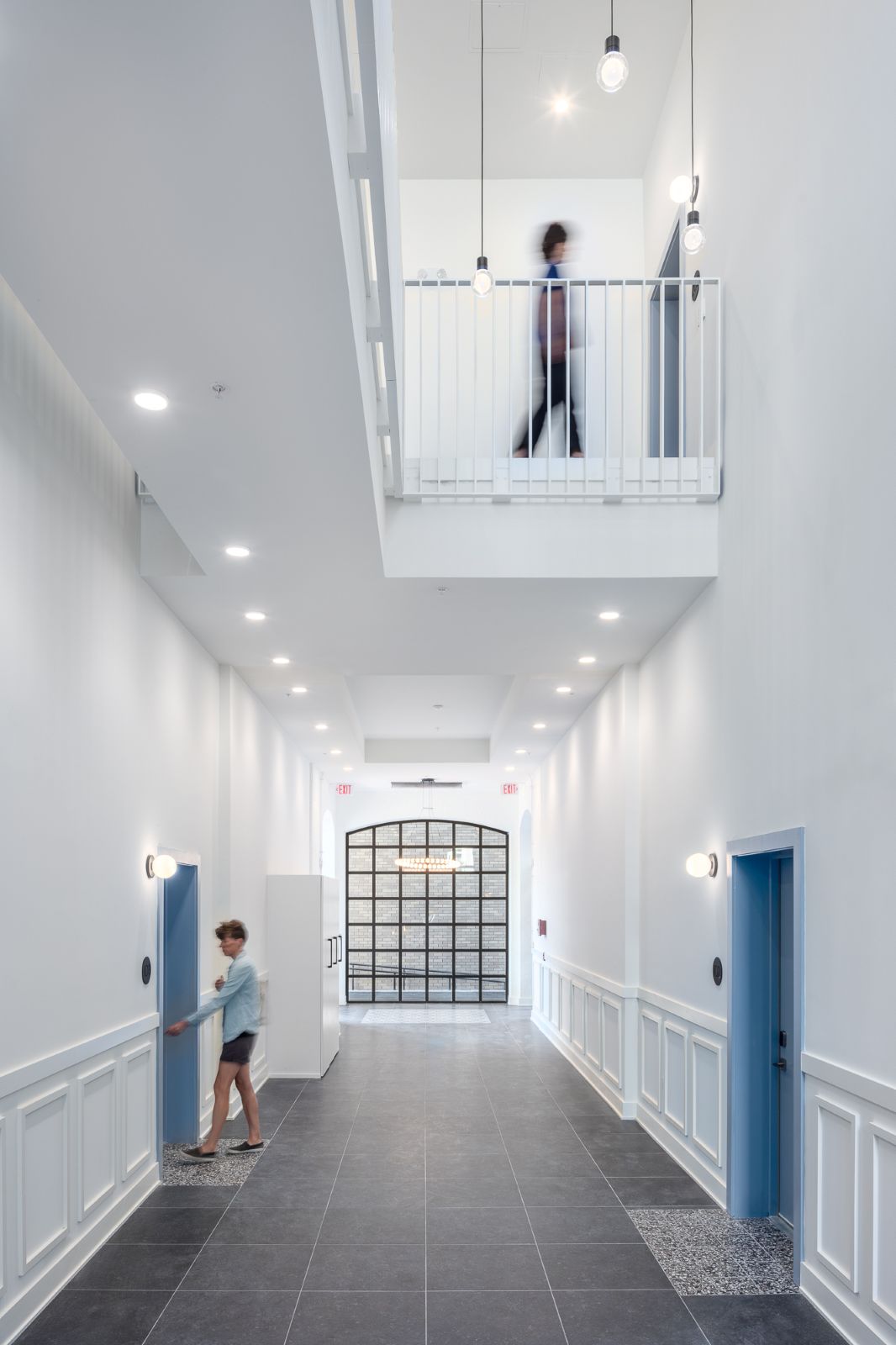
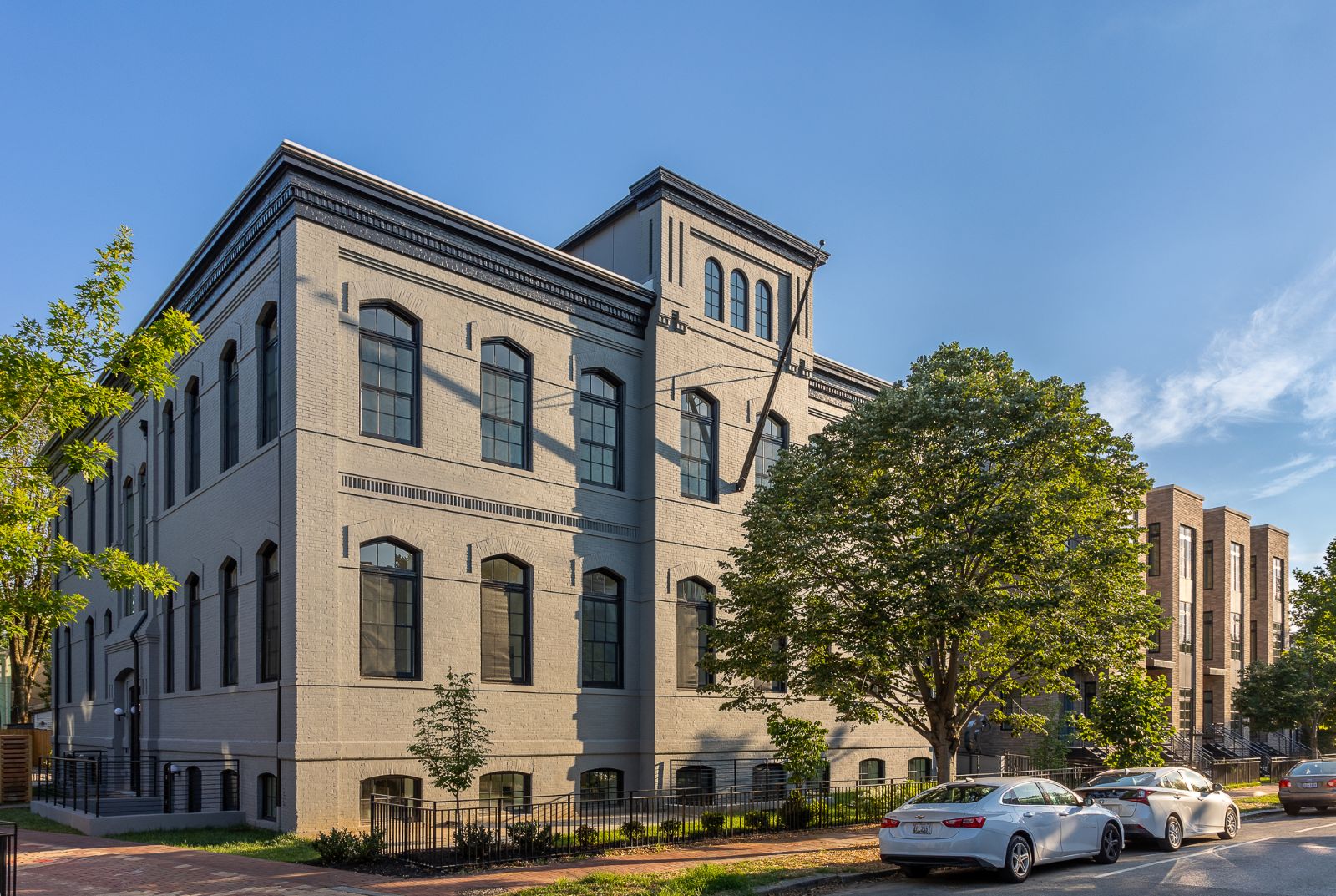
The anchor of the project is an 1880s surplus school building, a late-Victorian civic structure that has quietly witnessed more than a century of Shaw’s evolution. Vacant and at risk, the schoolhouse was given new purpose as a twelve-unit condominium building. The conversion required thoughtful stewardship: the building’s masonry envelope, historic window rhythms, and characteristic roofline were preserved and restored, while the interior was reimagined to accommodate modern residential life, with new high-performance mechanical systems, an updated building envelope, and comprehensive stormwater management. The Africare organization, a non-profit that had previously adapted the building for office use in the 1980s, is itself a chapter in the building’s history worth acknowledging. This schoolhouse has always served the community in one form or another.
The remaining parcels complete the block with equal care for context. Four new rowhouses rise on the former school parking lot, their scale and materiality drawn from the surrounding streetscape of Shaw’s historic residential fabric. A freestanding duplex occupies a triangular corner lot at New Jersey Avenue and R Street, a condition that demanded its own compositional response and adds a quiet landmark quality to the intersection.
Together, the twenty-three units represent a missing middle approach to urban housing, diverse in type, modest in scale, and calibrated to a neighborhood that has long resisted erasure. Each building has its own outdoor space: roof decks for the rowhouses, generous patios and yards for the duplex. Nothing is wasted; even the parking lot becomes home.
The Collection at R Street demonstrates what adaptive reuse can be at its best, not merely the recycling of an old shell, but the continuation of a building’s civic life in a form that honors where it came from.