



Image Credit © HDR
2026 Winner

Award of Merit
HDR
Visit HDR Website
Design Team:
Tyler Dye |
Stephen Nuttall |
Masoumeh Hosseinzadeh |
Yuxiang Qi |
Joe Rice |
Joey Yaha
Client:
Confidential
Additional Consultants:
Project Description
What would a laboratory look like if we threw out the playbook that we typically use to plan these facilities? Can a laboratory in the middle of the jungle achieve net-positive embodied and operational carbon if we challenge the status quo? This study in net-positive architecture pushes the boundaries of what we can achieve when we prioritize resilient planning and design strategies and ask, What If?
Immersed in the jungles of southeastern Gabon, Franceville is home to a confidential research institution. Complicating the project are a trio of intense environmental factors common in equatorial jungle ecosystems including extreme temperatures, constant high humidity, and heavy precipitation/drought cycles. This project exists in one of the most extreme environments on planet earth but needs to harmonize with it’s surrounding ecosystem to maintain critical research capabilities. These capabilities bring vital infrastructure supporting studies in virology, bacteriology, retroviral infection, ecology, parasitology, and immunology to the campus. Additionally, a high-containment laboratory suite and biorepository will provide BSL-3 level containment facilities to improve ongoing research and biosafety practices.
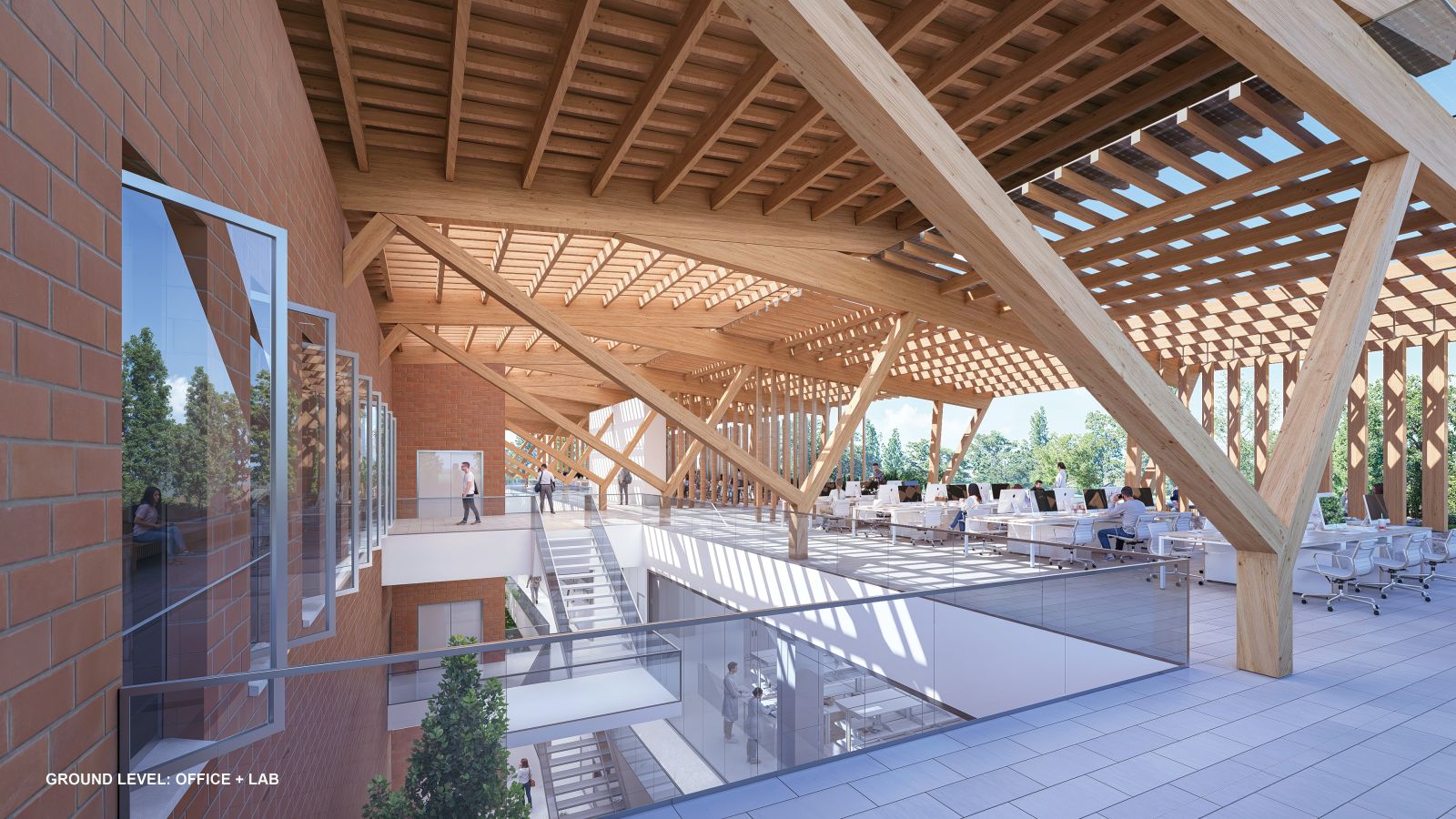
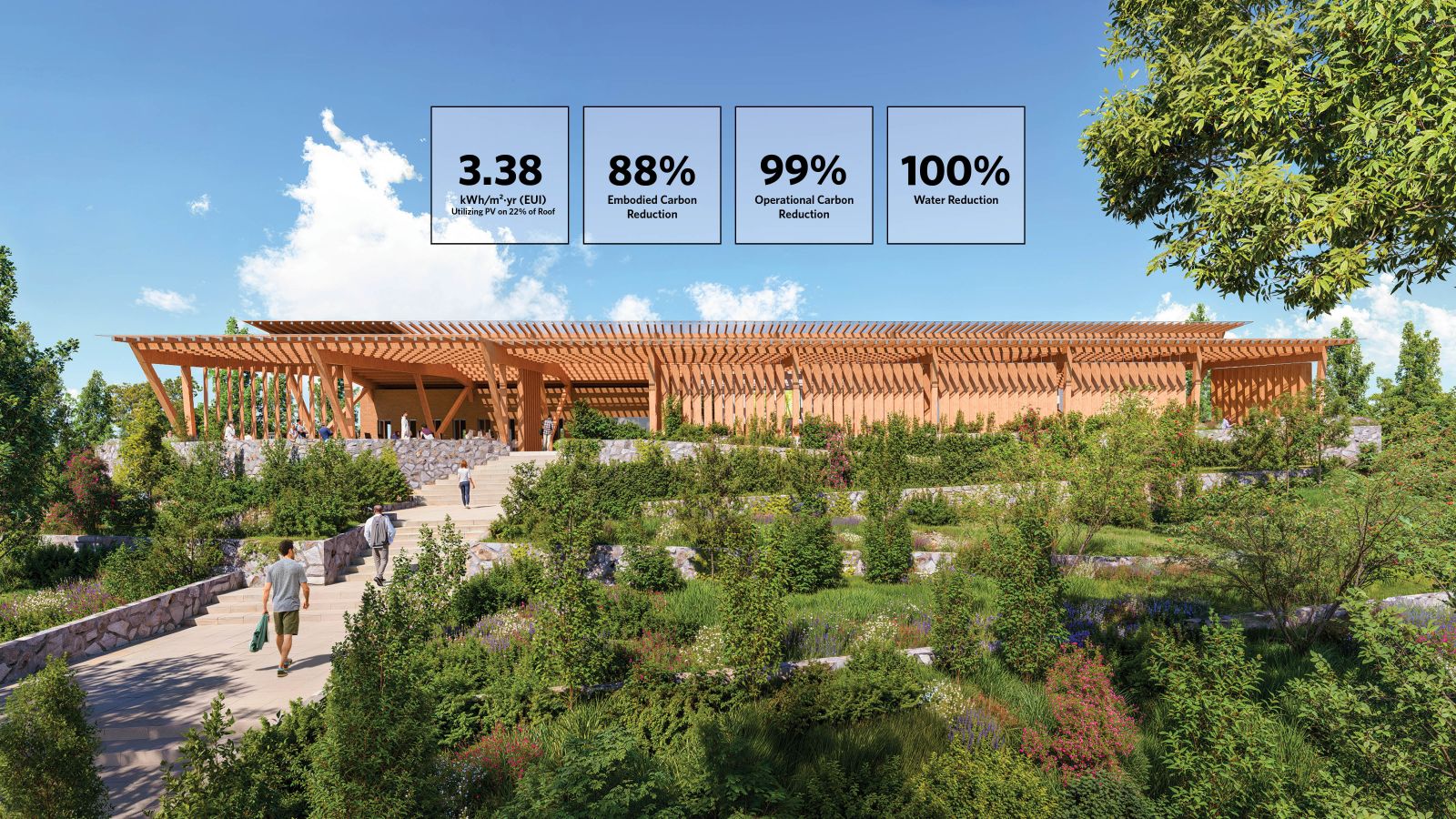
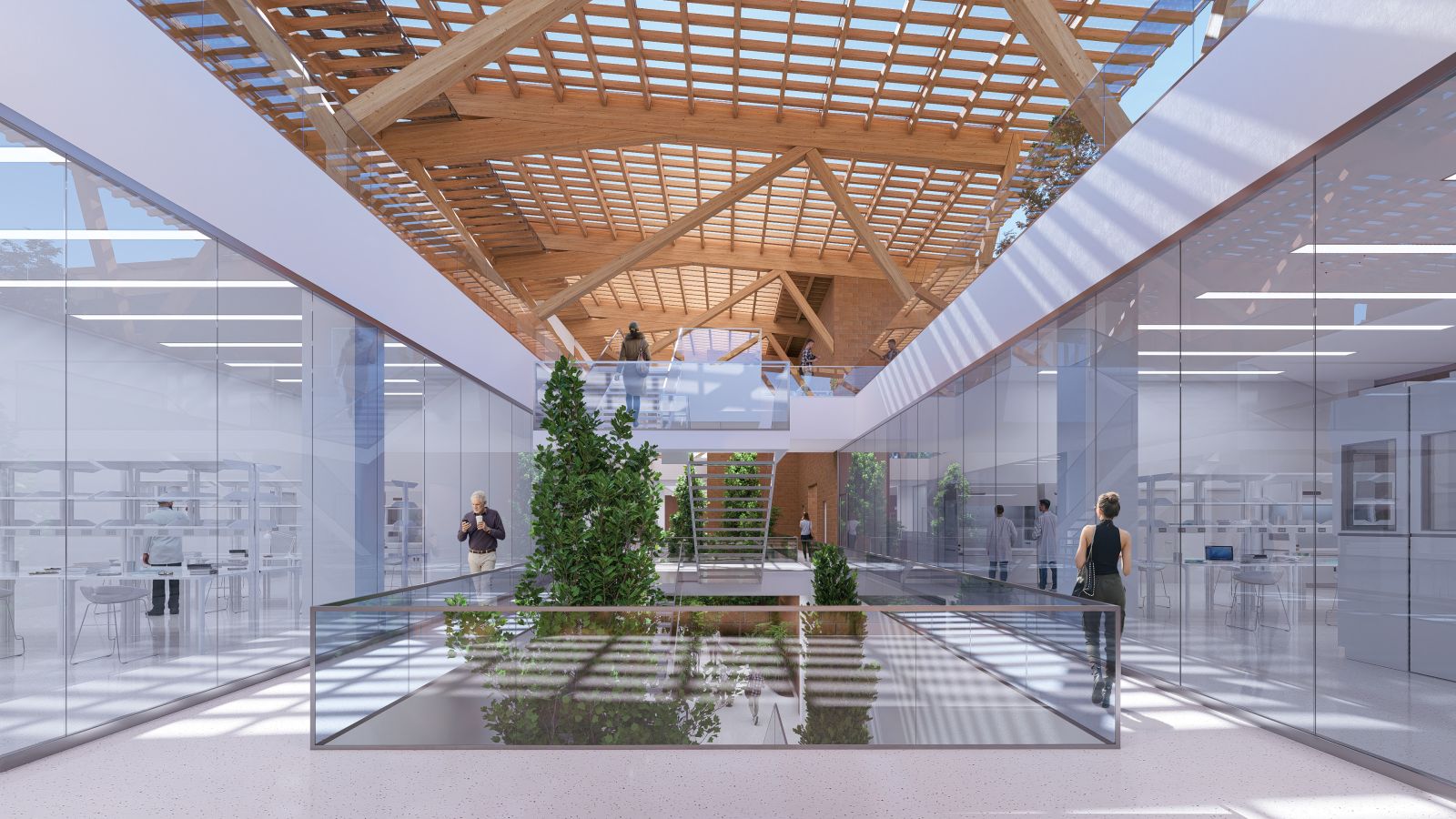
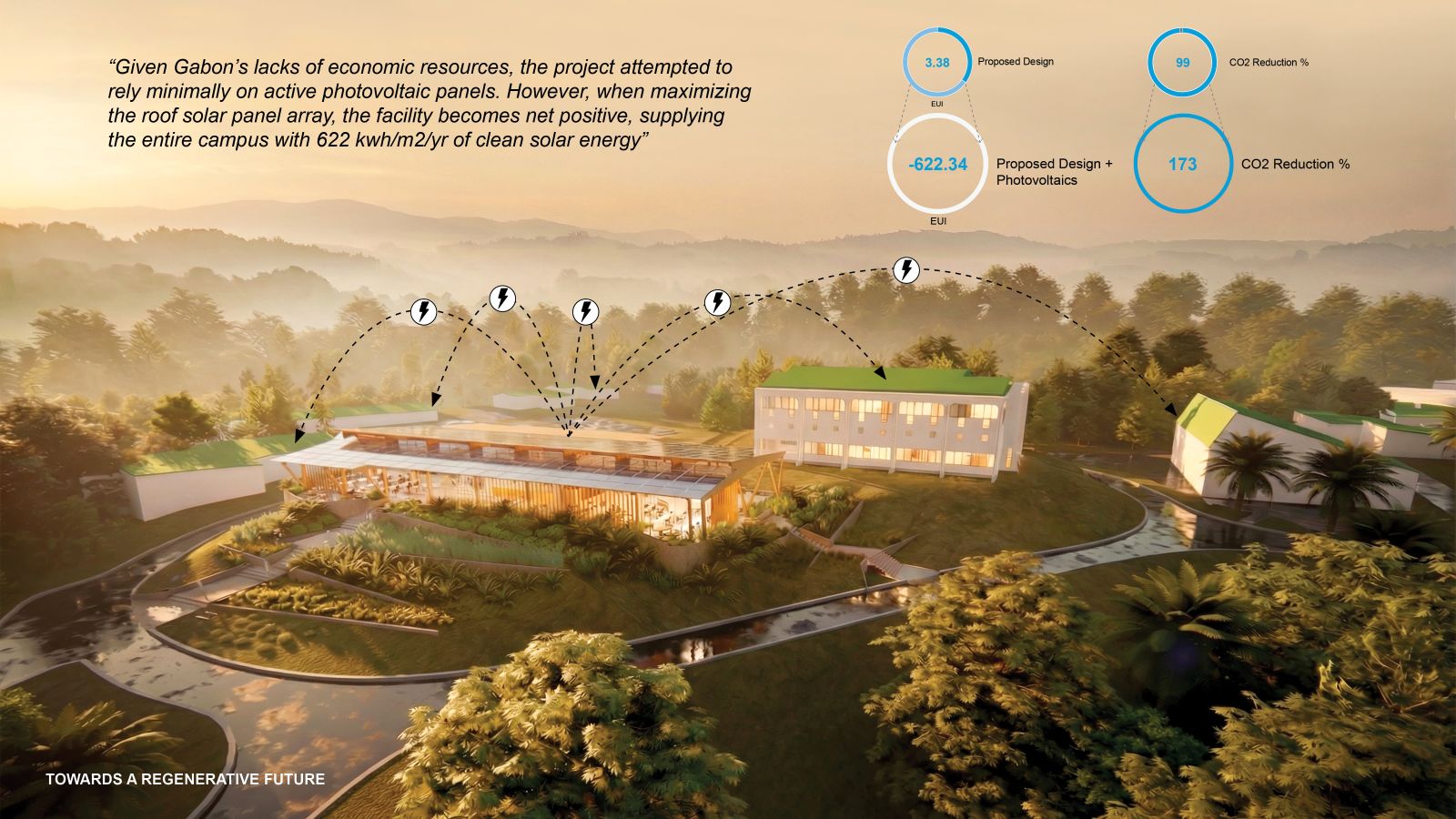
The project places resiliency at the heart of design by balancing the need to meet stringent programmatic requirements with the need to withstand its jungle environment for years to come. The project team explored responsible materials through low carbon options like rammed earth and compressed stabilized earth blocks, materials that relate back to traditional construction techniques like wattle and daub that has been used in the region for centuries. However, instead of raising earthen materials to enclose the spaces, the project explored burying the high-performance laboratory environments, allowing constant ground temperatures to reduce the burden on mechanical systems conditioning the building. In addition, the project challenges typical laboratory norms by designing certain programmatic components to be unconditioned and naturally ventilated. By thinking about circulation, open office, and collaboration zones as unconditioned spaces, the building reduces the conditioned square footage by 27% and dramatically reduces operational energy and carbon. These strategies, combined with an integrated rooftop photovoltaic array, result in the building becoming net-positive and giving back 622 KWH of clean electricity to the campus grid.
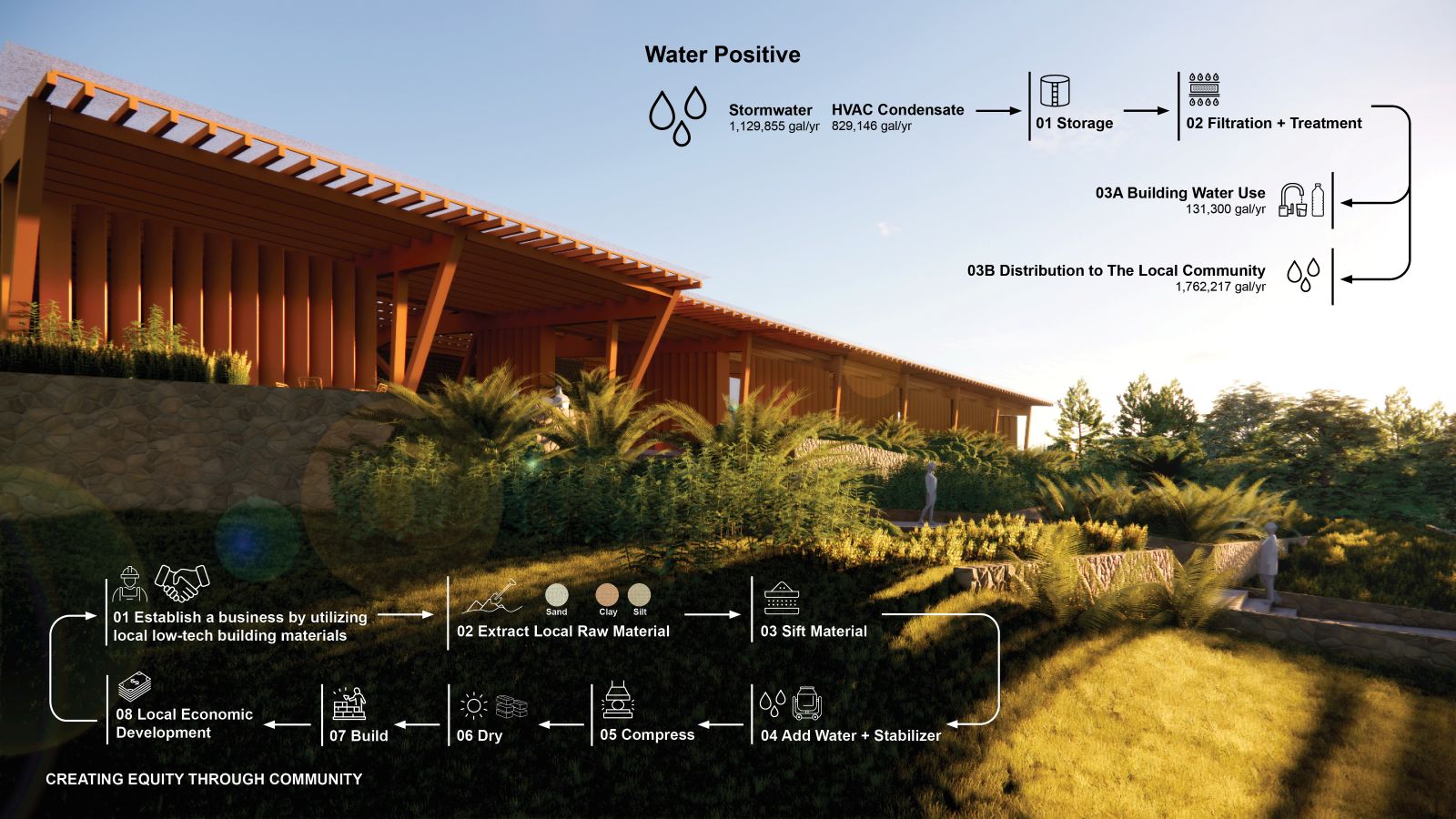
The concept of equitable communities was also explored in both the materials utilized in construction and the collection of water across the project. Compressed stabilized earth blocks act as a substitute for typical concrete masonry units. This low-tech building material provides opportunities for training local workforces and establishing companies within the region to drive economic stability. The design also prioritizes capturing the immense amount of stormwater and mechanical condensate for storage, treatment, and future use. This amount of water not only serves the needs of the facility, but results in an excess of 1.7 million gallons of water per year that can be treated and distributed to the local community or bottled and sent to areas in need. Putting all these strategies together, this project gives well beyond what it takes, becoming truly regenerative.