



Photo Credit © Allen Russ Photography
2026 Winner

Award of Merit
DLR Group
Visit DLR Group Website
Design Team:
Matthew Davitt, AIA |
Rachel Chung, AIA |
Hannah Caster |
Jate Yonkos |
Michael Boco |
Hillary Keene, NCIDQ |
Chris Sanders, RA |
Lucia Reyes |
Bob Widger, RA |
Paul Kempainen, PE |
Steve Reigh, PE
Client:
DC Department of General Services
General Contractor:
Smoot Construction Company
Additional Consultants:
Therapeutic Design: Amy Wagenfeld | Design |
Landscape Architecture: Carvalho and Good |
Structural Engineering: SK&A |
Civil Engineering: Wiles Mensch |
Aquatics Design: Counsilman-Hunsaker |
Foodservice Design: Nyikos-Garcia |
Geotechnical and Environmental Engineering: ECS Mid-Atlantic
Project Description
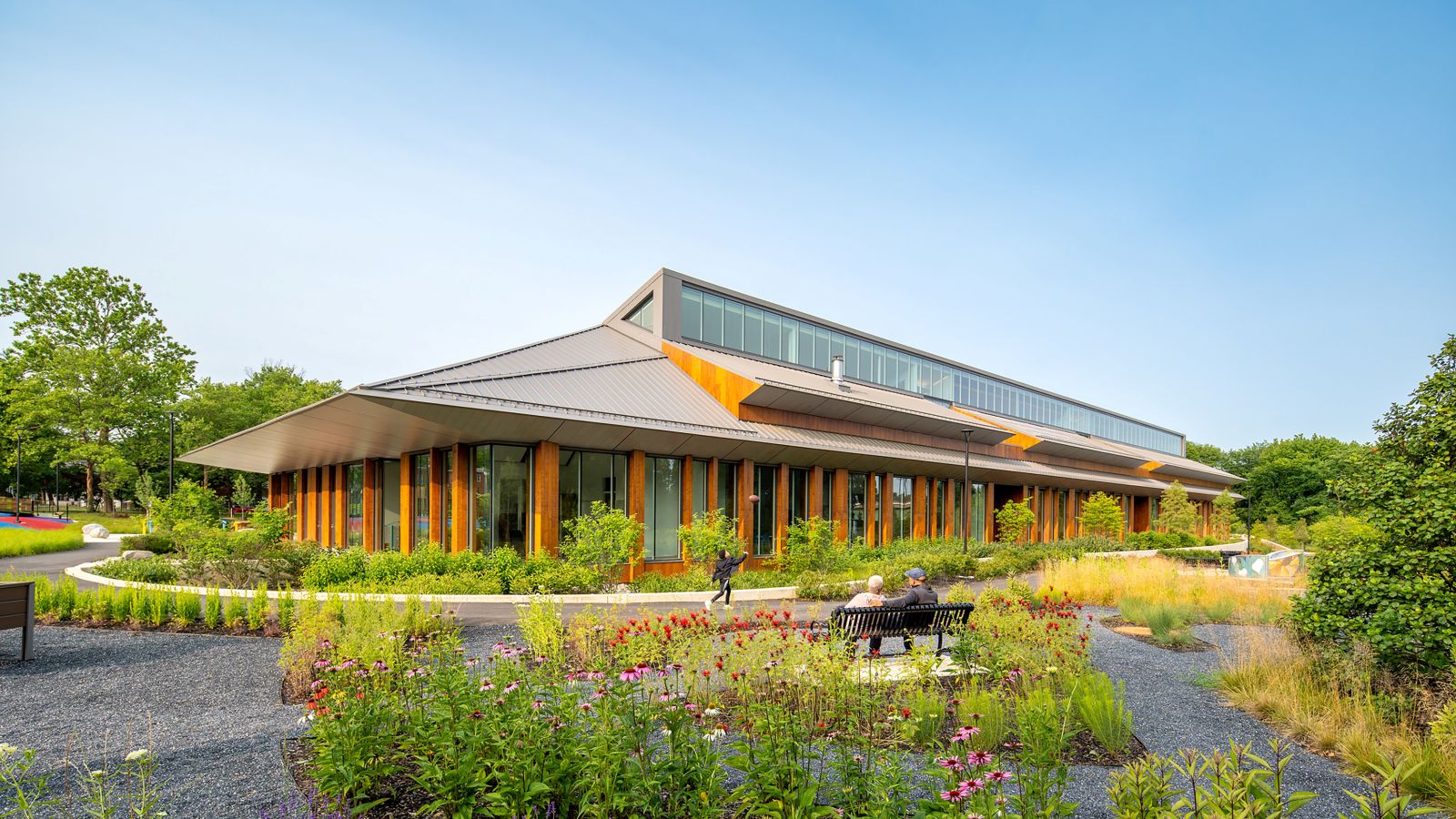
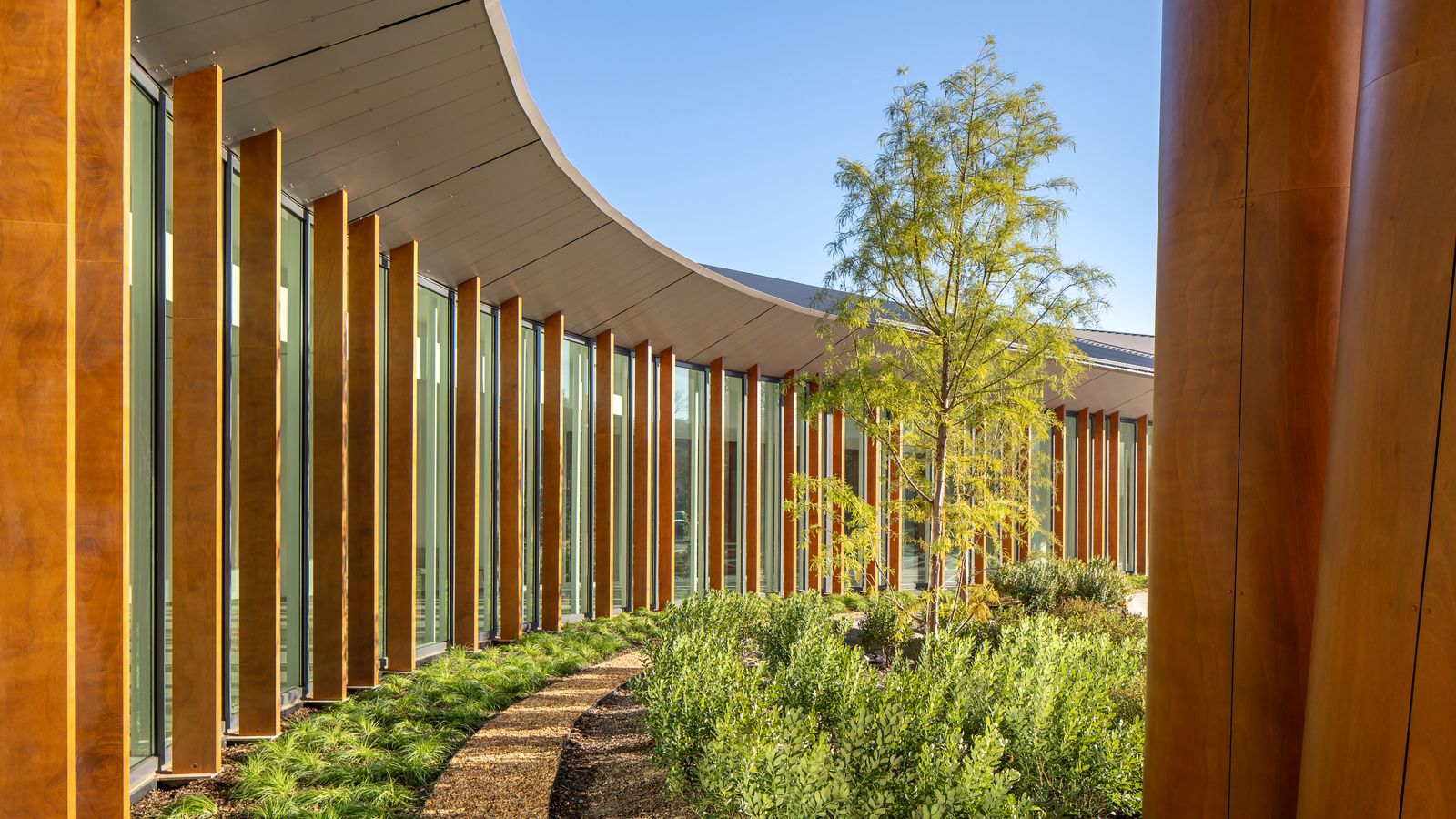
The Joy Evans Therapeutic Recreation Center replaces an aged 1970s building with a new community-centered facility focused on providing therapeutic recreation programming, serving people of all ages and abilities. Its large, wooded site sits between a residential neighborhood and extensive National Park Service land, with gentle terrain that drops steeply toward a stream valley along the north and east. The site frames long views of these forested parklands and sets the project’s tone, a quiet threshold where streets meet forest, and the building becomes a patient listener to the land.
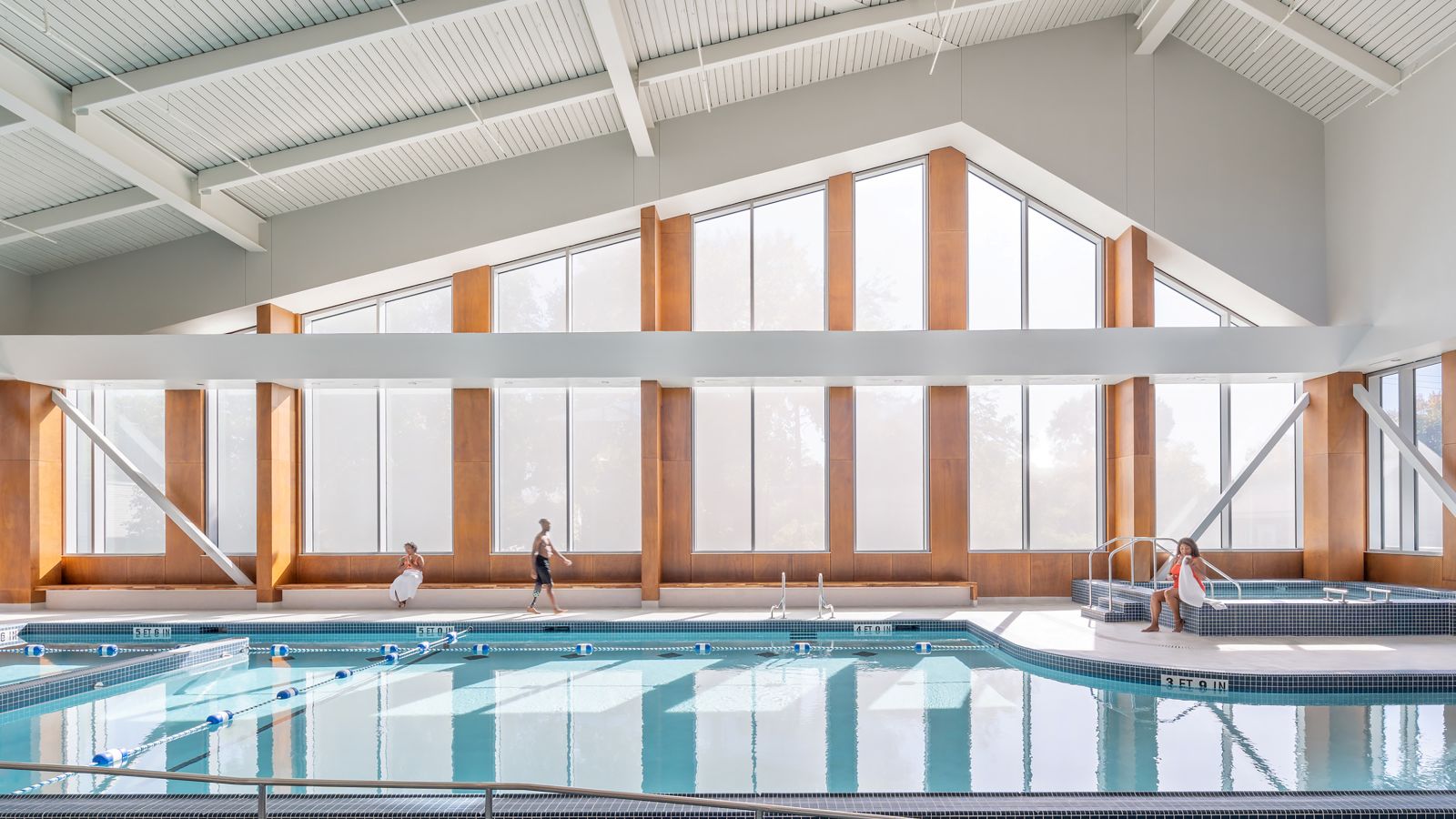
The project includes a new 36,800 SF recreation building and extensive sitework. Major program elements include an indoor natatorium with warm-water pool and spa, gymnasium, fitness room, wellness studio, senior and caregiver rooms, and multipurpose activity spaces. Outdoor amenities – playgrounds, splash-pad, athletic field, sport court, sensory and community gardens – are connected by a sitewide trail network. Spaces are grouped for clarity, choice, and calm, enabling users to tailor their experience to their comfort level.
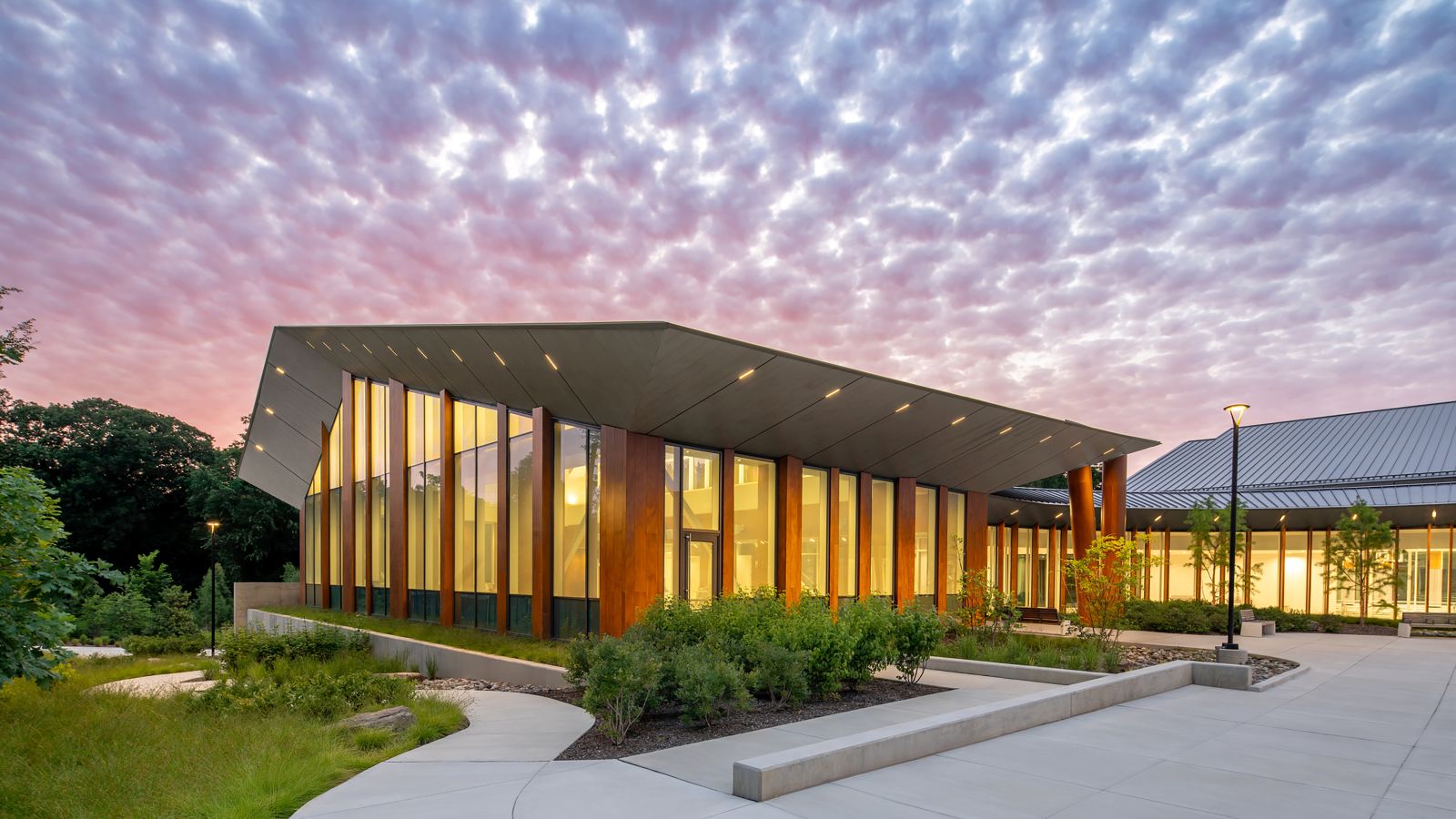
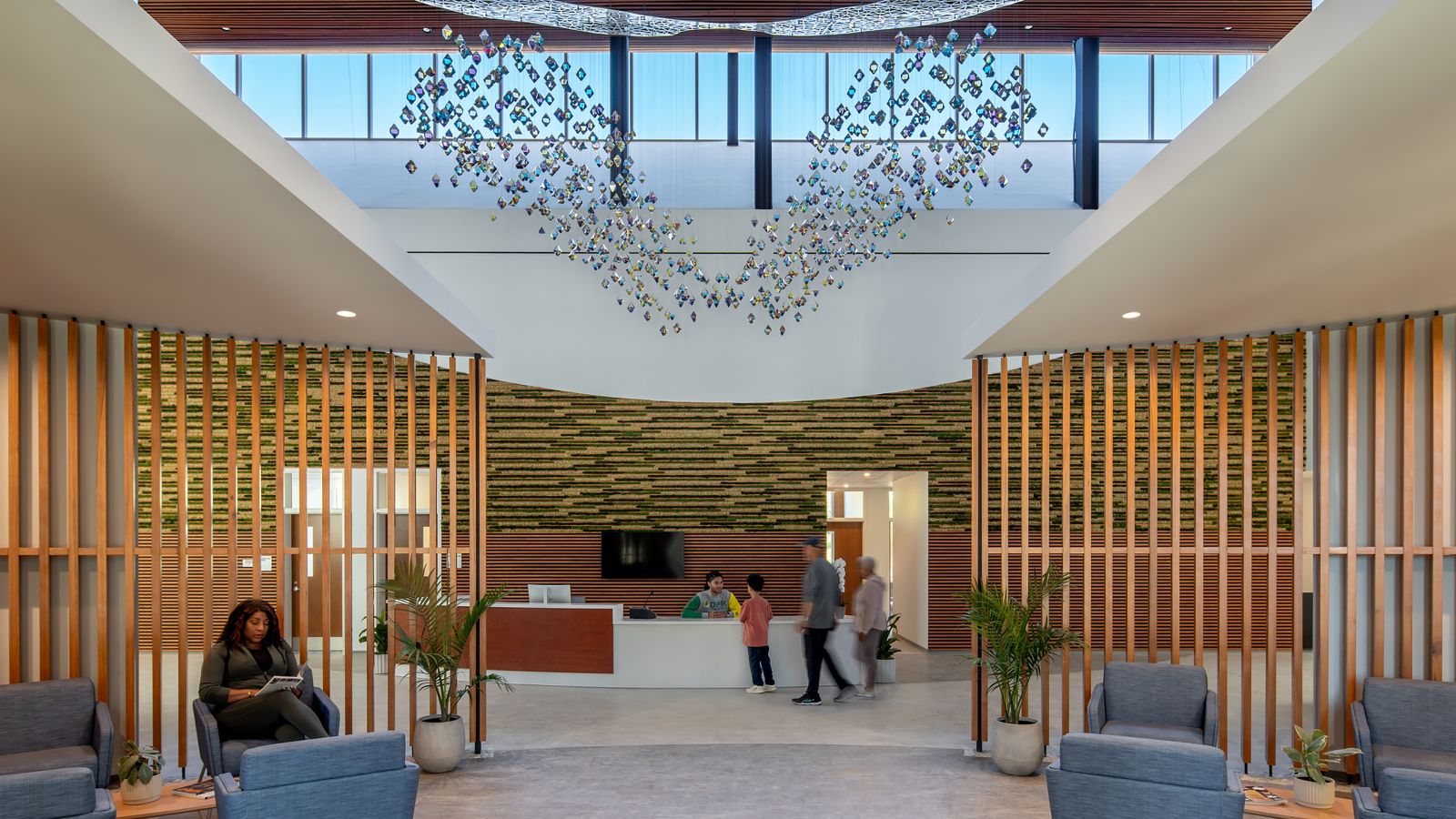
The Framework for Design Excellence guided the team’s approach from concept through execution. Designing for Integration establishes a clear biophilic design concept, using connection to nature as the foundation for a therapeutic experience. Designing for Well-being furthers this concept by connecting users to the adjacent park through expansive views, abundant daylight, and natural materials and textures. These elements create a restorative environment that supports physical, cognitive, and emotional health.
Designing for Ecosystems and Water shapes the landscape design including extensive gardens with native and adaptive plantings that strengthen ecological connections to the surrounding park. Dark-sky lighting principles reduce light pollution and protect wildlife. The site’s proximity to a tributary of the Anacostia River informed a robust stormwater approach, including bioretention planters and infiltration systems that improve water quality and reduce overall runoff.
Designing for Equitable Communities is essential to the facility’s function to provide programs for people of all ages, including adaptive programs for people with disabilities. This commitment to equity and accessibility influences programming, layout, and materials, from sensory-friendly spaces and dedicated senior and caregiver rooms to reducing disorienting glare with deep roof eaves.
Designing for Resources guides material selections toward durable, low-impact options with high recycled content and low VOC content, and a construction process that achieved 76% waste diversion. Designing for Economy streamlines the building footprint, introduces flexibility, and ensures responsible use of public funding. Community links include a substantial public art installation and a construction process which prioritized District tradespeople. Designing for Change influences the building’s role as a community shelter during emergencies, providing resilience for the surrounding neighborhood.
Designing for Energy combines passive strategies such as an efficient building envelope, optimal solar orientation, and extensive daylighting, with efficient mechanical systems to achieve performance goals, on track to meet LEED Silver requirements.
Finally, the team embraced Designing for Discovery by sharing lessons learned both internally and with the wider AEC community, including presenting to university design students and providing a tour at the 2024 AIA Conference.