



Image Credit © HDR
2026 Winner

Award of Merit
HDR
Visit HDR Website
Design Team:
Ahmad Soueid |
Omar Hamasni |
Simon Trumble |
Joey Yahya |
Jason Huber |
Jessica Vuocolo |
Afnan Bashaikh |
Michael Andrewsky |
Ambica Malhotra |
Allen Buie |
Erin McMillan |
Charles Secker |
Recco Cerisano
Client:
Jamjoom Pharma
Additional Consultants:
Rehabilitation + Operations Consultant: Shirley Ryan Ability Lab |
MEP+S Engineering: DAR Engineering (Arc/ Engineer of Record) |
Kitchen+ Laundry+ Waste M+ Warehousing: CDSMEA |
KAEC Municipality
Project Description
Inspired by the Arabic word for a flowing stream, Ghadeer, Jamjoom Specialty Hospital reimagines rehabilitation as a continuous journey of recovery, dignity, and renewal. Like water moving through a landscape, the architecture organizes movement, light, and experience into a clear and restorative sequence. Spaces unfold in a deliberate rhythm of activity and pause, guiding patients through daily routines of therapy, reflection, and reconnection. Rather than treating healthcare as a series of isolated programs, the hospital frames care as a cohesive spatial narrative where circulation, daylight, and landscape support healing as an everyday experience.
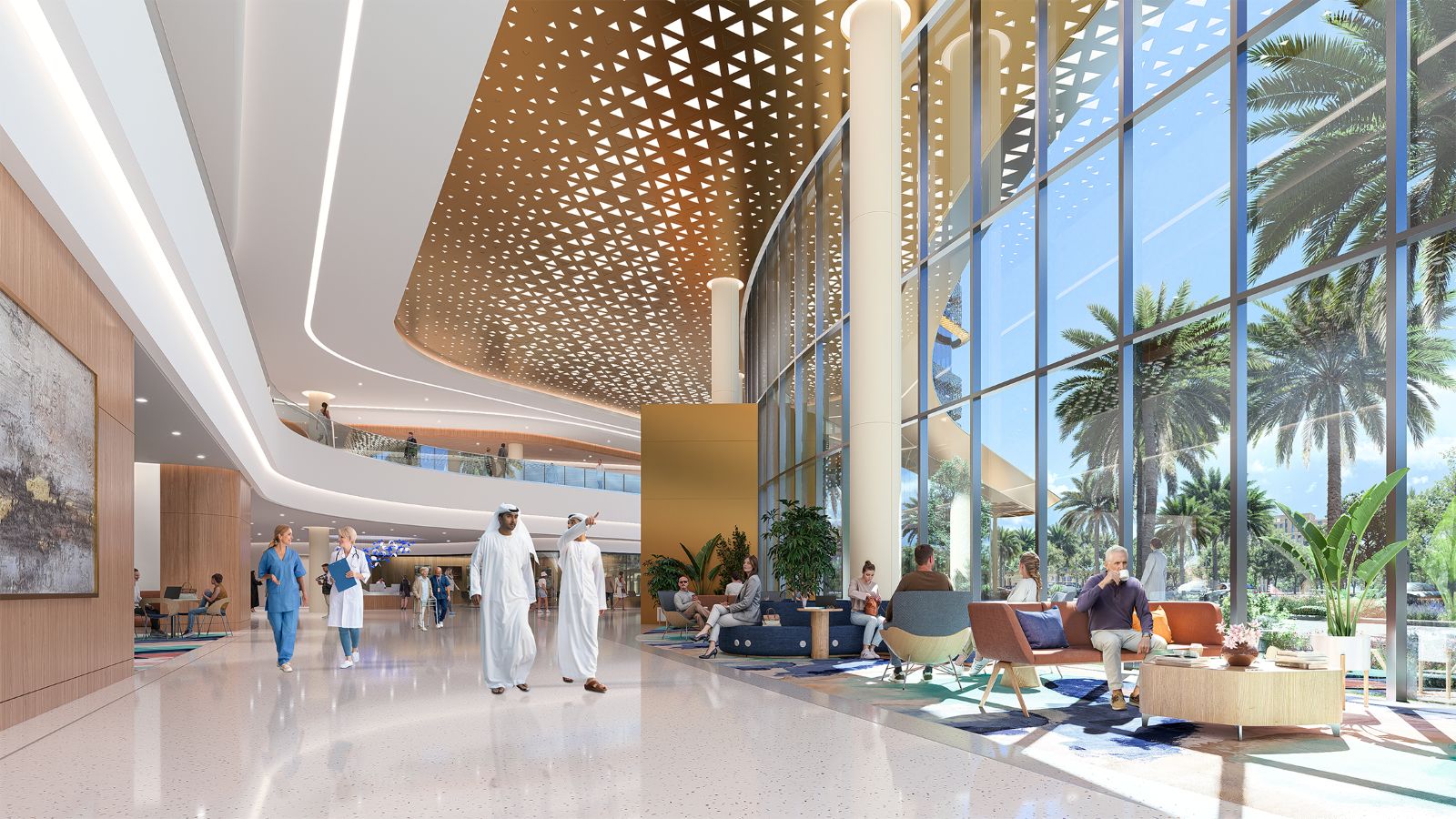
The 150-bed rehabilitation hospital integrates inpatient care with an extensive network of therapy and wellness spaces. Each inpatient level is organized around dedicated rehabilitation gyms that allow therapy to occur close to patient rooms, seamlessly embedding recovery into daily life. Two large inpatient gyms and seven specialty therapy suites support a range of rehabilitative treatments, while outpatient clinics extend care through a large rehabilitation gym and hydrotherapy pool. Social and restorative amenities, including a formal dining hall, cafes, and a sequence of landscaped gardens and walking paths encourage movement, independence, and connection to community, reinforcing the idea that recovery unfolds through both clinical care and lived experience.
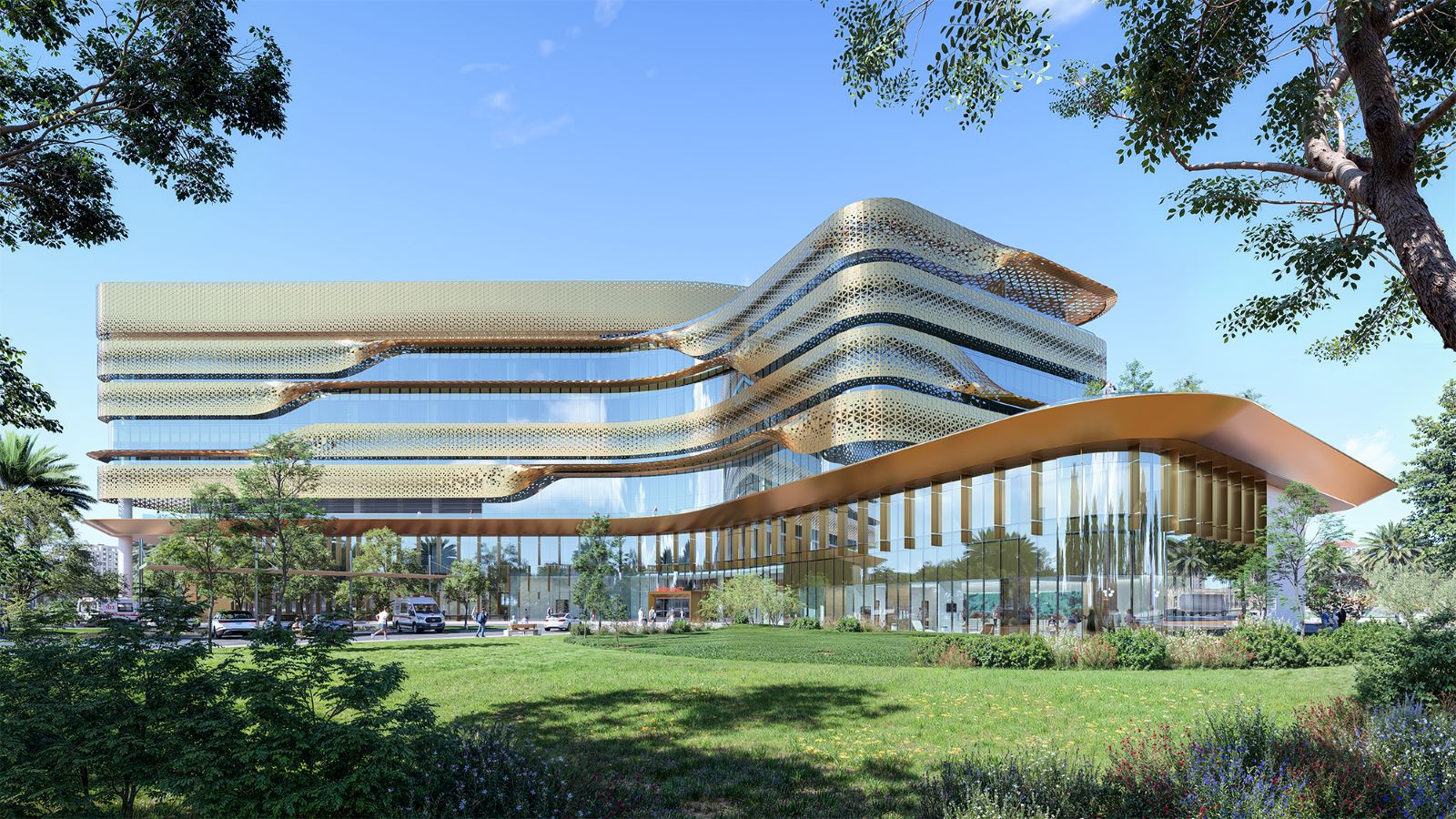
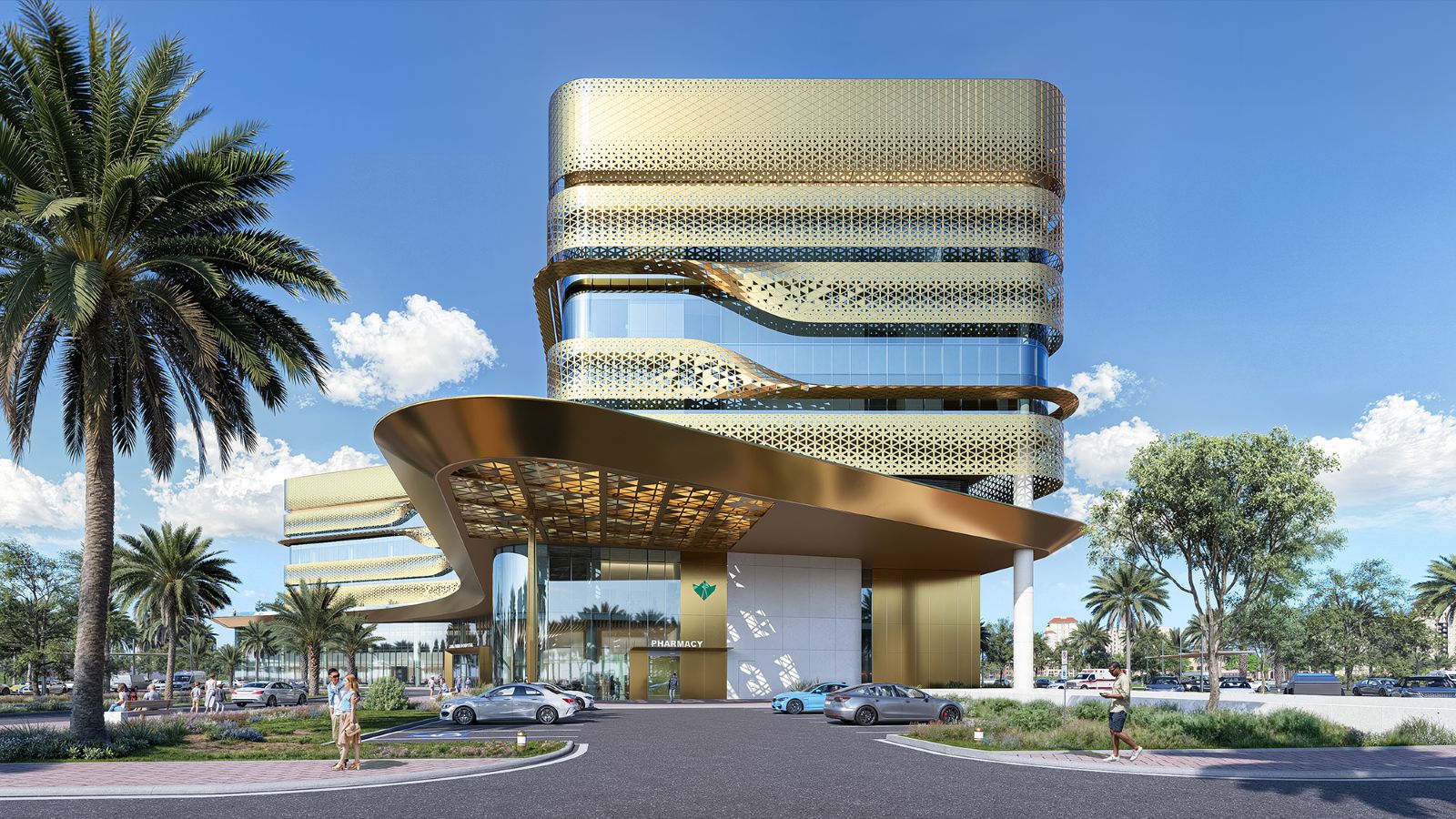
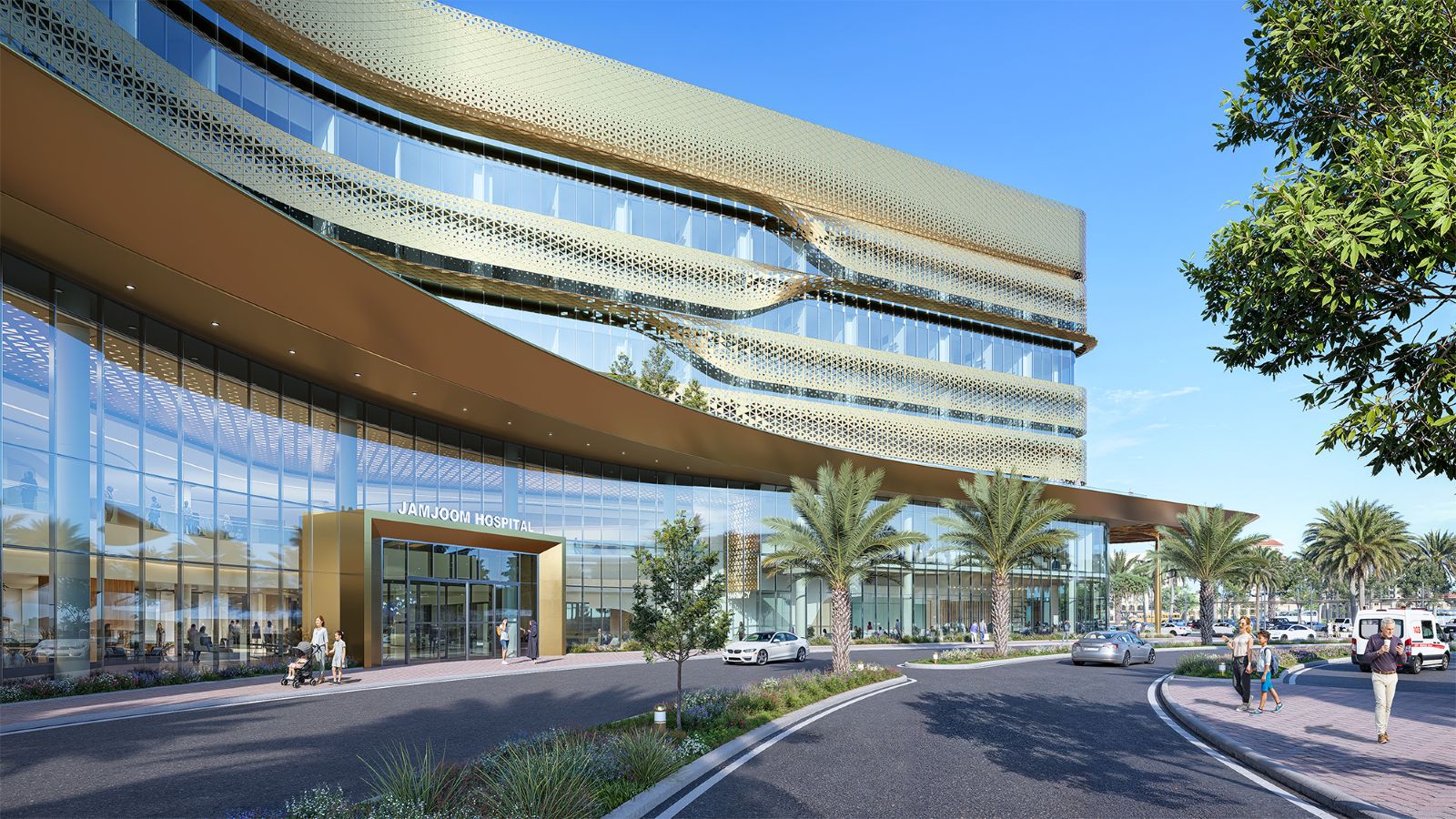
Rooted in Islamic principles of geometry, proportion, and rhythm, the design expresses local cultural continuity through a contemporary architectural language. Mashrabiya-inspired facades reinterpret traditional craft to filter daylight, frame views, and provide privacy while significantly reducing solar heat gain. Courtyards, shaded terraces, and planted roof gardens create a network of oasis-like outdoor spaces that temper the desert climate and offer restorative environments for patients, families, and caregivers. Throughout the building, light, air, and greenery guide orientation and reinforce a sense of calm, grounding the experience of care in both cultural memory and environmental comfort.
Material strategies further anchor the architecture to its context. Locally sourced limestone provides mass and permanence, while high-performance triple glazing and regionally manufactured perforated aluminum screens finished in metallic brass reinterpret traditional metalwork through a contemporary lens. These elements work together to filter light, reduce glare, and moderate heat gain, allowing the building to respond intelligently to the desert environment while maintaining a refined and durable architectural expression. Rather than relying on aesthetic excess, the architecture communicates care through clarity, restraint, and precision.
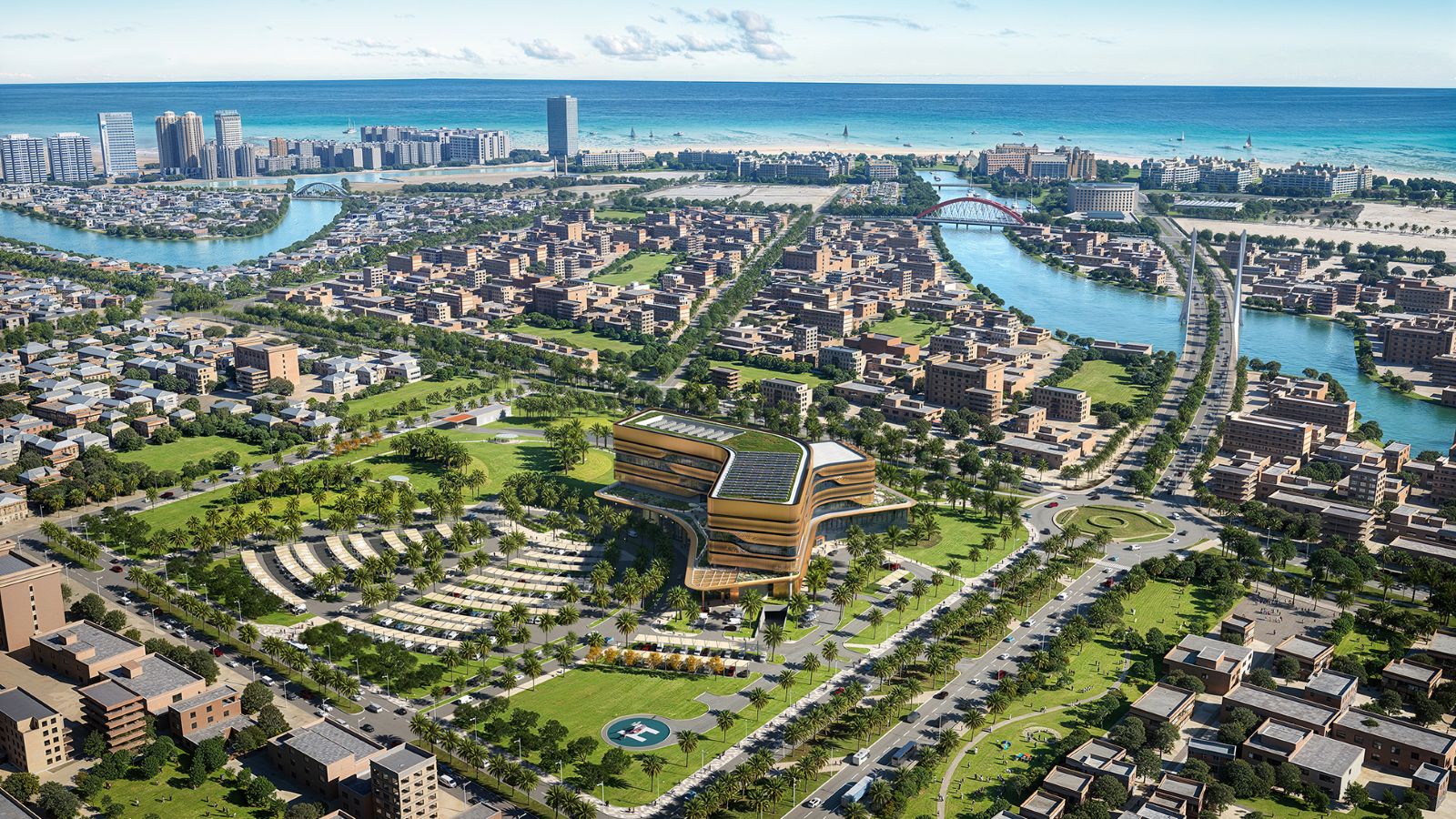
Sustainability is embedded within the architecture as both performance and experience. A high-performance building envelope, shaded facades, and semi-intensive green roofs work in concert to reduce energy demand and improve thermal comfort. Rainwater harvesting supports non-potable uses across the landscape, while an 882 m2 rooftop photovoltaic array generates approximately 370,000 kWh annually. Together, these strategies achieve a projected Energy Use Intensity of 149.54 kWh/m2/year approximately 40% below baseline demonstrating how climate-responsive design can advance both environmental responsibility and patient well-being.
Jamjoom Specialty Hospital ultimately operates as a living system, where the idea of flow, spatial, environmental, and human unites culture, care, and performance into a timeless architecture of healing.