



Photo Credit ©️ Sam Kittner
2026 Winner

Award of Excellence
Hickok Cole
Visit Hickok Cole Website
Design Team:
Robert Holzbach, FAIA, LEED AP |
Sarah Barr
Rebecca Kelly
Kerry Putnam, Associate AIA, LEED AP
Client:
JBG SMITH
General Contractor:
Clark Water | DAVIS Construction
Additional Consultants:
Structural and MEP Engineers: Gannett Fleming (now GFT) | Christopher Consultants (now IMEG) | OJB Landscape Architecture | AlexRenew | Thornton Tomasetti
Project Description
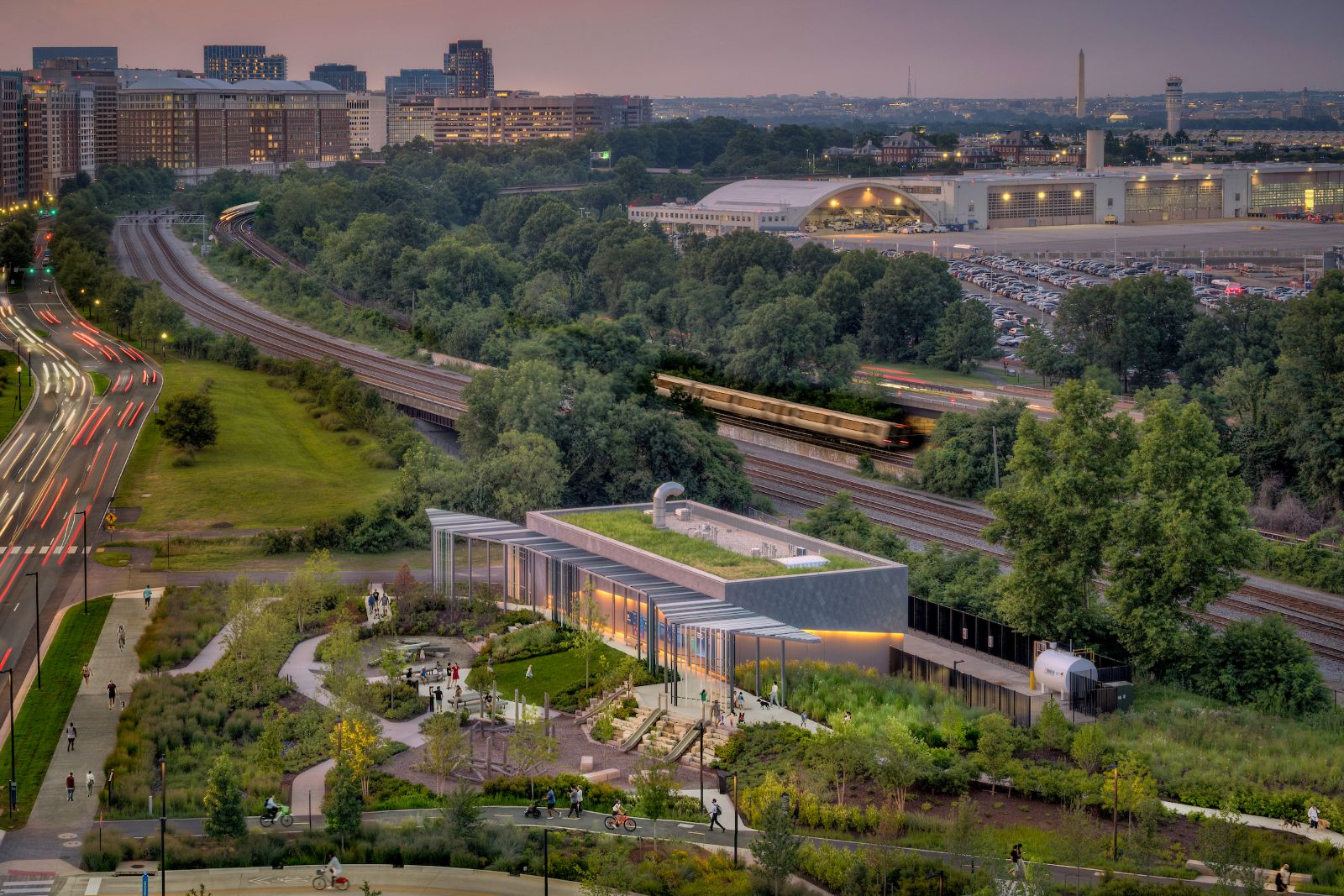
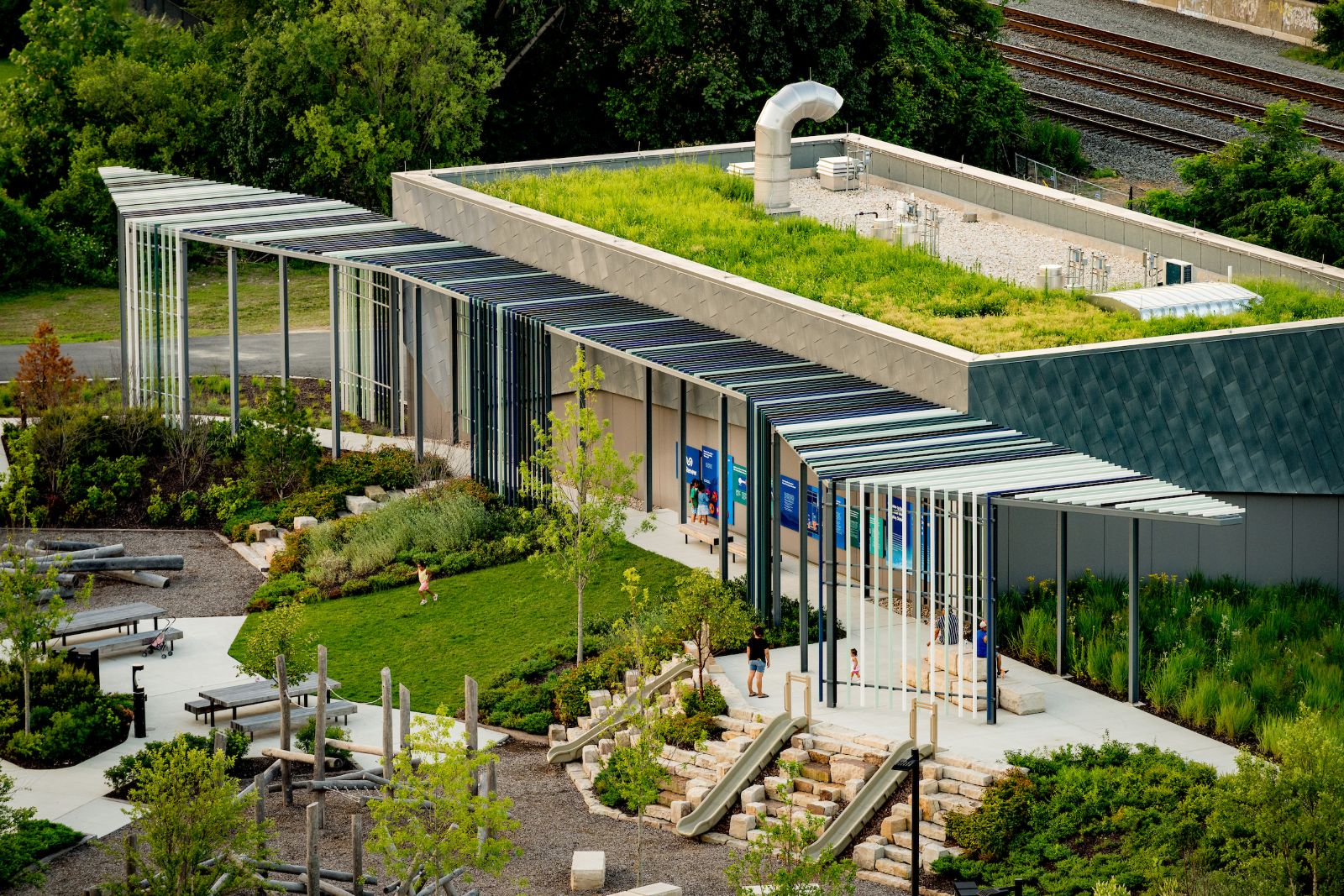
The Innovation District Pump Station reimagines the role of civic infrastructure. Located within North Potomac Yard Park in Alexandria, Virginia, this essential utility is not set apart from its surroundings, but is now part of them. Trails, play areas, and open space flow around and over the facility, supporting both the visible life of the park and the systems working quietly beneath it. Rather than hiding infrastructure entirely, the project brings it into the public realm in a way that feels accessible and engaging.
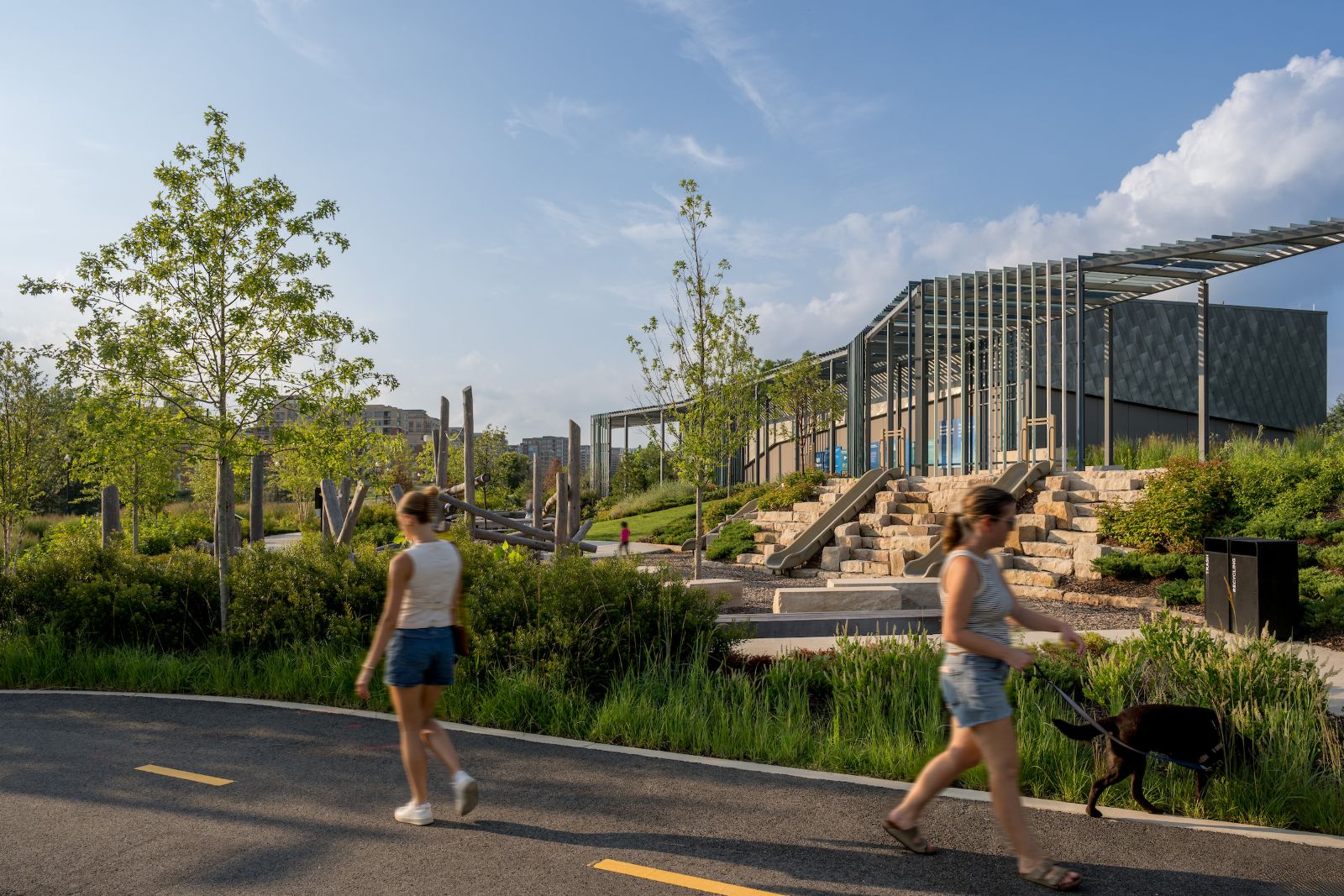
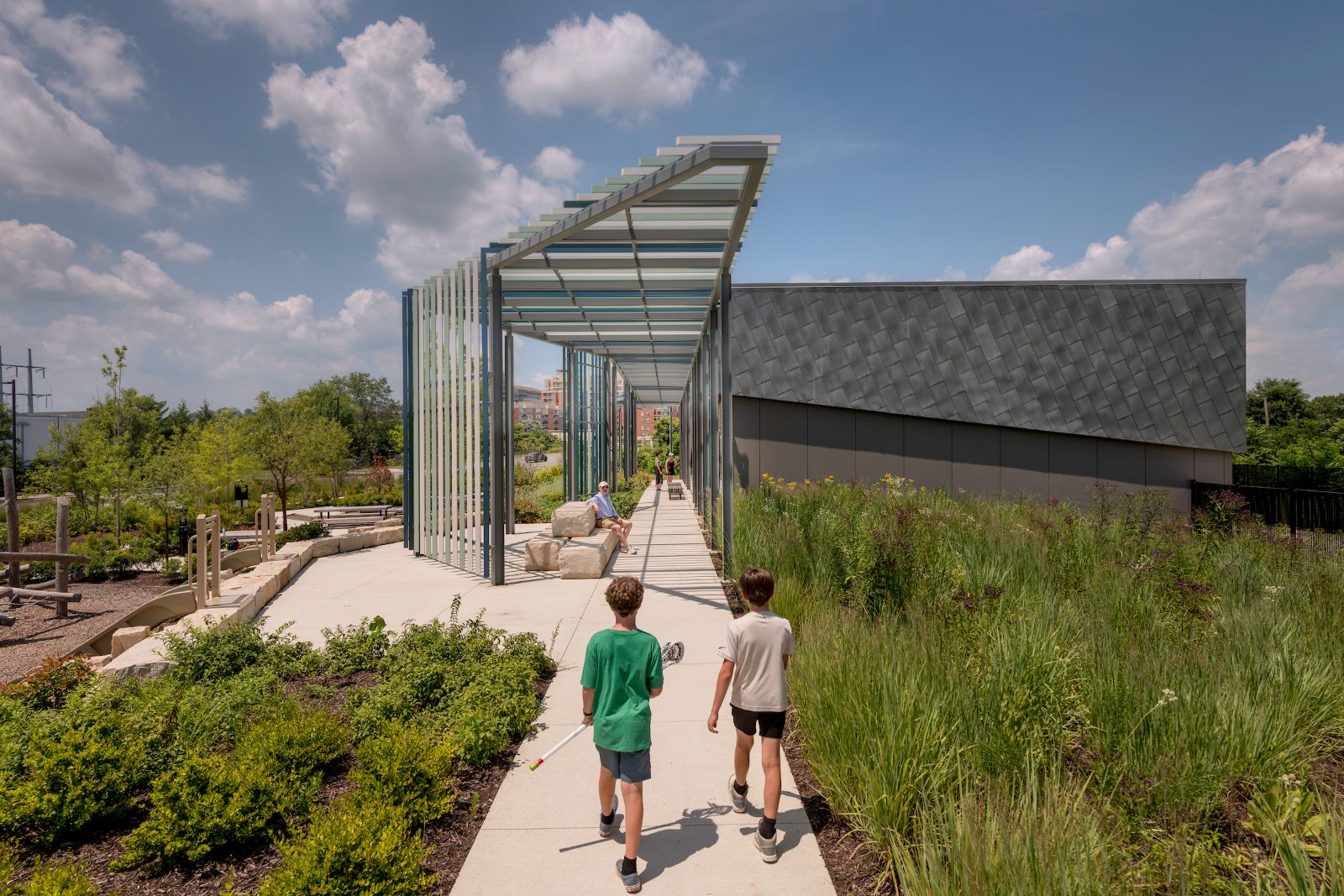
At 7,800 square feet, the facility houses significant pump equipment, yet its presence is intentionally subtle. Much of the structure, including large pipes and machinery, is placed 40 feet below grade. Above, sculpted berms and a green roof extend the park’s topography, minimizing visual impact and allowing the building to blend into the landscape. These forms do more than conceal the structure; they create opportunities for play and movement. Slopes double as slides, and terraces become places to climb and explore, turning the site into an active playscape. Picnic areas and shaded paths support gathering and everyday use, reinforcing the park as a welcoming destination.
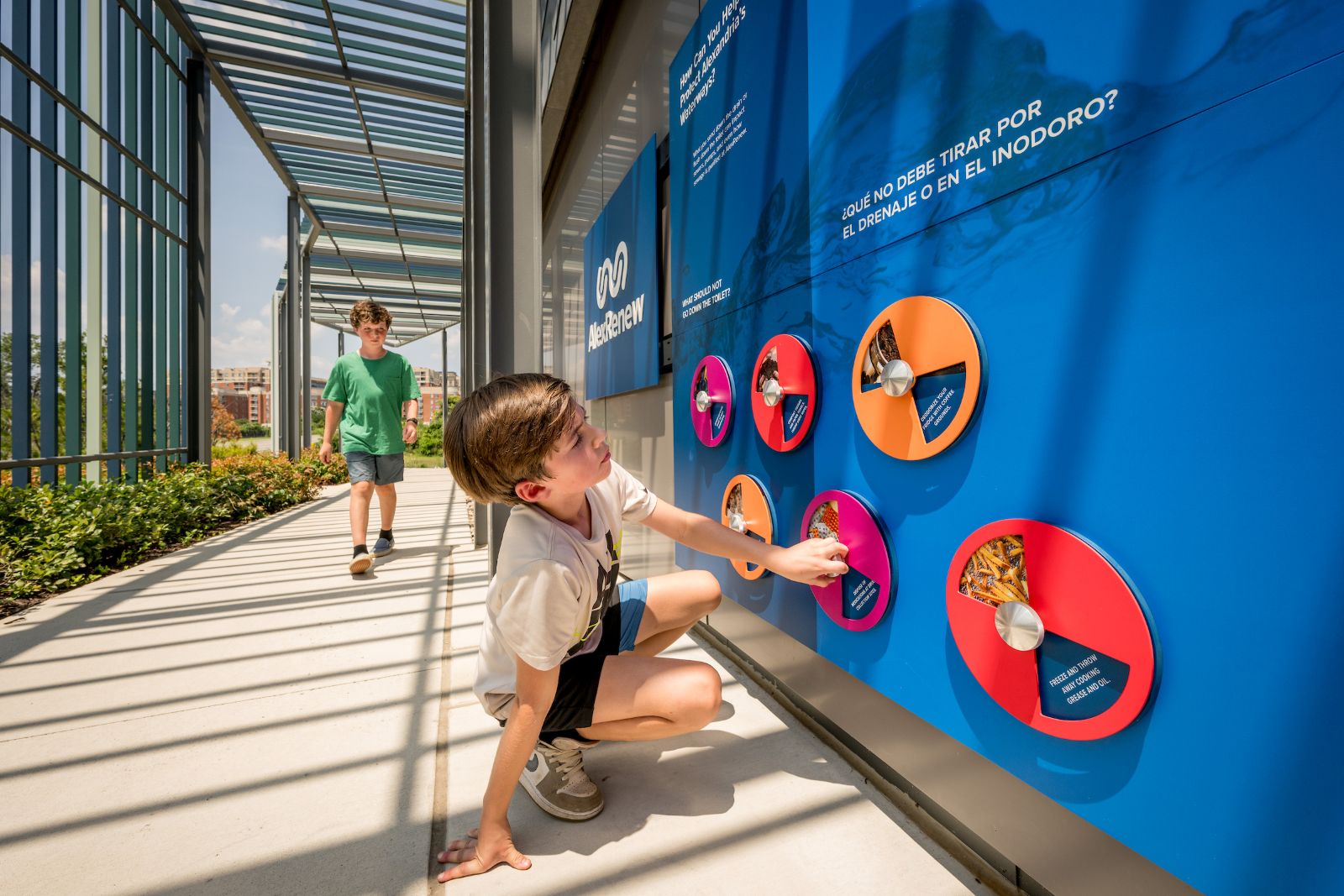
The design emphasizes integration and access. As a piece of public infrastructure, the pump station serves the entire community and invites people in. Paths approach from multiple directions, circulation is intuitive, and the space is fully accessible. Educational elements are incorporated throughout the site, with exhibits in both English and Spanish that explain how the system works. What is typically hidden is made visible, encouraging curiosity and helping visitors understand how water systems support public health.
Environmental performance is built into the project from the ground up. The green roof and bermed landscape help reduce heat gain, manage stormwater, and soften the building’s presence within the park. At the same time, the facility continues to perform its essential function of conveying wastewater reliably while supporting the health of the surrounding ecosystem.
Material and system choices reflect a focus on durability and long-term value. A restrained palette, including angled, overlapping metal panels with a graffiti-resistant coating and standard aluminum components, creates a cohesive identity without relying on costly customization. The design also looks ahead, allowing for future wastewater energy recovery through thermal extraction, supporting evolving sustainability goals over time.
Just as important, the project supports well-being and adaptability. Spaces for play, rest, and learning are woven throughout the site, encouraging people to engage with the environment in different ways. As development in the surrounding area continues, the pump station is designed to expand alongside it. By making essential infrastructure visible and interactive, the project shifts expectations, showing that even the most utilitarian systems can contribute meaningfully to public life.