



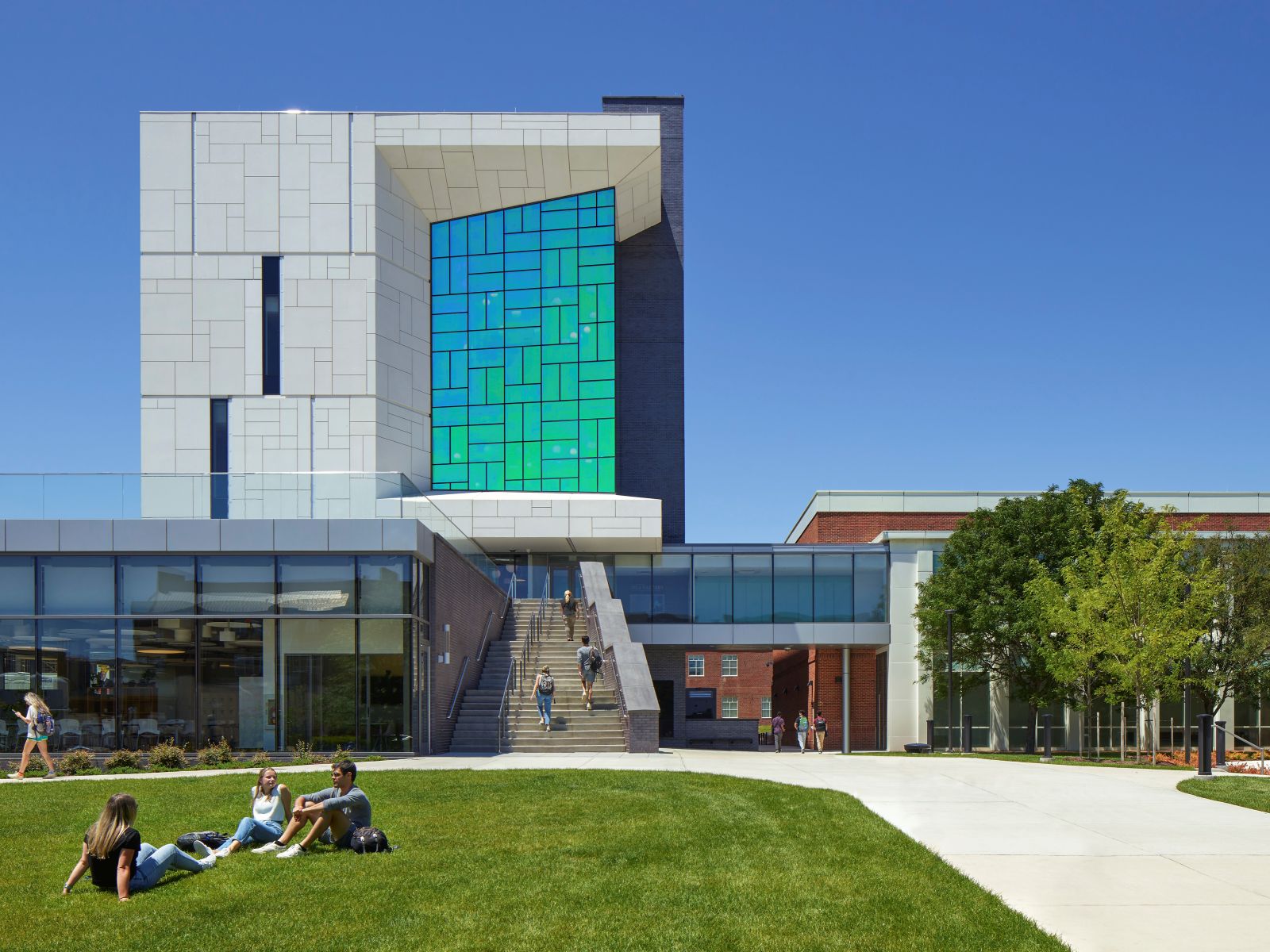
Photo Credit © Halkin Mason Photography
2026 Winner

Award of Merit
Page, now Stantec
Visit Page, now Stantec Website
Design Team:
Paul O'Connell, Lead Architect |
John Marco, Plumbing Designer |
Allison Friedel, Architect |
William Bowles, Sr Expertl Graphic Designer |
Alicia Hayter, Project Interior Designer |
Sean Lyons, Project Director |
Stephan Kozakowski, Fire Protection Designer |
Mihai Dobrescu, Lead Electrical Designer |
Daniel Lazarz, Fire Protection Engineering Lead |
Theodore Osborne, Technical Director |
Suzannah Klein, Project Interior Designer |
Angela Kwon, Experiential Graphic Designer |
Jose Leo Arango, Senior Technical Designer |
Adrian Lazaro, Architect
Client:
University of Maryland College Park
General Contractor:
Clark Construction Group, LLC.
Additional Consultants:
MEP Engineers: Page, now Stantec |
Structural Engineer: Hope Furrer Associates |
Civil Engineer: Site Resources, Inc. |
Landscape Architect: Site Resources, Inc. |
Technology Designer: S2N Technology Group
Project Description
The E.A. Fernandez IDEA Factory establishes a multidisciplinary innovation hub that strengthens the academic and civic fabric of its campus while advancing a contemporary model for education architecture. Positioned at a prominent campus edge, the building transforms an underdefined plaza into an active gathering space, serving as both a destination and a connector. Its architectural presence balances a sense of permanence with responsiveness, using massing, materiality, and façade articulation to engage the public realm while supporting high‑performance learning environments within.
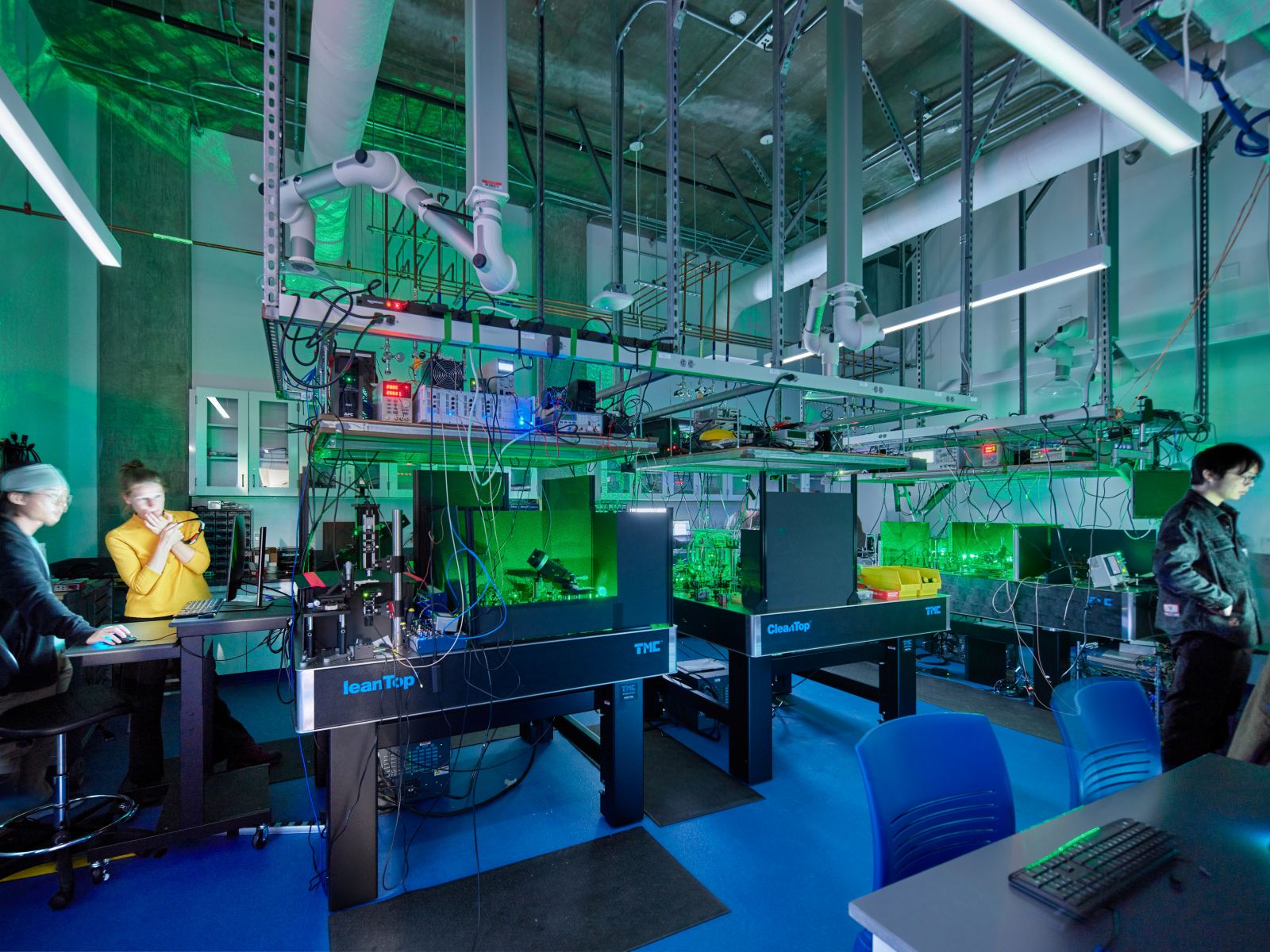
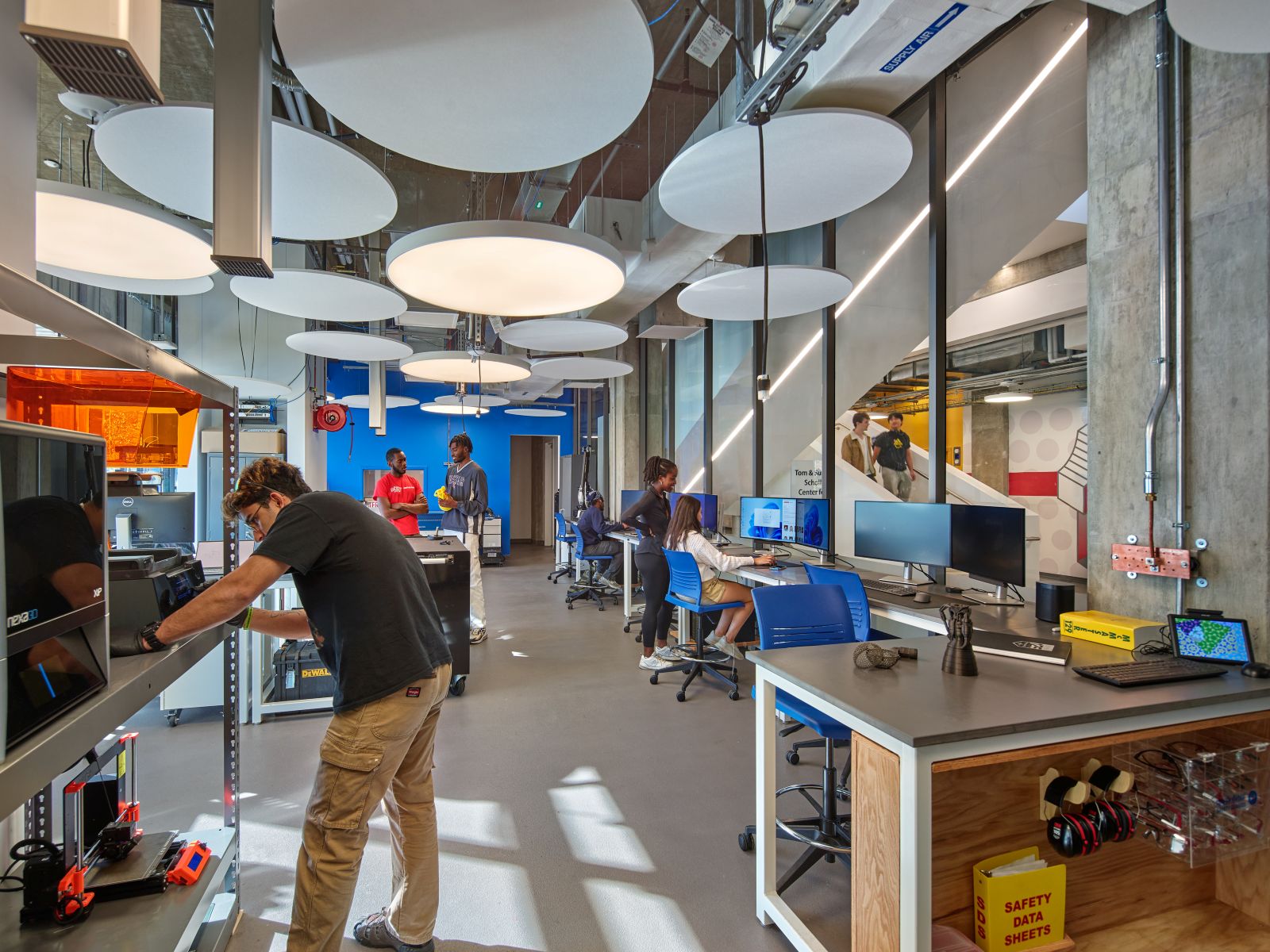
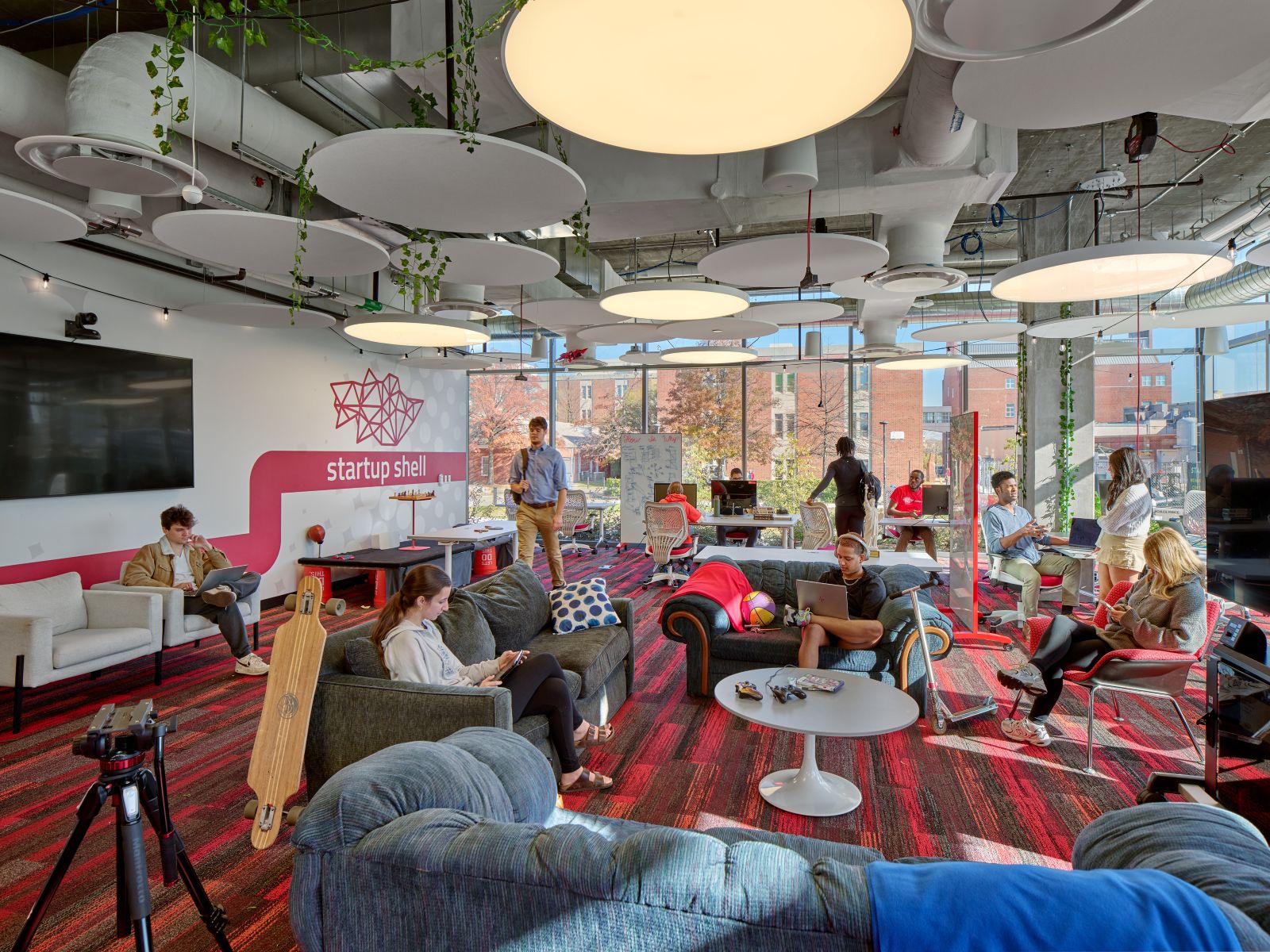
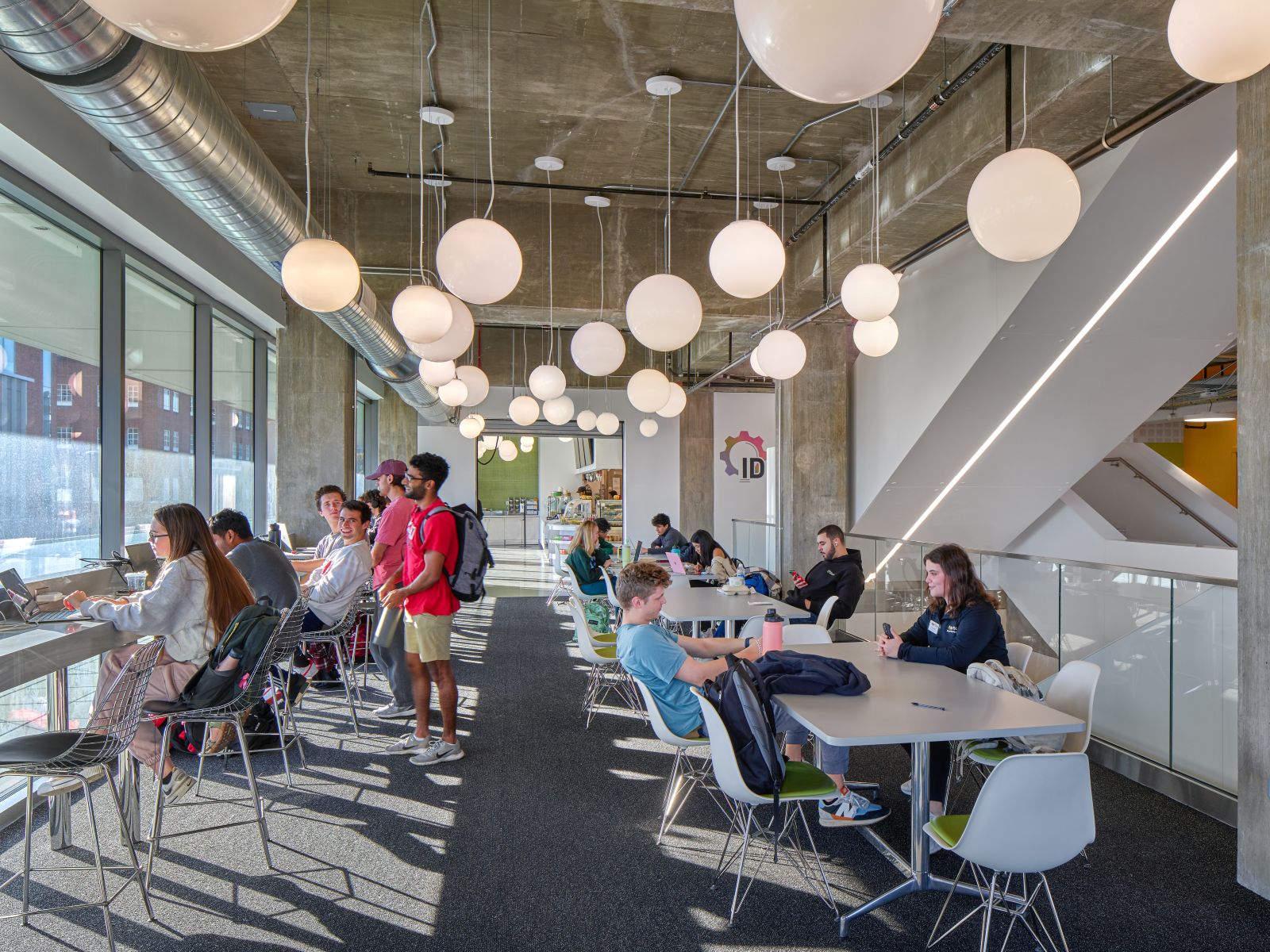
The program is organized to encourage collaboration, visibility, and interdisciplinary exchange. Laboratories, prototyping spaces, startup environments, and shared collaboration zones are deliberately interwoven rather than isolated, allowing learning, research, and entrepreneurship to occur simultaneously. Publicly accessible amenities—including informal meeting areas, terraces, and social spaces—support spontaneous interaction and reinforce a culture of openness. Vertical circulation is designed as an active social spine, visually linking floors and programs while fostering daily encounters among users from diverse disciplines.
Environmental performance is integral to the architectural concept. Landscape and building systems work together to restore ecological function to the site, incorporating green roofs, native plantings, and integrated stormwater management strategies that reduce runoff and support regional watershed health. These systems are not treated as add-ons, but as defining elements of the project’s identity, reinforcing the relationship between innovation, stewardship, and the built environment.
Material and structural strategies emphasize durability, resilience, and long-term value. Robust construction systems were selected to ensure longevity, minimize maintenance, and support adaptable interior planning. Flexible floor plates and modular spaces allow the building to evolve alongside emerging technologies and shifting educational priorities, ensuring relevance well beyond initial occupancy. This approach reflects a commitment to responsible investment and sustainable lifecycle performance.
Interior environments prioritize daylight, views, and connection to landscape to support occupant well-being and productivity. Operable windows, a skylit communicating stair, and visual access to outdoor spaces create a dynamic interior experience shaped by time of day and season. Active circulation and informal gathering areas encourage movement, interaction, and social learning, reinforcing the building’s role as a living academic commons.
More than a collection of specialized spaces, the IDEA Factory functions as a catalyst for discovery. By bringing together education, research, and entrepreneurship in a highly visible and adaptable setting, the architecture supports experimentation, iteration, and the translation of ideas into real-world impact—demonstrating how thoughtful design can advance institutional mission while contributing meaningfully to its broader community.