



Photo Credit © Paul Burk
2026 Winner

Award of Merit
EL Studio
Visit EL Studio Website
Design Team:
Mark Lawrence, AIA |
Elizabeth Emerson, AIA |
Sarah Beth Combs, AIA
Client:
Confidential
General Contractor:
JKG Contracting
Additional Consultants:
Millwork by Allegheny Wood Works
Project Description
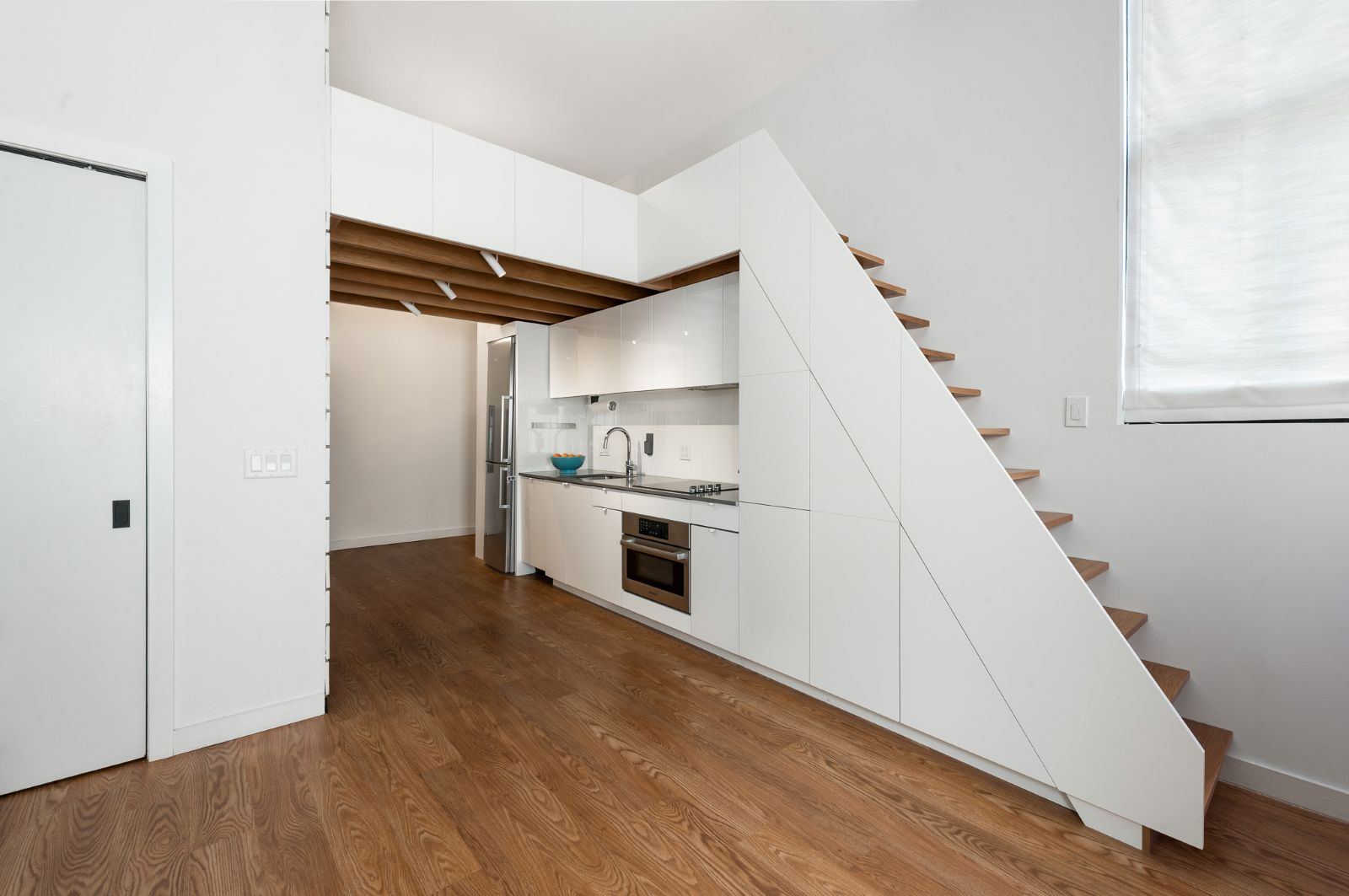
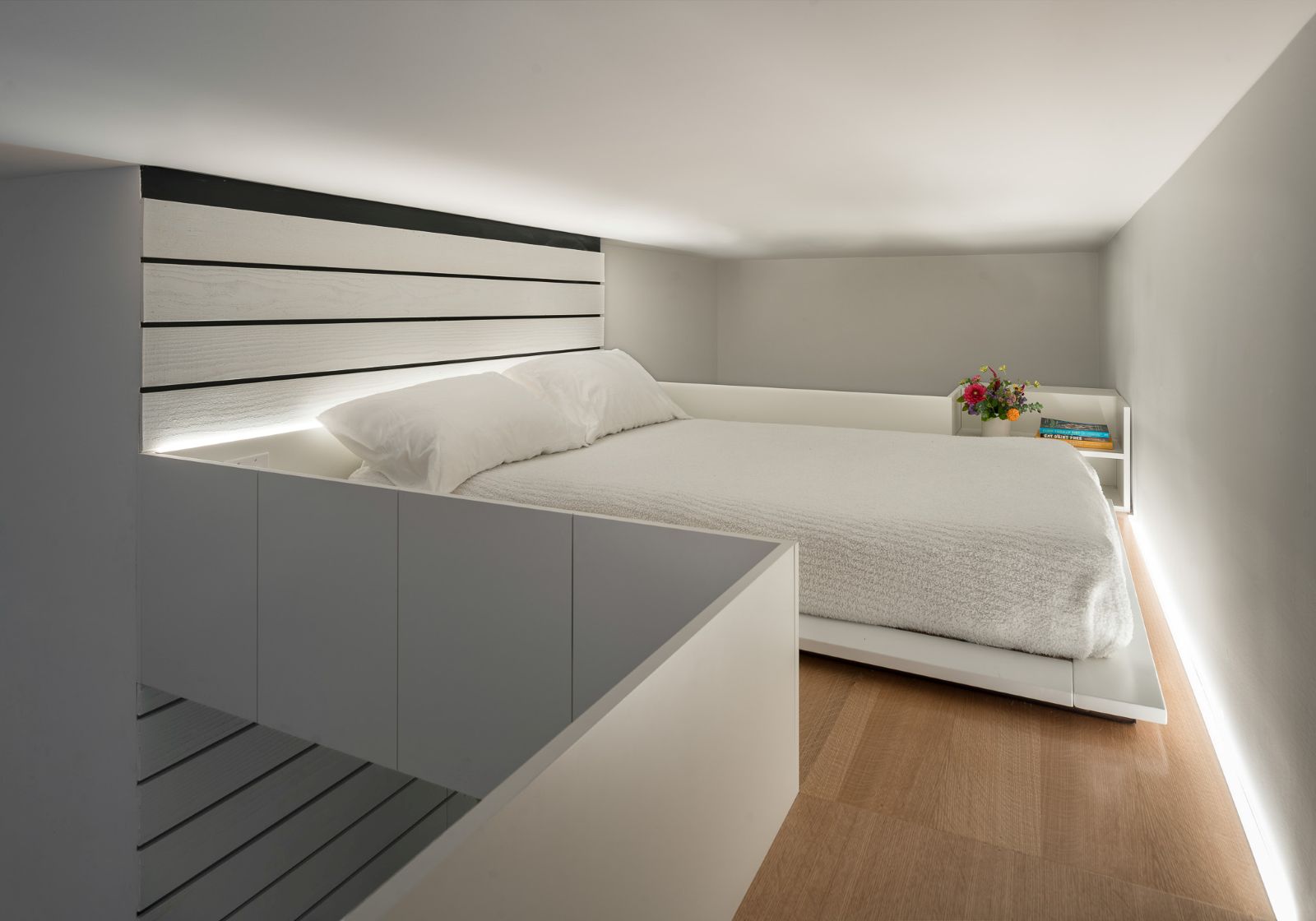
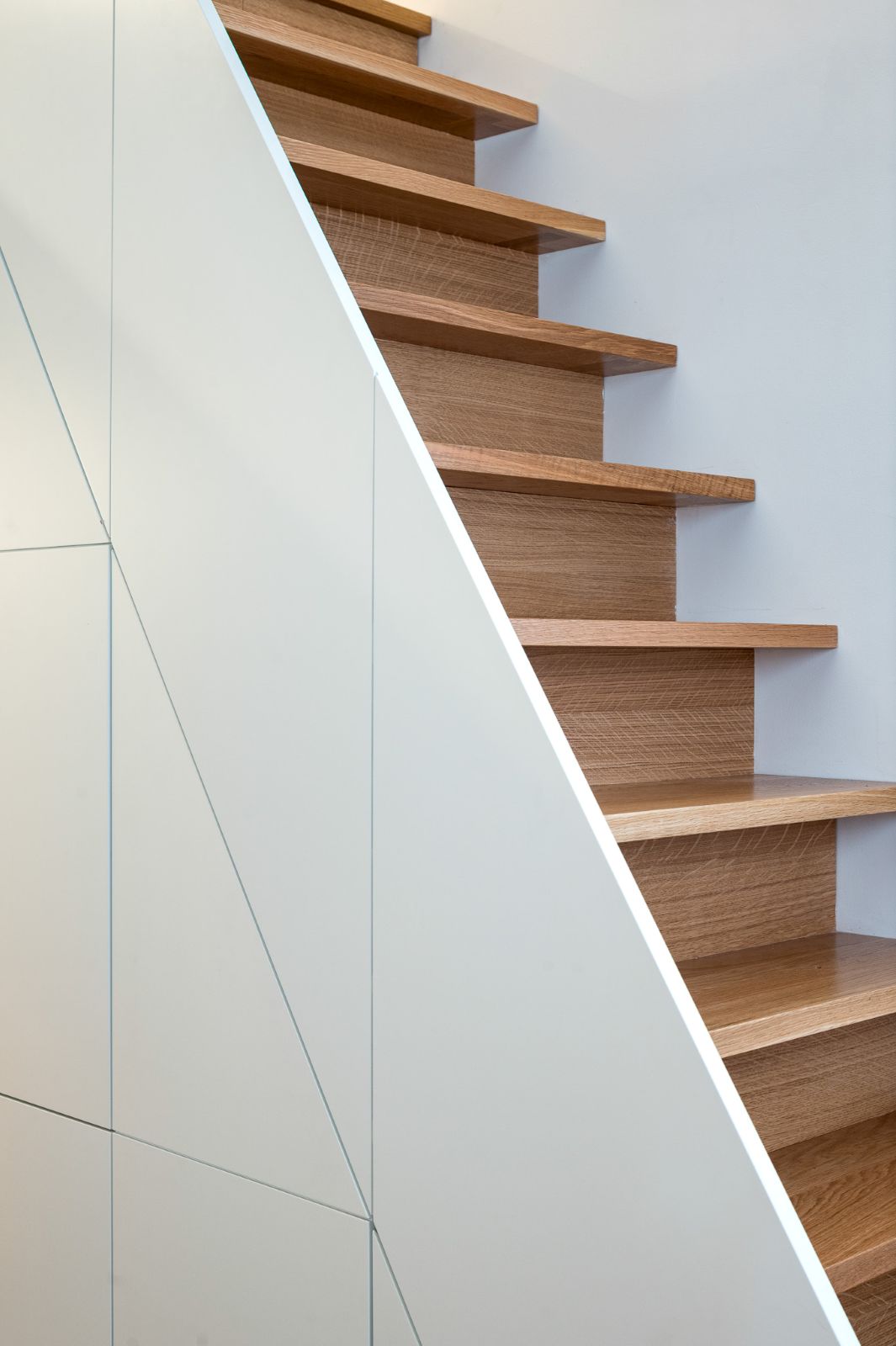
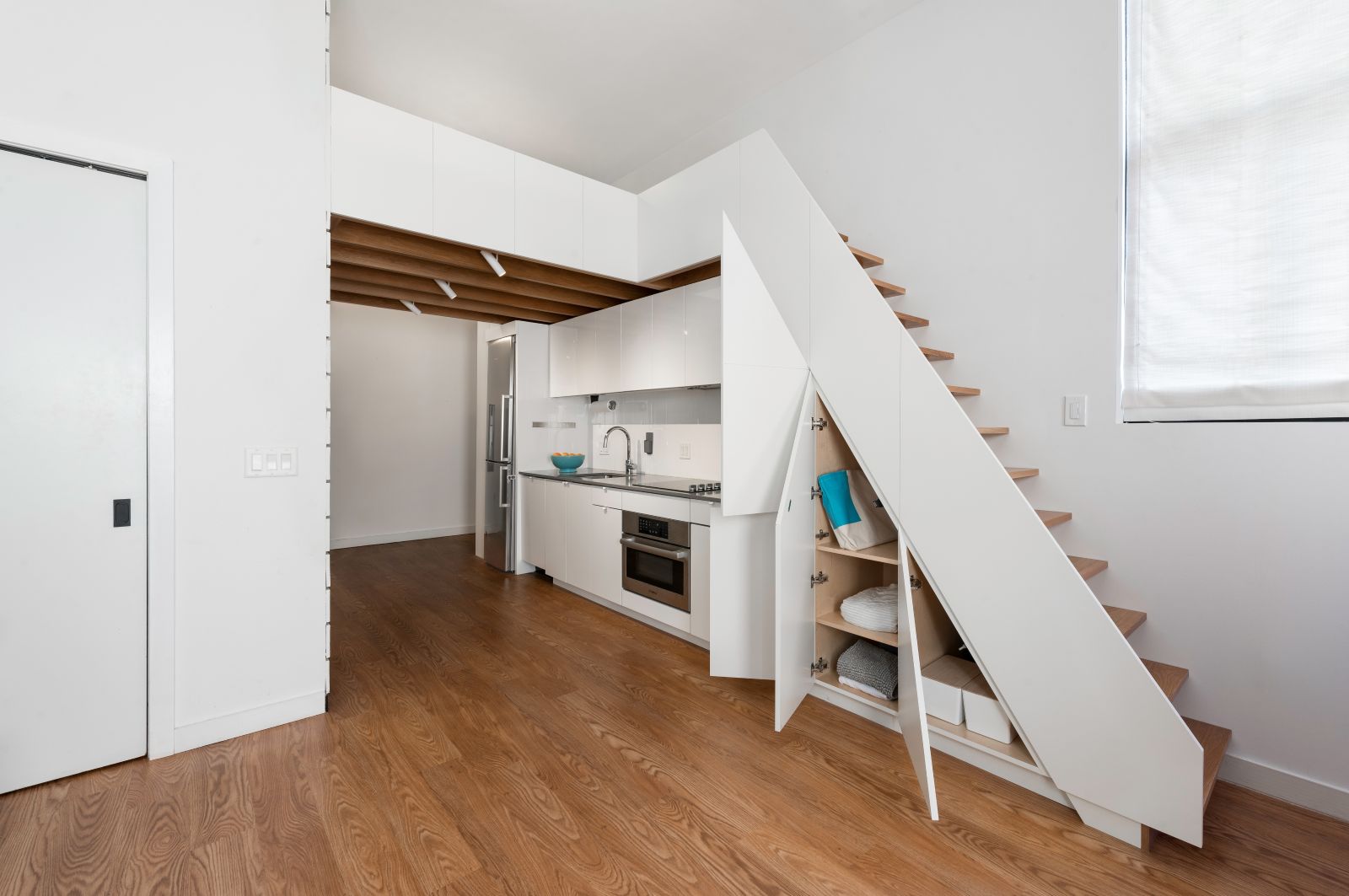
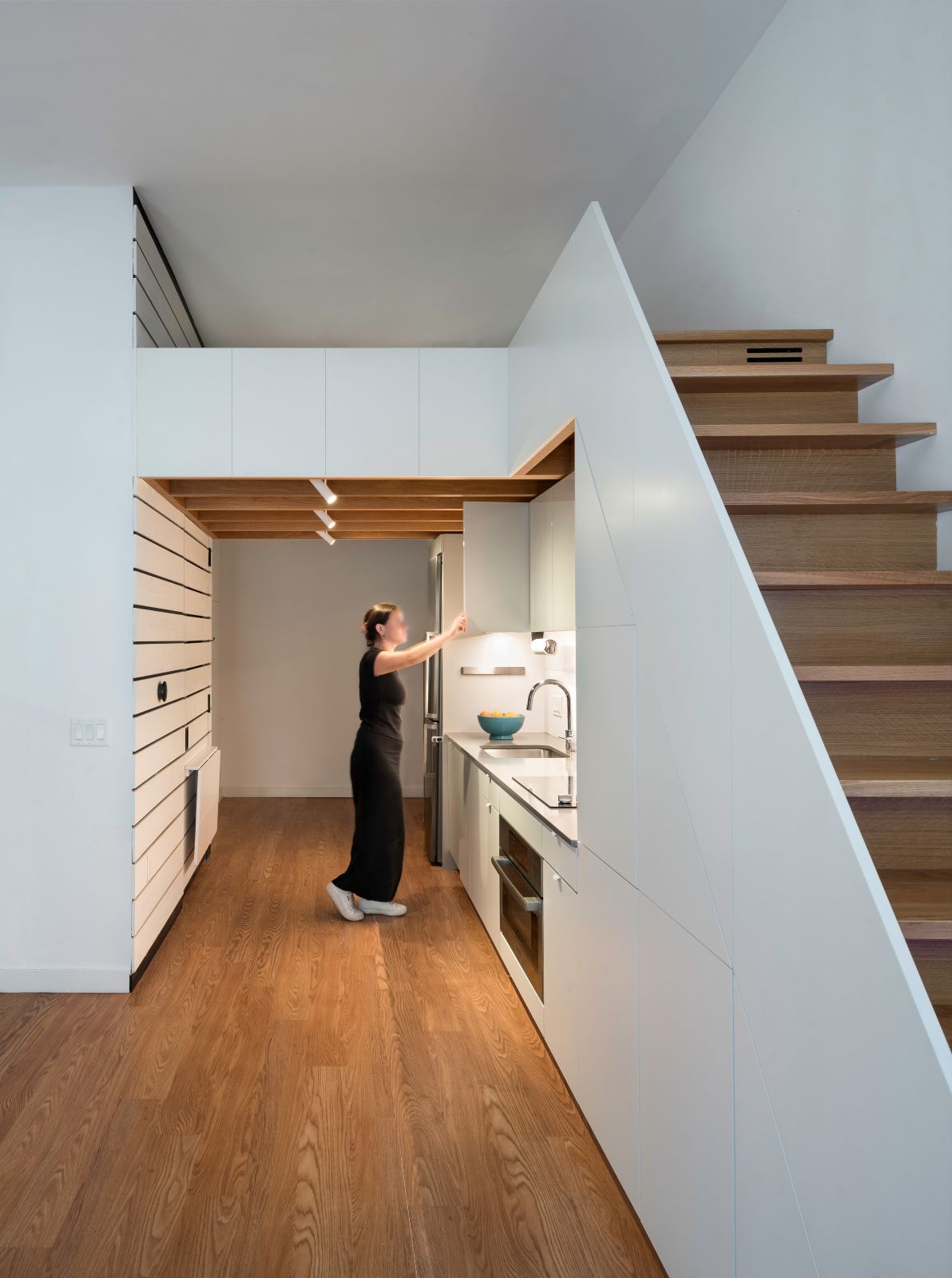
This project reimagines a compact studio within the historic Chapman Stables building through a highly integrated, vertically driven design that responds to both the existing structure and the client’s contemporary lifestyle. Taking advantage of the space’s exceptional ceiling height, which was originally intended for a hayloft mezzanine, the design introduces a carefully positioned loft above the kitchen, transforming underutilized volume into a layered living environment. This intervention maximizes spatial efficiency while minimizing the project’s footprint, aligning resource-conscious thinking with long-term adaptability. Program, structure, and storage are seamlessly intertwined: a series of storage units both organize daily life and support the loft above, while a custom stair-ladder consolidates circulation into a compact, multi-functional element. The loft itself enhances wellness and atmosphere with a concealed light that distributes a warm, ambient glow throughout the space. Below, the reconfigured kitchen and living areas are defined without enclosure, maintaining openness, daylight penetration, and visual continuity. Respecting the historic fabric while enabling modern use, the design preserves the character of the original volume and integrates targeted updates—such as refaced cabinetry—to bridge past and present. Running low on space isn’t a reason to move, but an opportunity to rethink how space is used and unlock the potential of a historic interior to support a modern lifestyle. The final result is a flexible, efficient, and human-centered environment that supports evolving needs, reduces material intervention, and elevates everyday living through thoughtful, performance-driven design.