



Photo Credit © Joseph Romeo
2026 Winner

Award of Merit
Beyer Blinder Belle Architects & Planners
Visit Beyer Blinder Belle Architects & Planners Website
Design Team:
Jill S. Cavanaugh, FAIA, AICP (Partner-in-Charge) |
Margaret Kittinger, AIA (Partner-in-Charge for Interiors) |
Rence W. Gill, AIA, LEED AP (Project Manager) |
Rachel Pierce, IIDA, NCIDQ (Lead Designer for Interiors) |
Bradley Cambridge, AIA, LEED AP |
Caroline Warlick Levins, AIA, LEED AP ID+C |
Rebecca Meyer, AIA |
Rachel Pierce, IIDA |
Andrew Reynolds, AIA |
Sarah Wassel
Client:
Maplewood Senior Living
General Contractor:
Turner
Additional Consultants:
Developer/Operator: Maplewood Senior Living |
Landscape Architect: MKSK |
Structural Engineer: TYLin |
MEP/FP Engineer: Cosentini Associates |
Civil Engineer: GordonDC |
Lighting Designer: Claude R. Engle |
Acoustics: Acoustics2 |
Code/Life Safety: Jensen Hughes |
Sustainability/LEED/WELL: Steven Winter Associates |
Food Service: Clevenger Frable LaVallee |
Vertical Transportation: Fortune Shepler Saling |
Specifications: Rosa D. Cheney, AIA, PLLC |
Building Envelope: Intertek
Project Description
The Fairfax Hotel at 2100 Massachusetts Avenue NW was a favorite destination for politicians, diplomats, and celebrities in Washington, DC, in the 1950s and ’60s, before its adaptive reuse into the second location of Maplewood Senior Living’s contemporary urban brand, Inspīr. Today, the transformation of this historic hotel safeguards its legacy while crafting a contemporary, luxury residential environment tailored to the needs of seniors in Washington, DC.
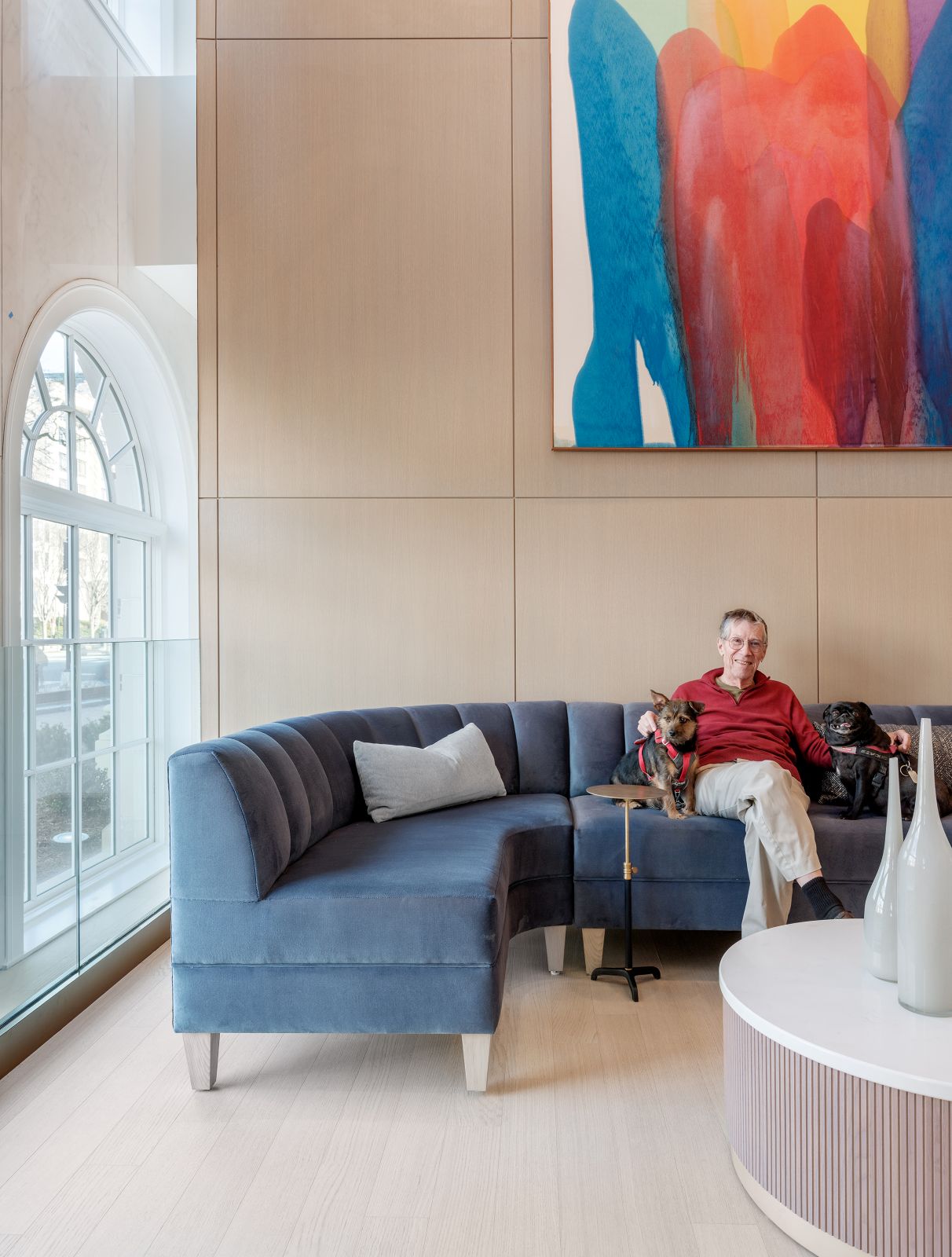
The design was based on extensive research on the existing building and its period of significance both architecturally and politically. The design approach was to create an intuitive relationship between the stature and presence of the historic exterior and a contemporary interior, by pairing traditional architectural elements and details with contemporary finishes and textures.
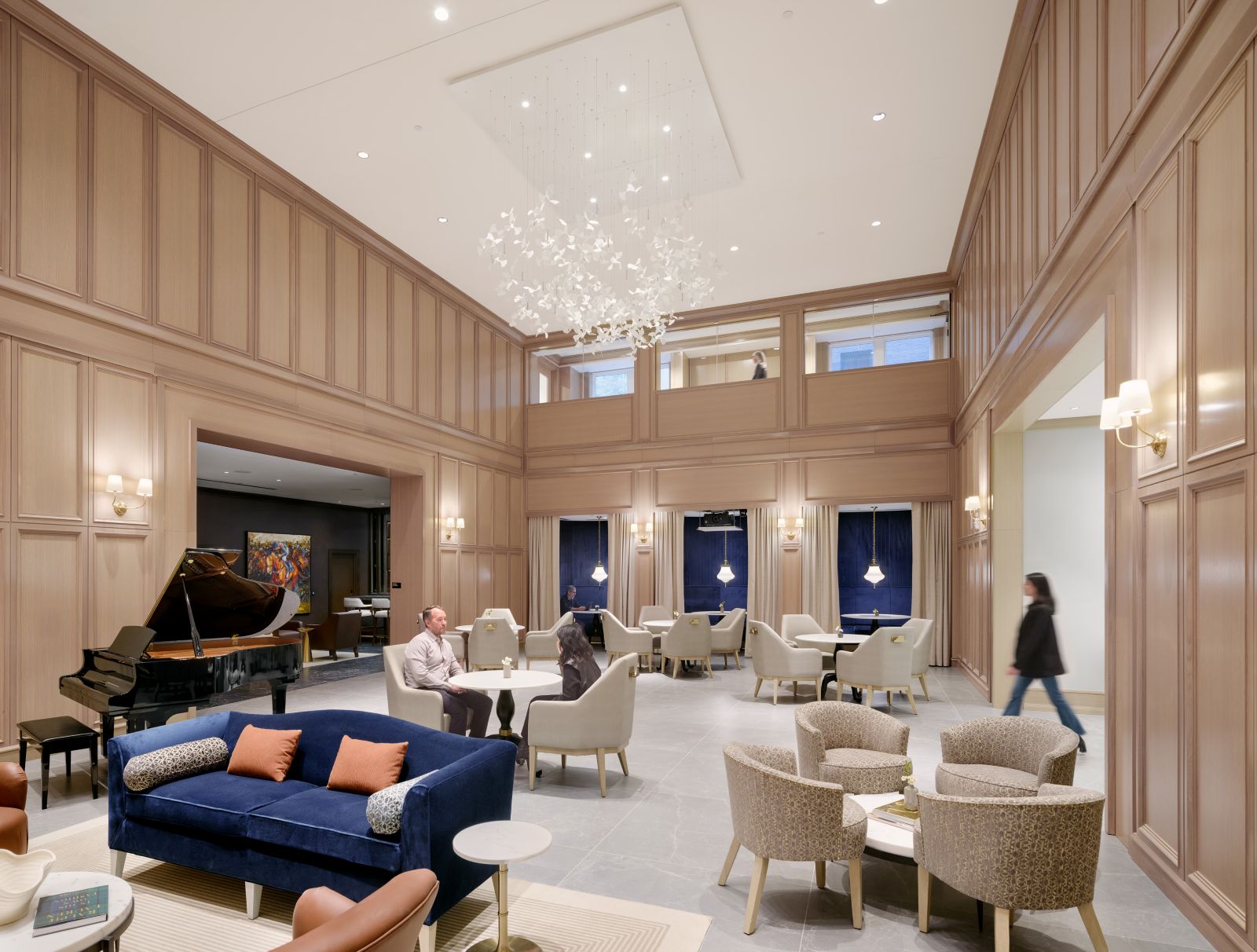
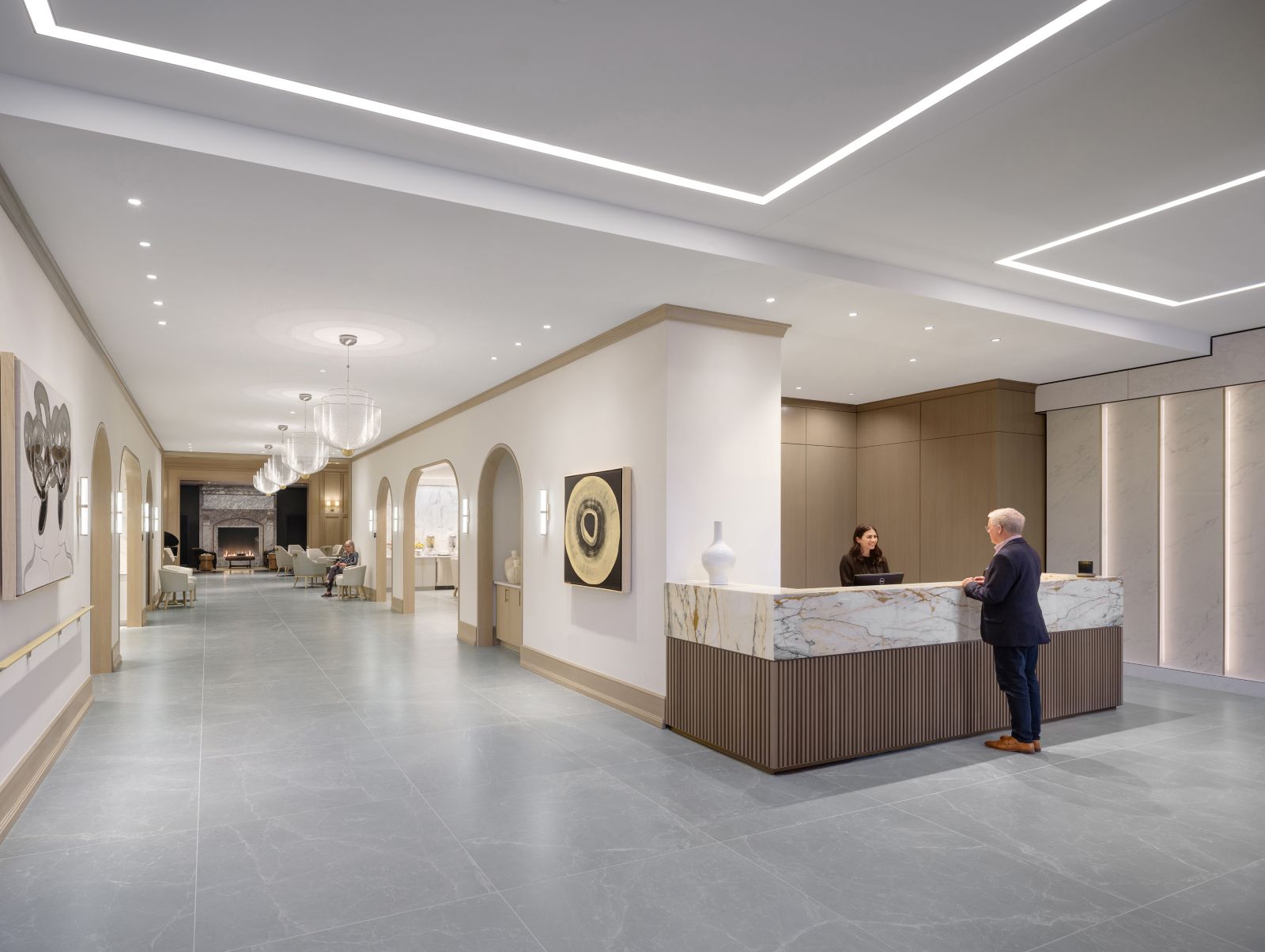
The ground level is large and sprawling, reflecting the original 1920s floorplate and a conjoined 1980s addition. Due to its irregular shape, the designers approached the layout of the interior architecture as one would plan a city or neighborhood. They relied on the basic building blocks of city planning: strong and visually clear paths, nodes along those paths for resting and conversing, and landmarks, or distinct features, at the ends of those paths.
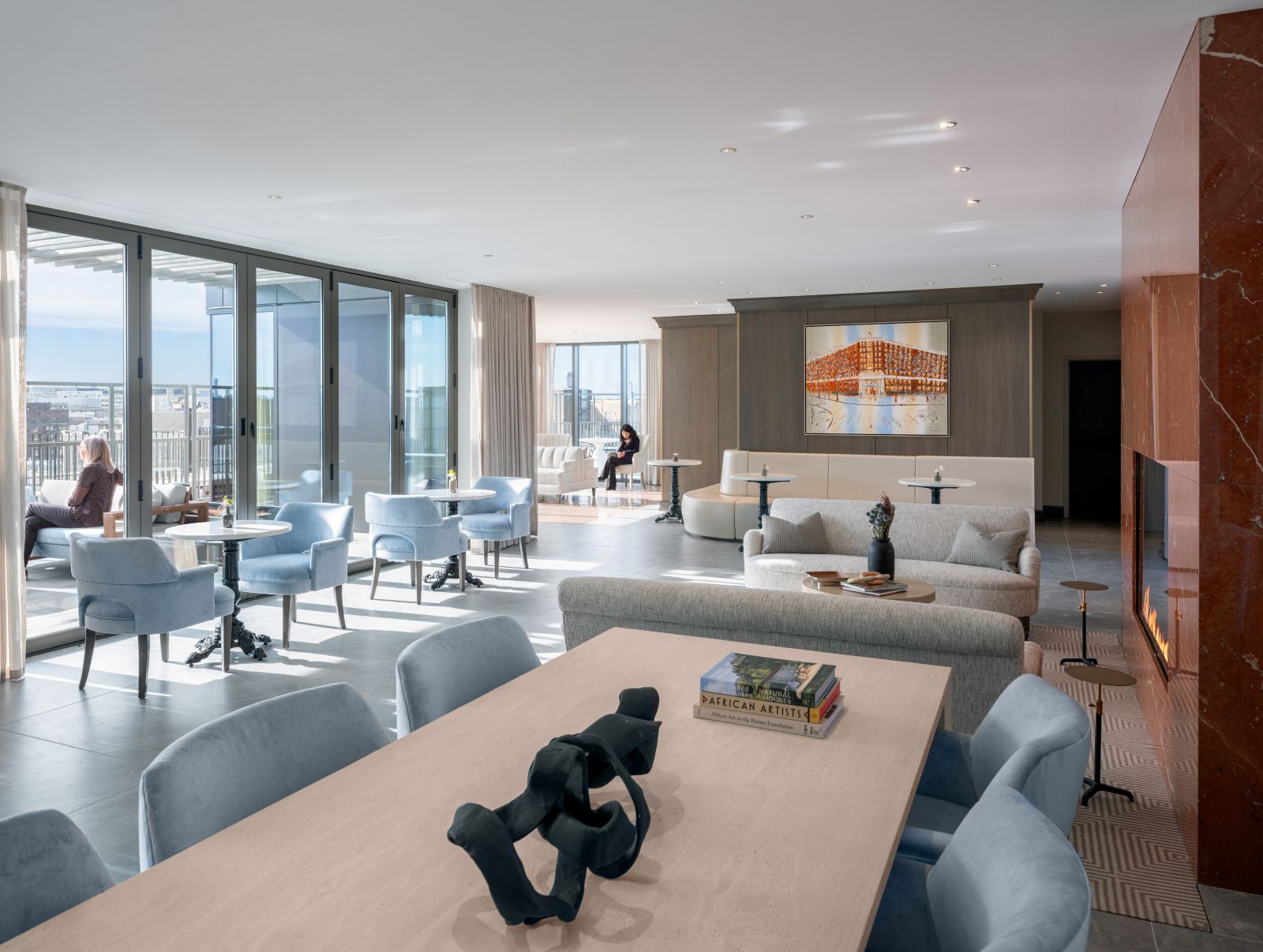
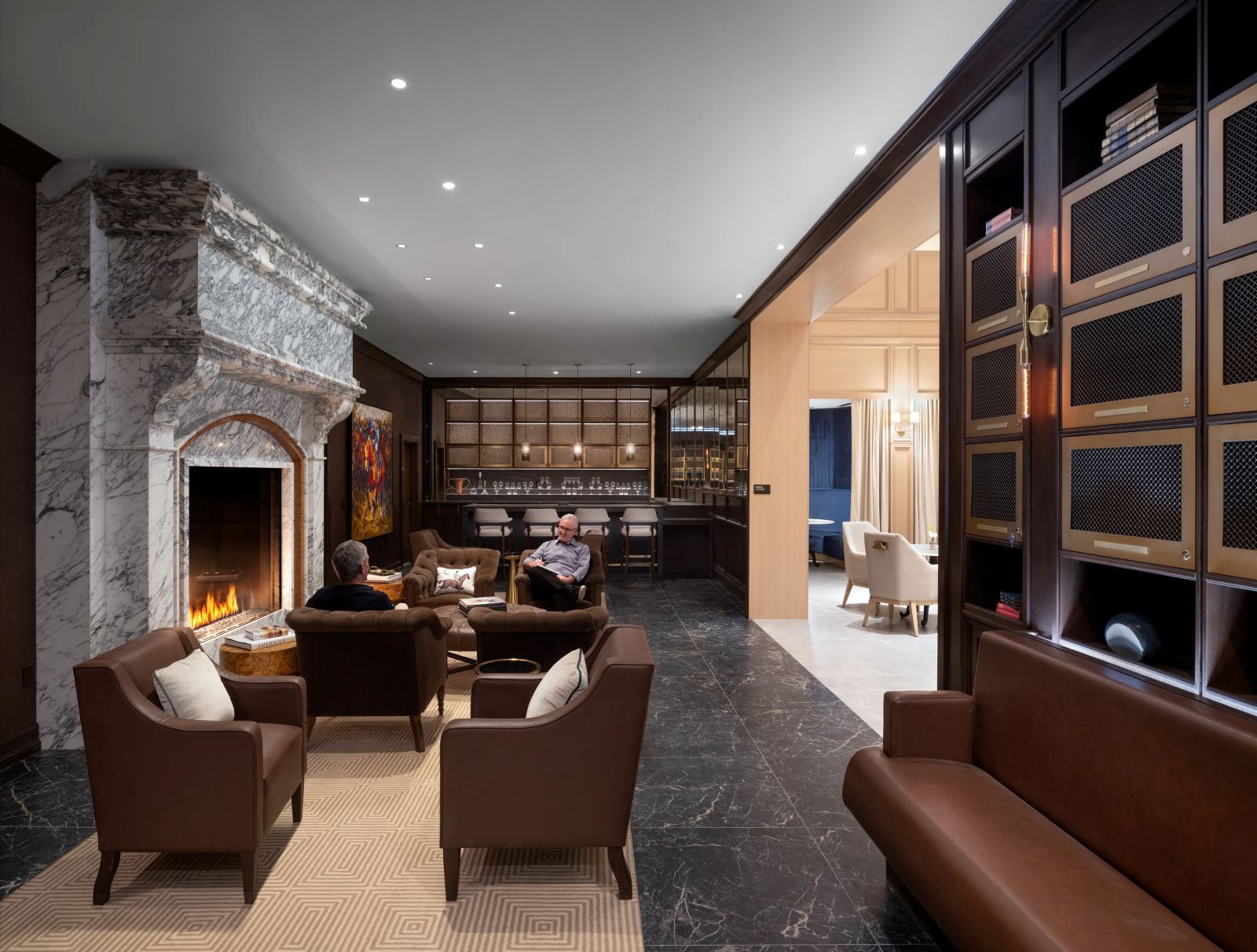
Each room or space has clear boundaries with unique flooring and ceiling patterns and distinct colors and finishes; this allows residents to use long-embedded cognitive patterns of navigating complex spaces through intuitive wayfinding, with the larger goal of facilitating planned as well as unplanned interactions. Some of these distinct architectural features include barrel vaulted ceilings, prominent arched openings as thresholds along these paths, rich and detailed millwork within the nodes, and large-scale yet cozy fireplaces as landmarks. Finally, the team purposefully designed distinct destinations within the building for programming and activities at different times of the day, from morning coffee to afternoon socialization or spa activities to evening dinner and cocktails.
A variety of residential units serve seniors with a wide variety of lifestyle, cognitive, or mobility needs. Floors 2 and 3 are devoted to memory care, all either studio or one‐bedroom apartments, while Floors 4 through 8 are dedicated to assisted living consisting predominantly of one‐bedroom apartments with some studios and two‐bedroom units. Each unit has either a full kitchen or kitchenette, along with a washer‐dryer and access to the common lounge on each floor. Inherited interior elements such as the structure, placement of corridors and entry doors, and exterior facade had to be coordinated with new unit layouts, creating a collection of unique residences that celebrate the historic fabric of the existing building.
This senior living environment evokes not only the Fairfax Hotel’s legacy—from a time period that likely also holds personal significance for many residents—but also a distinctively regional sensibility of luxury. As only the second location in the operator’s contemporary urban brand, and its first to be located within an existing, historic building, it offers a national prototype for the adaptive reuse of existing buildings for senior living.